
Filter
657
Text search:
OECD
countries
Featured
34
112
Language
Document type
272
256
44
39
27
9
4
4
2
Countries
91
26
16
12
9
9
9
9
8
8
8
8
8
7
6
6
6
5
5
5
4
4
4
4
4
4
4
4
4
3
3
3
3
3
3
3
3
3
3
3
3
2
2
2
2
2
2
2
2
2
2
2
2
2
2
1
1
1
1
1
1
1
1
1
1
1
1
1
1
1
1
1
1
1
1
1
1
1
1
1
1
Authors & Publishers
Publication Years
Category
145
58
50
14
13
6
4
Toolboxes
111
65
59
43
40
36
36
25
22
21
12
10
9
7
7
7
6
4
2
2
2
2
Development assistance for health (DAH) has grown substantially, totaling more than $31.3 billion in 2013. However, the degree that countries with high concentrations of armed conflict, ethnic violence, inequality, debt, and corruption have received
...
Nutrition data and information systems (ND&IS) are critical to guide the prioritisation, collection, analysis and
dissemination of nutrition data in countries. However, there is limited guidance for count
...

The Global Health Expenditure Report delves into the intricate landscape of global economies and health systems. This year, it focuses on health spending in 2022, the third year of the COVID-19 pandemic. It shows how countries around the world respo
...

This document aims to provide public health authorities in European Union and European Economic Area (EU/EEA) countries with guidance for improved preparedness planning taking the lessons that have been identified through various activities in the c
...
This book provides significantly expanded content and experience in relation to a broader stewardship context- for example, stewardship in specific populations, different countries as well as the role of different professions in stewardship to polit
...

Every year, around 830 000 children die from unintentional or "accidental" injuries. The vast majority of these injuries occur in low-income and middle-income countries. However, dozens of prevention strategies and programmes exist. If they were int
...
This paper presents a bibliometric analysis of the literature on private health aid and official health assistance between 2000 and 2022. It provides an overview of the sites and themes in the literature pertaining to development assistance in health, and collates the significant policy recommendati
...
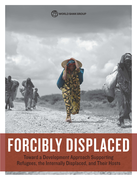
The report depicts the reality of forced displacement as a developing world crisis with implications for sustainable growth: 95 percent of the displaced live in developing countries and over half are in displacement for more than four years. To help
...
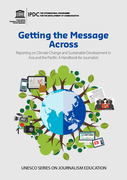
Reporting on Climate Change and Sustainable Development in Asia and the Pacific: A Handbook for Journalists.
UNESCO Series on Journalism education.
It explores the essential aspects of climate change, including its injustices to vulnerable communities, especially women and girls and least develope
...

The report showed commitments made three decades ago to protect the rights of children remain unfulfilled for millions. Violence still affects countless children. Discrimination based on age, gender, disability, sexual orientation and religion harms children worldwide.
Key factors include a lack
...
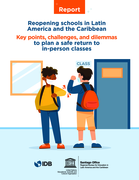
The document presents an assessment developed by both institutions as a contribution to the prioritization of education in national response plans to the health emergency and future recovery strategies. "Countries have deployed various response and
...
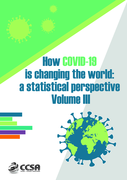
Since the release of the first volume in May 2020, the COVID-19 pandemic has continued to rage around the world. By mid-March, 2021, countries around the globe had reported over 123 million cases—a nearly five-fold increase since this report’s p
...
The African Development Bank has launched a consultation process with health ministers and other partners as it develops a strategy to drive enhanced access to health services across Africa through 2030.
Input from ministers in the Bank’s 54 regional member
...
Climate change is a major risk to good development outcomes, and the World Bank Group is committed to playing an important role in helping countries integrate climate action into their core development agendas. The World Bank Group is committed to s
...
This report started with a simple question—“How can we tell how much funding is devoted to global health programs?”—and ended (more than two years later) with an answer that is far from simple. As those who have tried know well, tracking health-related funding is challenging in any setting,
...
Little is known about foreign aid provided by private donors. This paper contributes to closing this research gap by comparing the allocation of private humanitarian aid to that of official humanitarian aid awarded to 140 recipient countries over th
...
Development finance is at a turning point, as the macroeconomic environment has changed profoundly and the financing gap for low- and middle-income countries has widened. The events that led to this new situation are the multiple crises that the glo
...
In 2019, the Task Force on Fiscal Policy for Health concluded that taxes on tobacco, alcohol, and sugar-sweetened beverages were a highly effective but greatly underused policy tool to reduce consumption, save lives, and raise domestic resources. The Task Force estimated that if all
...
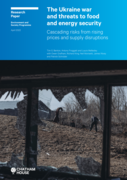
Cascading risks from rising prices and supply disruptions, April 2022.
Global resource markets are still reeling from the impacts of Russia’s invasion of Ukraine; the two countries are major suppliers of energy, food and fertilizers. Supply disru
...

The document "Global Report on Diabetes" by the World Health Organization (WHO) provides an in-depth analysis of diabetes as a global health challenge. It covers the rising prevalence of the disease, the associated risk factors, and the increasing burden on healthcare systems, particularly in low- a
...
