
Filter
174
Text search:
Global
Health
Institute,
University
of
California
Featured
Recommendations
22
New Publications
30
Language
Document type
No document type
69
Studies & Reports
52
Guidelines
27
Manuals
19
Strategic & Response Plan
2
Fact sheets
2
Situation Updates
1
App
1
Resource Platforms
1
Countries / Regions
Global
15
Congo, Democratic Republic of
4
India
4
Africa
4
Zimbabwe
3
Kenya
3
South Africa
3
USA
2
Uganda
2
Syria
2
Tanzania
2
Malawi
2
Brazil
2
Ukraine
2
Asia
2
Senegal
1
Morocco
1
Ghana
1
Philippines
1
Nepal
1
South Sudan
1
Lebanon
1
Zambia
1
Thailand
1
Rwanda
1
Indonesia
1
Mozambique
1
Argentina
1
Namibia
1
North Macedonia
1
Hungary
1
Colombia
1
Lesotho
1
Mexico
1
Myanmar / Burma
1
Chile
1
Yemen
1
Latin America and the Carribbean
1
Western and Central Europe
1
Other region
1
Venezuela
1
Russia
1
Kyrgyzstan
1
Georgia
1
North America
1
Jamaica
1
Norway
1
Portugal
1
Authors & Publishers
Publication Years
Category
Clinical Guidelines
32
Countries
30
Women & Child Health
12
Public Health
10
Key Resources
5
Pharmacy & Technologies
3
Capacity Building
1
Toolboxes
HIV
30
Planetary Health
24
COVID-19
14
NTDs
13
TB
10
Mental Health
8
Caregiver
8
Global Health Education
7
NCDs
7
Disability
5
Natural Hazards
3
Rapid Response
3
Refugee
3
Social Ethics
3
Health Financing Toolbox
3
Ebola & Marburg
2
Conflict
2
AMR
2
Malaria
2
Polio
1
2.0 Rapid Response
1
Policy Research Working Paper 6100 | Impact Evaluation Series No. 60 | This study examines the effect of performance incentives for health care providers to provide more and higher quality care in R
...
Pollution and health: a progress update
recommended
The Lancet Planetary Health Published:May 17, 2022DOI:https://doi.org/10.1016/S2542-5196(22)00090-0
Every year pollution causes 9 million deaths—1 in every 6 deaths worldwide, according to a Lancet Commission on pollution and
...
The key updates include: content update in various sections based on new evidence; design changes for enhanced usability; a streamlined and simplified clinical assessment that includes an algorithm for follow-up; inclusion of two new modules
- Ess
...
Management of Diabetes Mellitus-Tuberculosis
recommended
1st edition
This resource provides practical guidance for front line health workers responsible for the diagnosis, management and care of patients with these two diseases. Published in collaboratio
...

In this guideline, natural ventilation is considered
among one the effective measures to control infections in health care. This guideline provides
a design and operation guide for hospital planners, engineers, architects and infection control
...
Heat is the top killer among all types of weather hazards, including hurricanes and tornadoes. But hospitals and health care providers do not always report heat-related illnesses or heat as an under
...
During the first two years of the project (2019–2020), through a ‘One Health’ approach, comprehensive engagement was established with AMR coordinating committees, WHO regional and country offi
...
WHO Living guideline: Drugs to prevent COVID-19
recommended
Interim guidance 2 march 2021
Current use of drugs to prevent COVID-19 is variable, reflecting large-scale uncertainty. Numerous randomized trials of many different drugs are underway to inform pra
...
Climate change is increasing the risks of injuries, diseases, and deaths globally. However, the association between ambient temperature and renal diseases has not been fully characterized. This study aimed to quantify the risk and attributable burde
...

Rreport of a WHO Consultative Meeting Kolkata India 2012
WHO published guidance for clinicians and health care decision-makers on the use of corticosteroids in patients with COVID-19.
We recommend systemic corticosteroids for the treatment
...
The Fourth National Climate Assessment (NCA4) fulfills that mandate in two volumes. This report, Volume II, draws on the foundational science described in Volume I, the Climate Science Special Report (CSSR).2 Volume II focuses on the human welfare, societal, and environmental elements
...
On 15–16 December 2020, WHO and the Medicines for Malaria Venture co-convened a technical consultation to consider the preferred product characteristics (PPCs) for drugs used in malaria chemoprevention. The main goal of the technical consultation
...
Good primary care may lead to fewer avoidable hospitalizations, but unsafe primary care can cause avoidable illness and injury, leading to unnecessary hospitalizations, and in some cases, disability and even death.Implementing system changes and practices are crucial to improve safety at all levels
...
Joining efforts to control two trelated global epidemics.

First published in 2020, this toolkit is intended for clinicians working in acute care, managing adult and paediatric patients with acute respiratory infection, including severe pneumonia, acute respiratory distress syndrome, sepsis and septic shock. The main objective is to provide key tools for us
...
WHO mhGAP Guideline update
recommended
Update of the Mental Health Gap Action Programme
(mhGAP) Guideline for Mental, Neurological and Substance use Disorders May 2015
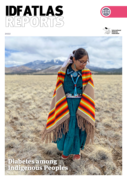
The IDF Diabetes Atlas report highlights the disproportionate prevalence of type 2 diabetes (T2D) among Indigenous Peoples globally. It emphasizes the social and health disparities resulting from co
...
