
Filter
796
Text search:
Cambodia
Featured
46
222
Language
Document type
475
142
82
32
19
15
7
7
7
6
2
1
Countries
105
62
39
21
15
15
13
13
12
11
11
9
9
9
8
8
7
7
7
6
6
5
5
5
5
4
3
3
3
3
3
3
3
2
2
2
2
2
2
2
2
2
2
2
2
2
2
1
1
1
1
1
1
1
1
1
1
1
1
1
1
1
1
1
1
1
1
1
1
1
1
Authors & Publishers
Publication Years
Category
226
57
55
55
53
19
11
Toolboxes
79
65
60
38
36
33
32
31
21
19
15
14
11
11
10
10
10
7
7
7
7
4
4
1
The Mekong Malaria Elimination (MME) programme is an initiative aimed at supporting Greater Mekong Subregion (GMS) countries – Cambodia, Lao People's Democratic Republic, Myanmar, Thailand, Viet Nam, and Yunnan (China) – in achieving the goal of
...
This brief focuses on disability rights in the ASEAN countries, namely Brunei Darussalam, Cambodia, Indonesia, Lao People’s Democratic
Republic (PDR), Malaysia, Myanmar, the Philippines, Singapore, Thailand and Viet Nam.
The Mekong Malaria Elimination (MME) programme is an initiative aimed at supporting Greater Mekong Subregion (GMS) countries – Cambodia, Lao People's Democratic Republic, Myanmar, Thailand, Viet Nam, and Yunnan (China) – in achieving the goal of
...
The purpose of this document is to share good practices and processes concerning the inclusion of disability issues in HIV policy and programming, drawing on specific experiences in Senegal, Ethiopia, Kenya, Rwanda and Cambodia and on lessons learne
...

Findings on maternal and child health in Nepal, Mozambique and
Rwanda, and neglected tropical diseases in Cambodia and Sierra Leone | This report synthesises findings from five country case studies from the health dimension of this project, which f
...
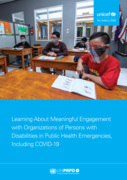
This report presents the findings from a ‘deep dive’ undertaken by UNICEF East Asia and the Pacific Regional Office to consider the experiences in Cambodia, Indonesia, the Lao People’s Democratic Republic, Malaysia, Myanmar, the Philippines an
...
The WHO Mekong Malaria Elimination programme hosted a two-day workshop in Nha Trang City, Viet Nam, from 31 October to 1 November 2024, gathering representatives from the Greater Mekong Subregion (GMS) countries of Cambodia, China, the Lao People’
...

The annual bulletin of the Mekong Malaria Elimination (MME) programme is a yearly report that reviews ongoing efforts to combat multidrug resistance and eliminate malaria in the 6 countries of the Greater Mekong subregion (GMS): Cambodia, China (Yun
...
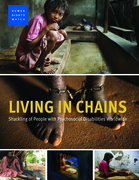
The report examines how people with mental health conditions are often shackled by families in their own homes or in overcrowded and unsanitary institutions, against their will, due to widespread stigma and a lack of mental health services.
Many are forced to eat, sleep, urinate, and defecate in t
...
Trop. Med. Infect. Dis. 2019, 4, 40; Schistosomiasis is an infectious disease caused by helminth parasites of the genus Schistosoma. Worldwide, an estimated 250 million people are infected with these parasites with the majority of cases occurring in sub-Saharan Africa. Within Asia, three species of
...

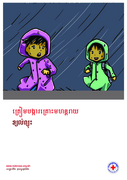
A road to resilience in Southeast Asia
This comic book is a children-friendly tool to support school safety, to raise awareness and preparedness for typhoon and cyclone.
This comic book is a children-friendly tool to support school safety, to raise awareness and preparedness for typhoon and cyclone.
Talking About Corona-19
in English and Vietnamese
Informations for Kids
En 2014, le taux de mortalité maternelle au Cambodge était estimé à 170 décès pour 100 000 naissances vivantes, et le taux de mortalité néonatale à 18 décès pour 1000 naissances vivantes, selon l’enquête démographique et de santé menée au Cambodge en 2014 . Ces chiffres signifient q
...
Dans la plupart des pays, les services de lutte contre la tuberculose (TB) sont décentralisés jusqu’aux dispensaires
les plus périphériques et souvent au sein même des villages et des quartiers. Par contre, les services
de lutte contre le VIH/Sida sont généralement beaucoup plus centralis
...
