
Filter
1759
Text search:
Latin
America
Featured
130
270
Language
Document type
630
537
202
117
66
63
36
33
28
16
14
7
7
1
Countries
448
157
59
47
40
29
21
19
18
18
17
15
15
15
15
15
14
14
14
13
12
12
11
11
11
10
10
10
9
8
8
8
8
7
7
7
7
7
7
7
6
6
6
6
6
6
6
6
5
5
5
5
5
5
5
5
5
5
4
4
4
3
3
3
3
3
3
3
3
3
3
2
2
2
2
2
2
2
2
2
2
2
2
2
2
1
1
1
1
1
1
1
1
1
1
1
1
1
1
1
1
1
1
1
1
1
1
1
1
1
Authors & Publishers
Publication Years
Category
550
145
129
126
115
29
12
3
Toolboxes
248
176
157
115
90
70
57
54
50
47
41
40
37
34
32
30
24
23
20
18
17
9
8
6
4
1
This Topic Guide has been compiled to provide an overview of undernutrition in the context of development. The focus of the Guide is on undernutrition, defined as the outcome of insufficient (quantity and quality) of food intake (hunger) and repeated infectious diseases. Undernutrition includes bein
...
Guidelines for essential trauma care
recommended
The Guidelines for essential trauma care seek to set achievable standards for trauma treatment services which could realistically be made available to almost every injured person in the world. They then seek to define the resources that would be necessary to assure such care. These include human res
...

This manual is a guide to psychosocial interventions to help people cope with the emotional effects of disasters. Some are direct responses to the trauma of disasters, while others are longer-term responses. Even more than the physical effects of disasters, the emotional effects cause long-lasting s
...
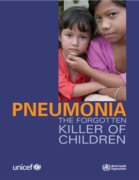
Pneumonia kills more children than any other illness – more than AIDS, malaria and measles combined. Over 2 million children die from pneumonia each year, accounting for almost 1 in 5 under five deaths worldwide. Yet, little attention is paid to this disease. This joint UNICEF/WHO report examines
...
This publications outlines the specific reproductive health needs of this cadre of adolescents and the programmatic responses that can be used to reach them.
Chapter 1 provides new data on the latest developments in the global treatment effort, highlighting positive trends as well as aspects that require improvement. Chapter 2 summarizes the impact of the scale-up in reducing AIDS-related mortality and new HIV infections. Chapter 3 examines the sequence
...
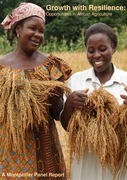
- Resilient Markets
- Resilient Agriculture
- Resilient People
- Political Leadership for Resilient Growth
- The Role of Plant Nutrition in Supporting Food Security
- Micronutrient Malnutrition: Causes, Prevalence, Consequences and Interventions
- Fertilizer Application and Nutraceutical Content in
Health-Functional Foods
- Plant Nutrition and Health Risks Associated with Plant Diseases
- Human Heal
...
Millennium Development Goal 8E aims for affordable access to essential medicines. Essential medicines, as defined by WHO, are those that “satisfy the health-care needs of the majority of the population” and that should therefore “be available at all times in adequate amounts”. However, there
...
This book is aimed at policymakers in ministries of agriculture and national agricultural research institutes, as well as multilateral development banks and the private sector and provides guidance on various technology strategies and which to pursue as competition grows for land, water, and energy
...
The Baby-friendly Hospital Initiative (BFHI) is a global effort launched by WHO and UNICEF to implement practices that protect, promote and support breastfeeding. It was launched in 1991 in response to the Innocenti Declaration. The global BFHI materials have been revised, updated and expanded for i
...
The revised package of BFHI materials includes five sections: 1. Background and Implementation, 2. Strengthening and Sustaining the BFHI: A course for decision-makers, 3. Breastfeeding Promotion and Support in a Baby-friendly Hospital: a 20-hour course for maternity staff, 4. Hospital Self-Appraisal
...
'Ethical Issues in Obstetrics and Gynecology' represents the results of carefully researched and considered discussion. The guidelines are intended to provide material for consideration and debate about ethical aspects of our discipline for member organisations and their constituent membership.
This curriculum can be used freely in order to stimulate means of ethical analysis, reflection and decision-making.
