
Filter
1070
Text search:
paid
sex
Featured
79
345
Language
Document type
670
223
76
44
37
7
7
3
2
Countries
80
36
35
34
33
31
27
27
26
26
26
24
24
21
19
19
18
15
15
15
13
13
12
11
11
10
10
10
9
9
8
8
6
6
6
6
5
5
5
5
4
4
4
4
3
3
3
3
3
3
2
2
2
2
2
2
2
2
2
2
2
2
2
2
1
1
1
1
1
1
1
1
1
1
1
1
1
1
1
1
1
1
1
1
1
1
1
1
1
1
Authors & Publishers
Publication Years
Category
551
66
60
55
43
21
5
Toolboxes
75
73
54
49
47
43
36
24
19
18
16
15
14
13
9
7
7
5
4
3
3
3
3
1
1
1
Drawing light from the pandemic: A new strategy for health and sustainable development (2021)
Available in English, French, German and Russian
Healthy communities rely on well-functioning ecosystems. They provide clean air, fresh water, medicines and food security. They also limit disease and stabilize the climate. But biodiversity loss is happening at unprecedented rates, impacting human health worldwide, according to a new state of knowl
...

Why bold action against inequalities is needed to en AIDS, stop COVID-19 and prepare for future pandemics
24 Nov. 2021
Action against gender-based violence being pushed to the outlying margins of the global COVID-19 response
A new Oxfam report shows an undeniable increase in gender-based violence (GBV) during the COVID-19 pandemic around the world to which too many governments and donors are not doi
...

The WHO End TB Strategy aims to end the global TB epidemic by 2030, in alignment with Goal 3 of the United Nations (UN) Sustainable Development Goals (SDGs). Member States of the World Health Organization (WHO) and the UN committed to ending the TB epidemic through adoption of WHO’s End TB Strateg
...
This South-East Asia Regional Strategy for Primary Health Care: 2022-2030 aims to accelerate progress in all countries of the Region towards universal health coverage (UHC), health security and the health-related Sustainable Development Goals (SDGs). It is intended to provide Member States with guid
...

The 2021 COVID-19 Strategic Preparedness and Response Plan (SPRP) for AFR serves as a regional guide for a holistic public health response to COVID‑19 at regional, national and sub-national levels. The 2021
SPRP:
1. Builds upon the lessons learnt from the implementation of the 2020 SPRP and outl
...
Arabic Analysis on World about Food and Nutrition; published on 22 Sep 2021 by UNICEF.
Available in different languages
Noncommunicable diseases (NCDs) are the principal cause of morbidity, disability and premature mortality in Azerbaijan. The most effective way to reduce the NCD burden is to prevent NCD development, by addressing thebehavioural risk factors underlying NCDs at the population and individual leve
...
The overview of findings from five Latin American countries
The unparalleled action needed to combat unprecedented inequality in the wake of COVID-19.
New billionaire minted every 26 hours, as inequality contributes to the death of one person every four seconds
Available in English, French, Spanish and Arabic https://www.oxfam.org/en/research/inequality-ki
...

A study conducted by the World Health Organisation Regional Office for Africa. The COVID-19 pandemic has had a significant impact on older persons both globally and in the African region. Although overall the region’s population is younger relative to many other world regions, the WHO AFRO region
...
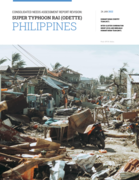
Eight years after Super Typhoon Haiyan, the most destructive storm to ever hit the Philippines, Super Typhoon Rai brought similar torrential rains, violent winds, mudslides, floods and storm surges to central parts of the Philippines, leaving a wide path of destruction and debris in its wake. While
...
A Snapshot of European Collection Schemes
Connecting global priorities: biodiversity and human health: a state of knowledge review
