
Filter
1427
Text search:
companies
Featured
Recommendations
163
New Publications
308
Language
Document type
No document type
610
Studies & Reports
315
Guidelines
247
Manuals
104
Strategic & Response Plan
73
Training Material
28
Fact sheets
25
Situation Updates
10
Resource Platforms
8
Infographics
3
Brochures
2
App
1
Online Courses
1
Countries / Regions
Global
104
Western and Central Europe
46
India
31
South–East Asia Region
22
Latin America and the Carribbean
20
South Africa
19
Ukraine
19
Syria
17
Sierra Leone
16
Africa
16
Eastern Europe
15
Liberia
13
Kenya
13
Nepal
12
Philippines
11
Malawi
11
Tanzania
10
East and Southern Africa
10
Uganda
9
Zambia
9
Namibia
9
Yemen
9
Middle East and North Africa
9
Asia
9
Guinea
8
Nigeria
8
Ghana
8
South Sudan
8
West and Central Africa
8
Congo, Democratic Republic of
7
Ethiopia
7
Zimbabwe
7
Rwanda
7
Eastern Europe and Central Asia
7
Germany
5
Botswana
5
Myanmar / Burma
5
Venezuela
5
Indonesia
4
Bangladesh
4
Mozambique
4
Moldova
4
Senegal
3
USA
3
Cameroon
3
Pakistan
3
Afghanistan
3
Madagascar
3
Western Pacific Region
3
Russia
3
Iran
3
Kazakhstan
3
Mali
2
Jordan
2
Lebanon
2
Cambodia
2
China
2
Benin
2
Central African Republic
2
Brazil
2
North Macedonia
2
Lesotho
2
Tajikistan
2
Estonia
2
Côte d’Ivoire / Ivory Coast
1
Haiti
1
Iraq
1
Turkey
1
Egypt
1
Chad
1
Thailand
1
Papua New Guinea
1
Sudan
1
Eswatini/ Swaziland
1
Serbia
1
Hungary
1
Croatia
1
Angola
1
Sri Lanka
1
Chile
1
Other region
1
Poland
1
Albania
1
Southern Africa
1
Timor Leste/ East Timor
1
Romania
1
Kyrgyzstan
1
Vietnam
1
Turkmenistan
1
Japan
1
Denmark
1
Azerbaijan
1
Belarus
1
Authors & Publishers
Publication Years
Category
Countries
288
Clinical Guidelines
174
Public Health
120
Key Resources
115
Women & Child Health
109
Pharmacy & Technologies
37
Capacity Building
32
Toolboxes
HIV
118
COVID-19
105
Planetary Health
88
TB
84
Mental Health
81
AMR
70
Caregiver
59
NTDs
59
Disability
53
Conflict
46
Rapid Response
46
Global Health Education
44
Pharmacy
38
2.0 Rapid Response
31
Refugee
28
Ebola & Marburg
27
NCDs
26
Health Financing Toolbox
21
Natural Hazards
20
Zika
15
Polio
12
Specific Hazards
12
Malaria
11
Cholera
9
Social Ethics
6
Typhoon
1

About one fourth of the world’s population is estimated to have been infected with the tuberculosis (TB) bacilli, and about 5–10% of those infected develop TB disease in their lifetime. The risk for TB disease after infection depends on several factors, the most important being the person’s im
...
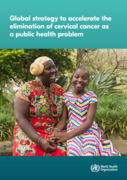
WHO‘s Global Strategy to Accelerate the Elimination of Cervical Cancer, launched today, outlines three key steps: vaccination, screening and treatment. Successful implementation of all three could reduce more than 40% of new cases of the disease and 5 million related deaths by 2050.
Recency assays use one or more biomarkers to identify whether HIV infection in a person is recent (usually within a year or less) or longstanding. Recency assays have been used to estimate incidence in representative cross-sectional surveys and in epidemiological studies to better understand the pat
...

To enhance health co-benefits across urban policies which tackle air pollution and climate change, WHO, in cooperation with various international, national, and local partners, implemented the Urban Health Initiative (UHI) pilot project in Accra, Ghana. The Initiative prompted the health sector to u
...
Cervical cancer is the fourth most common cancer in women worldwide in 2018, with 570,000 new cases and 311,000 deaths occurring annually.T he highest incidence rates are in Southern Africa, Eastern Africa, SubSaharan Africa, Western Africa, Melanesia, and Middle Africa . It also ranks as the leadin
...
WHO recommends member states provide universal access to public hand hygiene stations and making their use obligatory on entering and leaving any public or private commercial building and any public transport facility. It is also recommended that healthcare facilities improve access to and practice
...
An all-hazards tool for hospital administrators and emergency managers.
The World Health Organization Regional Office for Europe has developed the Hospital emergency response checklist to assist hospital administrators and emergency managers in responding effectively to the most likely disaster sce
...
WHO recommends that pre-exposure prophylaxis (PrEP) be offered as an additional prevention choice for HIV-negative individuals at substantial risk of HIV infection as part of combination prevention approaches.
HIV drug resistance has been rarely reported among PrEP users who tested HIV positive i
...
IPCAT2 will assist countries to determine the core components already in place, that is, existing strengths, and to identify gaps or weaknesses to guide action planning. IPCAT2 corresponds to the six core component recommendations of the guidelines targeted at the national level.
It is very impor
...
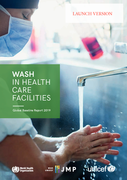
The WHO/UNICEF JMP report, WASH in Health Care Facilities, is the first comprehensive global assessment of water, sanitation and hygiene (WASH) in health care facilities. It also finds that 1 in 5 health care facilities has no sanitation service*, impacting 1.5 billion people. The report further rev
...

Cities are uniquely positioned to understand local needs and respond rapidly to changing conditions to safeguard health. These changes require strong city leadership to implement multisectoral, health-relevant policies and public services that engage communities. The response to malaria must be an i
...

The executive summary of the WHO Global oral health status report presents a snapshot of the most recent data on major oral diseases, risk factors, health system challenges and opportunities for reform. The report’s clear conclusion is that the status of global oral health is alarming and requires
...

Regional Tuberculosis Program, Pan American Health Organization (PAHO/WHO)
31 Janaury 2021
SCORE for health data technical package. The first global assessment on the status and capacity of health information systems in 133 countries, covering 87% of the global population.
It identifies gaps and provides guidance for investment in areas that can have the greatest impact
...
This assessment tool is to support municipalities and local authorities in identifying the risks and vulnerabilities that refugees and migrants face and to identify gaps where possible methods to minimize the impact of the pandemic exist so that they can be prioritized within local policy processes.
...
