
Filter
1244
Text search:
WHO
South
Sudan
Featured
Recommendations
116
New Publications
319
Language
Document type
No document type
606
Studies & Reports
350
Guidelines
101
Manuals
64
Strategic & Response Plan
53
Fact sheets
25
Situation Updates
15
Training Material
14
Infographics
9
Resource Platforms
5
Brochures
1
Online Courses
1
Countries / Regions
South Sudan
128
Global
111
Africa
59
Uganda
56
Ethiopia
44
Syria
42
Kenya
42
Congo, Democratic Republic of
41
Yemen
37
East and Southern Africa
27
Middle East and North Africa
25
West and Central Africa
24
Sudan
23
Liberia
22
Rwanda
20
Nigeria
18
Sierra Leone
17
Central African Republic
17
South Africa
14
Somalia
13
Mozambique
12
Guinea
10
Western and Central Europe
10
Mali
9
Ghana
9
Afghanistan
9
Tanzania
9
Myanmar / Burma
8
Burkina Faso
7
Senegal
7
Zimbabwe
7
Latin America and the Carribbean
7
Asia
7
Cameroon
6
Nepal
6
Zambia
6
Indonesia
6
Bangladesh
6
Ukraine
6
Colombia
6
Niger
5
India
5
Pakistan
5
Lebanon
5
Malawi
5
Burundi
5
South–East Asia Region
5
Palestine
5
Saudi Arabia
4
Haiti
4
Jordan
4
Chad
4
Brazil
4
Iran
4
Guinea-Bissau
3
Côte d’Ivoire / Ivory Coast
3
Togo
3
Philippines
3
Iraq
3
Germany
3
Cambodia
3
China
3
Botswana
3
Libya
3
Angola
3
Mexico
3
Venezuela
3
Tunisia
3
Morocco
2
Egypt
2
Benin
2
Eswatini/ Swaziland
2
Serbia
2
Madagascar
2
Sri Lanka
2
Eastern Europe and Central Asia
2
Russia
2
Vietnam
2
Malaysia
1
Papua New Guinea
1
Vanuatu
1
Namibia
1
Peru
1
North Macedonia
1
Croatia
1
Ecuador
1
Greece
1
Lesotho
1
Western Pacific Region
1
Paraguay
1
Solomon Islands
1
Eastern Europe
1
North Korea
1
Italy
1
Albania
1
Djibouti
1
Armenia
1
Southern Africa
1
Laos
1
Canada
1
Moldova
1
Kyrgyzstan
1
Georgia
1
Gabon
1
Turkmenistan
1
Japan
1
Mauritius
1
Portugal
1
Spain
1
Azerbaijan
1
Israel
1
Bosnia and Herzegovina
1
Authors & Publishers
Publication Years
Category
Countries
298
Key Resources
124
Women & Child Health
102
Public Health
81
Clinical Guidelines
81
Capacity Building
22
Pharmacy & Technologies
8
Toolboxes
COVID-19
130
Conflict
118
HIV
91
Mental Health
82
NTDs
70
Ebola & Marburg
63
Refugee
55
Planetary Health
55
Disability
34
Rapid Response
32
Global Health Education
31
TB
30
Malaria
29
Health Financing Toolbox
27
2.0 Rapid Response
25
Caregiver
18
Cholera
16
Natural Hazards
16
AMR
14
Pharmacy
12
Polio
11
NCDs
10
Specific Hazards
9
Zika
5
South Sudan
2
Community-Based Management of Acute Malnutrition (CMAM) is a decentralised community-based approach to treating acute malnutrition. Treatment is matched to the nutritional and clinical needs of the child, with the majority children receiving treatment at home using ready-to-use foods. In-patient car
...
English Analysis on World and 19 other countries about Agriculture, Food and Nutrition and Drought; published on 13 Jan 2021 by FAO
This analysis focused on the chronic form of HAT caused by T. b. gambiense, as it contributes to the majority of disease burden. Information from the literature review,
product development landscape, and stakeholder interviews was compiled to:
- Identify use cases and understand current diagnosti
...
Parasite Epidemiology and Control Volume 27, November 2024, e00380
The planning and implementation of intervention measures against schistosomiasis, particularly mass administration, require knowledge of the current status of the infection. This is important for monitoring the impact of the interve
...
For most people in displacement contexts, there are simply not enough vaccines available in the places where they are hosted: 85% of refugees are hosted in lower- and middle-income countries, while in the first six months of this year 85% of vaccines went to wealthy countries; lower- and middle inco
...
2nd edition. Known as “Community Case Management of Sick Children” (CCM), this approach sends community-based health workers out to find, diagnose, and successfully treat sick children, in partnership with their families. Inspired by the classic “Immunization Essentials”, this guide methodic
...
BMJ Global Health2020;5:e002014. doi:10.1136/bmjgh-2019-002014
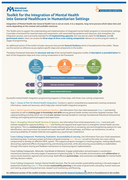
This Toolkit aims to support the understanding and implementation of integrated mental health programs in humanitarian settings. It provides a framework for essential steps and components, with associated key guidance and resources, that strengthen the integration process, and is primarily intended
...
This briefing pack serves this purpose by sharing RCCE/humanitarian coordination experience from country level, feedback from global consultations and addressing frequently asked questions. In parallel, the RCCE Core Group has been working to revise the RCCE Collective Service Strategy. Where possib
...
Background: Comparable estimates of health spending are crucial for the assessment of health systems and to optimally deploy health resources. The methods used to track health spending continue to evolve, but little is known about the distribution of spending across diseases. We developed improved e
...
Int J Environ Res Public Health. 2018 Jun; 15(6): 1279.
Published online 2018 Jun 16. doi: 10.3390/ijerph15061279
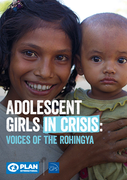
Commissioned by Plan International the report draws on data from research conducted in Bangladesh in April 2018. It explores how adolescent girls within two age brackets (10-14 and 15-19) understand the unique impact the crisis has upon them, and how they have responded to the challenges they face.
...
...
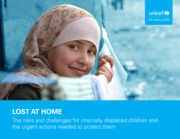
Today, more children than ever before are displaced within their own countries. Their harrowing stories of displacement are unfolding every day, and with increasing frequency. At the end of 2019, approximately 45.7 million people were internally displaced by conflict and violence (Fig. 1.1). Nearly
...
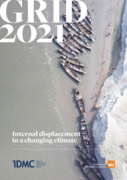
Internal displacement at all-time high after unprecedented year of crises
The total number of people living in internal displacement reached a record 55 million by the end of 2020. During a year marked by intense storms and persistent conflict, 40.5 million new displacements were triggered across
...
