
Filter
1394
Text search:
respiratory
communicable
diseases
control
Featured
Recommendations
153
New Publications
379
Language
Document type
No document type
666
Studies & Reports
271
Guidelines
242
Strategic & Response Plan
73
Manuals
72
Training Material
20
Situation Updates
17
Fact sheets
17
Dashboards/Maps
6
Resource Platforms
4
Infographics
3
Brochures
2
Videos
1
Countries / Regions
Global
121
Kenya
61
India
56
South Africa
45
Western and Central Europe
34
Africa
34
Liberia
33
Ethiopia
33
Latin America and the Carribbean
31
Uganda
29
Bangladesh
29
Nigeria
28
Rwanda
28
Nepal
27
Philippines
25
Ghana
24
Namibia
24
Myanmar / Burma
24
Sierra Leone
23
Zambia
21
Malawi
17
Tanzania
15
Syria
14
Lesotho
13
Eastern Europe
13
Ukraine
12
South–East Asia Region
12
Indonesia
9
East and Southern Africa
9
West and Central Africa
9
Cambodia
8
Mozambique
8
Brazil
8
Zimbabwe
7
Pakistan
7
Western Pacific Region
7
Eastern Europe and Central Asia
7
Asia
7
North America
7
Congo, Democratic Republic of
6
Germany
6
Thailand
6
Botswana
6
Jordan
5
Sudan
5
Colombia
5
Haiti
4
Yemen
4
Guinea
3
Cameroon
3
Somalia
3
South Sudan
3
Iraq
3
Afghanistan
3
Lebanon
3
Argentina
3
Middle East and North Africa
3
Paraguay
3
Venezuela
3
Timor Leste/ East Timor
3
Tajikistan
3
Moldova
3
Iran
3
Burkina Faso
2
Saudi Arabia
2
Turkey
2
Egypt
2
China
2
Papua New Guinea
2
Central African Republic
2
Peru
2
Bolivia
2
Madagascar
2
Bhutan
2
Palestine
2
Albania
2
Laos
2
Russia
2
Bulgaria
2
Mauritius
2
Senegal
1
Mali
1
Morocco
1
USA
1
Gambia
1
Benin
1
Eswatini/ Swaziland
1
North Macedonia
1
Hungary
1
Burundi
1
El Salvador
1
Greece
1
Libya
1
Angola
1
Mexico
1
Sri Lanka
1
Chile
1
Other region
1
Poland
1
Djibouti
1
Southern Africa
1
Qatar
1
Romania
1
Slovakia
1
Kyrgyzstan
1
Kazakhstan
1
Georgia
1
Maldives
1
Tunisia
1
Azerbaijan
1
Authors & Publishers
Publication Years
Category
Countries
642
Public Health
205
Clinical Guidelines
126
Key Resources
72
Women & Child Health
45
Capacity Building
16
Pharmacy & Technologies
13
Toolboxes
NCDs
134
COVID-19
129
TB
102
Planetary Health
63
Rapid Response
52
AMR
43
Global Health Education
40
Caregiver
40
Conflict
35
HIV
33
Mental Health
31
2.0 Rapid Response
26
Ebola & Marburg
23
Refugee
20
NTDs
20
Natural Hazards
15
Pharmacy
14
Health Financing Toolbox
11
Polio
9
Disability
8
Zika
7
Cholera
6
Specific Hazards
6
Malaria
4
Typhoon
1

As a public good, antimicrobial medicines require rational use if their effectiveness is to be preserved. However, up to 50% of antibiotic use is inappropriate, adding considerable costs to patient care, and increasing morbidity and mortality. In addition, there is compelling evidence that antimicro
...

Progress towards targets of the Global action plan on dementia

The Disaster Recovery Framework (DRF) Guide for the Health Sector provides guidance on how to implement a comprehensive, integrated, and structured approach to disaster recovery. Its overarching goal is to minimize the impact of the disaster on communities and help countries to recover quickly and e
...

These guidelines aim to guide all health care providers in Myanmar, accommodating the situation of different settings in the context of progressive decentralization of HIV services. Notable changes from the previous edition include:
• diagnosis of HIV
• update on the initiation of ART
...
• diagnosis of HIV
• update on the initiation of ART
...
Over nine years of protracted and violent conflict in Syria has decimated its health system,killed an estimated 586,000 people and forcibly displaced more than half the 22 million pre-war population from their homes. As of June 2020, a total of 6.2 million Syrians (of whom 40% are children) are inte
...

The annual Development Co-operation Report brings new evidence, analysis and ideas on
sustainable development to members of the OECD Development Assistance Committee (DAC) and the international community more broadly. The objectives are to promote best practices and innovation in development co-ope
...
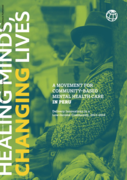
This report explores community-focused change initiatives in the financing, organization, and delivery of mental health services in Peru from 2013 to 2016. It examines the national dimension of reforms but focuses above all on implementation and results in the economically fragile district of Caraba
...
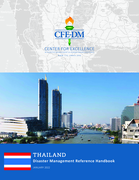
Thailand is exposed to flooding, landslides, drought, earthquakes, tsunamis, heat waves, forest fires, and epidemics. Thailand is also exposed to technological hazards such as chemical accidents. Flooding is the natural hazard with the most significant impact on human life, livelihoods, and the econ
...
The infectious disease burden in India is among the highest in the world. A large amount of antibiot-ics are consumed in fighting infections, some of them saving lives, but every use adding to antibiotic resistance in bacteria. Antibiotic use is increasing steadily (table 1), particularly
...
7 June 2020 Version 1
Women in Myanmar have traditionally been underrepresented in public decision-making processes, a trend which is continuing in structures established to respond to COVID-19. This means that even as women are disproportionately affected by the crisis, they have less say in how t
...

Produced by Training and Research Support Centre for the Regional Network for Equity in Health in east and southern Africa (EQUINET), March 20, 2020.
This brief summarises and provides links to official, scientific and other resources to support an understanding of and individual to regional level
...
Statistical Agency under the President of the Republic of Tajikistan Dushanbe, Republic of Tajikistan
Ministry of Health and Social Protection of Population of the Republic of Tajikistan
Dushanbe, Republic of Tajikistan
The DHS Program ICF
Rockville, Maryland, USA

The availability, prices and affordability of essential medicines in Malawi: A cross-sectional study
The Malawian government recently introduced cost-covering consultation fees for self-referral patients in tertiary public hospitals. Previously, patients received medicines free of charge in government-owned health facilities, but must pay elsewhere. Before the government implements a payment policy
...
This brief considers the rationale for shielding individuals at high risk of severe disease or death from COVID-19 in low- and middleincome countries. It provides an overview of proposed approaches to shielding, discusses the categories of individuals who may be identified for shielding, and outline
...

1 June 2020
Countries around the world are facing the challenge of increased demand for care of people with COVID-19, compounded by fear, misinformation and limitations on movement that disrupt the delivery of health care for all conditions. Maintaining essential health services: operational guidan
...
