Filter
1427
Text search:
companies
Featured
Recommendations
163
New Publications
308
Language
Document type
No document type
610
Studies & Reports
315
Guidelines
247
Manuals
104
Strategic & Response Plan
73
Training Material
28
Fact sheets
25
Situation Updates
10
Resource Platforms
8
Infographics
3
Brochures
2
App
1
Online Courses
1
Countries / Regions
Global
104
Western and Central Europe
46
India
31
South–East Asia Region
22
Latin America and the Carribbean
20
South Africa
19
Ukraine
19
Syria
17
Sierra Leone
16
Africa
16
Eastern Europe
15
Liberia
13
Kenya
13
Nepal
12
Philippines
11
Malawi
11
Tanzania
10
East and Southern Africa
10
Uganda
9
Zambia
9
Namibia
9
Yemen
9
Middle East and North Africa
9
Asia
9
Guinea
8
Nigeria
8
Ghana
8
South Sudan
8
West and Central Africa
8
Congo, Democratic Republic of
7
Ethiopia
7
Zimbabwe
7
Rwanda
7
Eastern Europe and Central Asia
7
Germany
5
Botswana
5
Myanmar / Burma
5
Venezuela
5
Indonesia
4
Bangladesh
4
Mozambique
4
Moldova
4
Senegal
3
USA
3
Cameroon
3
Pakistan
3
Afghanistan
3
Madagascar
3
Western Pacific Region
3
Russia
3
Iran
3
Kazakhstan
3
Mali
2
Jordan
2
Lebanon
2
Cambodia
2
China
2
Benin
2
Central African Republic
2
Brazil
2
North Macedonia
2
Lesotho
2
Tajikistan
2
Estonia
2
Côte d’Ivoire / Ivory Coast
1
Haiti
1
Iraq
1
Turkey
1
Egypt
1
Chad
1
Thailand
1
Papua New Guinea
1
Sudan
1
Eswatini/ Swaziland
1
Serbia
1
Hungary
1
Croatia
1
Angola
1
Sri Lanka
1
Chile
1
Other region
1
Poland
1
Albania
1
Southern Africa
1
Timor Leste/ East Timor
1
Romania
1
Kyrgyzstan
1
Vietnam
1
Turkmenistan
1
Japan
1
Denmark
1
Azerbaijan
1
Belarus
1
Authors & Publishers
Publication Years
Category
Countries
288
Clinical Guidelines
174
Public Health
120
Key Resources
115
Women & Child Health
109
Pharmacy & Technologies
37
Capacity Building
32
Toolboxes
HIV
118
COVID-19
105
Planetary Health
88
TB
84
Mental Health
81
AMR
70
Caregiver
59
NTDs
59
Disability
53
Conflict
46
Rapid Response
46
Global Health Education
44
Pharmacy
38
2.0 Rapid Response
31
Refugee
28
Ebola & Marburg
27
NCDs
26
Health Financing Toolbox
21
Natural Hazards
20
Zika
15
Polio
12
Specific Hazards
12
Malaria
11
Cholera
9
Social Ethics
6
Typhoon
1
Ramped-up cancer services could save 7 million lives over the next decade—and addressing huge service gaps between rich and poor countries is key to success, according to this report.
In 2019, over 90% of high-income countries reported that comprehensive cancer treatment services were available
...
This guideline provides evidence-informed guidance on the use of non-sugar sweeteners to reduce the risk of unhealthy weight gain and diet-related noncommunicable diseases in adults and children. The guidance in this guideline is not based on toxicological assessments of the safety of individual no
...
The core of the strategy is the goal for all patients to have better overall care, so that the numbers of deaths and cases of disability are reduced by 50% before 2030. For this to be achieved, four strategic aims will be pursued.
Empower and engage communities,
Ensure safe, effective trea
...
Strengthening health-system emergency preparedness.
Planned and regulated task shifting and task sharing can have a range of benefits. It can ensure a rational optimization of the available health workforce, address health system shortages of specialized health-care professionals, improve equity in access to health care and increase the acceptability
...

The purpose of the landscape analysis is ultimately to facilitate improved engagement of private providers, thereby contributing to universal access to quality and affordable TB care and the end of the TB epidemic. It focuses on the role of private for-profit providers and on specific challenges and
...

This tool offers practical advice on implementing HIV and STI programmes for and with sex workers. It is based on the recommendations in the guidance document on Prevention and treatment of HIV and other sexually transmitted infections for sex workers in low- and middle-income countries published in
...
HIV drug resistance strategies focus on prevention through adherence and treatment optimization, surveillance to monitor resistance trends, and innovation in new drugs and diagnostics. Key approaches include implementing national action plans, strengthening laboratory capacity for monitoring, and pr
...
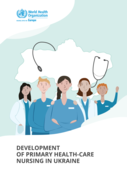
Nurses play a key role in the provision of primary health care (PHC) and the coordination and organization of medical care overall. Nurses are often the first point of contact with the health system and have an important role to play in leaving no one behind.
Large-scale reform of PHC in Uk
...
his practical Guide serves as a companion to the “WHO guideline: recommendations on digital interventions for health system strengthening” and provides a systematic process for countries to develop a costed implementation plan for digital health within one or more health programme areas, drawing
...
There is growing international consensus that food systems transformation is important to address the challenges of malnutrition in all its forms, the burden of noncommunicable diseases (NCDs), environmental sustainability, increasing inequality and ensuring the welfare of workers and animals. In li
...
Health care-associated infections (HAI) are one of the most common adverse events in care delivery and a major public health problem with an impact on morbidity, mortality and quality of life. At any one time, up to 7% of patients in developed and 10% in developing countries will acquire at least on
...
Guide to cancer early diagnosis
recommended

This update of the Guidelines for poison control, entitled Guidelines for establishing a poison centre, reflects the development of the role of poison centres in public health and the sound management of chemicals, described in section 1, and the opportunities provided by new technology. Assessments
...

This report compiles data for the first time on the far-reaching consequences of uncontrolled hypertension, including heart attacks, strokes and premature death, along with substantial economic losses for communities and countries. It also contains information on the global, regional and country-lev
...
A total of 18 laboratories from 13 countries participated in the four rounds of EQA: 10 laboratories from eight African endemic countries, four of which participated in all four rounds and three in three rounds. The overall results showed that the median performance of these laboratories improved ov
...