
Filter
2362
Text search:
sustainability
analysis
Featured
173
674
Language
2315
54
50
25
22
21
13
7
6
3
2
2
2
2
2
2
2
2
2
2
2
1
1
1
1
1
1
1
1
1
1
1
1
1
1
1
1
Document type
1168
575
239
163
141
32
17
16
7
3
1
Countries
161
84
64
62
62
53
51
50
49
46
43
40
40
39
38
38
37
35
32
30
28
23
23
21
21
21
20
19
17
17
17
15
15
15
13
12
12
12
11
11
9
8
8
8
7
7
7
7
7
6
6
6
6
6
5
5
5
5
5
4
4
4
4
4
4
4
4
3
3
3
3
3
3
3
3
3
3
3
3
2
2
2
2
2
2
2
2
2
2
2
2
2
2
2
1
1
1
1
1
1
1
1
1
1
1
1
1
1
1
1
1
1
1
1
1
1
1
1
1
1
1
Authors & Publishers
298
77
64
57
45
42
41
40
29
26
18
16
15
14
14
13
13
12
11
11
11
11
11
10
10
10
9
9
8
8
7
7
7
7
7
6
6
6
6
6
6
6
6
6
6
6
6
6
5
5
5
5
5
5
5
5
5
5
5
5
5
5
5
5
4
4
4
4
4
4
4
4
4
4
4
4
4
4
4
4
4
4
4
4
4
4
4
4
4
4
4
4
4
4
4
3
3
3
3
3
3
3
3
3
3
3
3
3
3
3
3
3
3
3
3
3
3
3
3
3
3
3
3
3
3
3
3
3
3
3
3
3
3
3
3
3
3
3
3
3
3
3
3
3
3
3
3
3
3
2
2
2
2
2
2
2
2
2
2
2
2
2
2
2
2
2
2
2
2
2
2
2
2
2
2
2
2
2
2
2
2
2
2
2
2
2
2
2
2
2
2
2
2
2
2
2
2
2
2
2
2
2
2
2
2
2
2
2
2
2
2
2
2
2
2
2
2
2
2
2
2
2
2
2
2
2
2
2
2
2
2
2
2
2
2
2
2
2
2
2
2
2
2
2
2
2
2
2
2
2
2
2
2
2
2
2
2
2
2
2
2
2
2
2
2
2
2
2
2
2
2
2
2
2
2
2
2
2
2
2
2
2
2
2
2
2
2
2
2
2
2
2
2
2
2
2
2
1
1
1
1
1
1
1
1
1
1
1
1
1
1
1
1
1
1
1
1
1
1
1
1
1
1
1
1
1
1
1
1
1
1
1
1
1
1
1
1
1
1
1
1
1
1
1
1
1
1
1
1
1
1
1
1
1
1
1
1
1
1
1
1
1
1
1
1
1
1
1
1
1
1
1
1
1
1
1
1
1
1
1
1
1
1
1
1
1
1
1
1
1
1
1
1
1
1
1
1
1
1
1
1
1
1
1
1
1
1
1
1
1
1
1
1
1
1
1
1
1
1
1
1
1
1
1
1
1
1
1
1
1
1
1
1
1
1
1
1
1
1
1
1
1
1
1
1
1
1
1
1
1
1
1
1
1
1
1
1
1
1
1
1
1
1
1
1
1
1
1
1
1
1
1
1
1
1
1
1
1
1
1
1
1
1
1
1
1
1
1
1
1
1
1
1
1
1
1
1
1
1
1
1
1
1
1
1
1
1
1
1
1
1
1
1
1
1
1
1
1
1
1
1
1
1
1
1
1
1
1
1
1
1
1
1
1
1
1
1
1
1
1
1
1
1
1
1
1
1
1
1
1
1
1
1
1
1
1
1
1
1
1
1
1
1
1
1
1
1
1
1
1
1
1
1
1
1
1
1
1
1
1
1
1
1
1
1
1
1
1
1
1
1
1
1
1
1
1
1
1
1
1
1
1
1
1
1
1
1
1
1
1
1
1
1
1
1
1
1
1
1
1
1
1
1
1
1
1
1
1
1
1
1
1
1
1
1
1
1
1
1
1
1
1
1
1
1
1
1
1
1
1
1
1
1
1
1
1
1
1
1
1
1
1
1
1
1
1
1
1
1
1
1
1
1
1
1
1
1
1
1
1
1
1
1
1
1
1
1
1
1
1
1
1
1
1
1
1
1
1
1
1
1
1
1
1
1
1
1
1
1
1
1
1
1
1
1
1
1
1
1
1
1
1
1
1
1
1
1
1
1
1
1
1
1
1
1
1
1
1
1
1
1
1
1
1
1
1
1
1
1
1
1
1
1
1
1
1
1
1
1
1
1
1
1
1
1
1
1
1
1
1
1
1
1
1
1
1
1
1
1
1
1
1
1
1
1
1
1
1
1
1
1
1
1
1
1
1
1
1
1
1
1
1
1
1
1
1
1
1
1
1
1
1
1
1
1
1
1
1
1
1
1
1
1
1
1
1
1
1
1
1
1
1
1
1
1
1
1
1
1
1
1
1
1
1
1
1
1
1
1
1
1
1
1
1
1
1
1
1
1
1
1
1
1
1
1
1
1
1
1
1
1
1
1
1
1
1
1
1
1
1
1
1
1
1
1
1
1
1
1
1
1
1
1
1
1
1
1
1
1
1
1
1
1
1
1
1
1
1
1
1
1
1
1
1
1
1
1
1
1
1
1
1
1
1
1
1
1
1
1
1
1
1
1
1
1
1
1
1
1
1
1
1
1
1
1
1
1
1
1
1
1
1
1
1
1
1
1
1
1
1
1
1
1
1
1
1
1
1
1
1
1
1
1
1
1
1
1
1
1
1
1
1
1
1
1
1
1
1
1
1
1
1
1
1
1
1
1
1
1
1
1
1
1
1
1
1
1
1
1
1
1
1
1
1
1
1
1
1
1
1
1
1
1
1
1
1
1
1
1
1
1
1
1
1
1
1
1
1
1
1
1
1
1
1
1
1
1
1
1
1
1
1
1
1
1
1
1
1
1
1
1
1
1
1
1
1
1
1
1
1
1
1
1
1
1
1
1
1
1
1
1
1
1
1
1
1
1
1
1
1
1
1
1
1
1
1
1
1
1
1
1
1
1
1
1
1
1
1
1
1
1
1
1
1
1
1
1
1
1
1
1
1
1
1
1
1
1
1
1
1
1
1
1
1
1
1
1
1
1
1
1
1
1
1
1
1
1
1
1
1
1
1
1
1
1
1
1
1
1
1
1
1
1
1
1
1
1
1
1
1
1
1
1
1
1
1
1
1
1
1
1
1
1
1
1
1
1
1
1
1
1
1
1
1
1
1
1
1
1
1
1
1
1
1
1
1
1
1
1
1
1
1
1
1
1
1
1
1
1
1
1
1
1
1
1
1
1
1
1
1
1
1
1
1
1
1
1
1
1
1
1
1
1
1
1
1
1
1
1
1
1
1
1
1
1
1
1
1
1
1
1
1
1
1
1
1
1
1
1
1
1
1
1
1
1
1
1
1
1
1
1
1
1
1
1
1
1
1
1
1
1
1
1
1
1
1
1
1
1
1
1
1
1
1
1
1
1
1
1
1
1
1
1
1
1
1
1
1
1
1
1
1
1
1
1
1
1
1
1
1
1
1
1
1
1
1
1
1
1
1
1
1
1
1
1
1
1
1
1
1
1
1
1
1
1
1
1
1
1
1
1
1
1
1
1
1
1
1
1
1
1
1
1
1
1
1
1
1
1
1
1
1
1
1
1
1
1
1
1
1
1
1
1
1
1
1
1
1
1
1
1
1
1
1
1
1
1
1
1
1
1
1
1
1
1
1
1
1
1
1
1
1
1
1
1
1
1
1
1
1
1
1
1
1
1
1
1
1
1
1
1
1
1
1
1
1
1
1
1
1
1
1
1
1
1
1
1
1
1
1
1
1
1
1
1
1
1
1
1
1
1
1
1
1
1
1
1
1
1
1
1
1
1
1
1
1
1
1
1
1
1
1
1
1
1
1
1
1
1
1
1
1
1
1
1
1
1
1
1
1
1
1
1
1
1
1
1
1
1
1
1
1
1
1
1
1
1
1
1
1
1
1
1
1
1
1
1
1
1
1
1
1
1
1
1
1
1
1
1
1
1
1
1
1
1
1
1
1
1
1
1
1
1
1
1
1
1
1
1
1
1
1
1
1
1
1
1
1
1
1
1
1
1
1
1
1
1
1
1
1
1
1
1
1
1
1
1
1
1
1
1
1
1
1
1
1
1
1
1
1
1
1
1
1
1
1
1
1
1
1
1
1
1
1
1
1
1
1
1
1
1
1
1
1
1
1
1
1
1
1
1
1
1
1
1
1
1
1
1
1
1
1
1
1
1
1
1
1
1
1
1
1
1
1
1
1
1
1
1
1
1
1
1
1
1
1
1
1
1
1
1
1
1
1
1
1
1
1
1
1
1
1
1
1
1
1
1
1
1
1
1
1
1
1
1
1
1
1
1
1
1
1
1
1
1
1
1
1
1
1
1
1
1
1
1
1
1
1
1
1
1
1
1
1
1
1
1
1
1
1
1
1
1
1
1
1
1
1
1
1
1
1
1
1
1
1
1
1
1
1
1
1
1
1
1
1
1
1
1
1
1
1
1
1
1
1
1
1
1
1
1
1
1
1
1
1
1
1
1
1
1
1
1
1
1
1
1
1
1
1
1
1
1
1
1
1
1
1
1
1
1
1
1
1
1
1
1
1
1
1
1
1
1
1
1
1
1
1
1
1
1
1
1
1
1
1
1
1
1
1
1
1
1
1
1
1
1
1
1
1
1
1
1
1
1
1
1
1
1
1
1
1
1
1
1
1
1
1
1
1
1
1
1
1
1
1
1
1
1
1
1
1
1
1
1
1
1
1
1
1
1
1
1
1
1
1
1
1
1
1
1
1
1
1
1
1
1
1
1
1
1
1
1
1
1
1
1
1
1
1
1
1
1
1
1
1
1
1
1
1
1
1
1
1
1
1
1
1
1
1
1
1
1
1
1
1
1
1
1
1
1
1
1
1
1
1
1
1
1
1
1
1
1
1
1
1
1
1
1
1
1
1
1
1
1
1
1
1
1
1
1
1
1
1
1
1
1
1
1
1
1
1
1
1
1
1
1
1
1
1
1
1
1
1
1
1
1
1
1
1
1
1
1
1
1
1
1
1
1
1
1
1
1
1
1
1
1
1
1
1
1
1
1
1
1
1
1
1
1
1
1
1
1
1
1
1
1
1
1
1
1
1
1
1
1
1
1
1
1
1
1
1
1
1
1
1
1
1
1
1
1
1
1
1
1
1
1
1
1
1
1
1
1
1
1
1
1
1
1
1
1
1
1
1
1
Publication Years
766
1424
164
8
Category
915
242
164
111
82
36
10
Toolboxes
224
108
95
90
88
87
83
81
76
72
68
64
52
44
40
39
39
38
36
31
14
13
13
6
5
1
1
External quality assessment (EQA) is an important component of quality systems for blood transfusion services. Establishing external quality assessment programmes for screening of donated blood for transfusion-transmissible infections (TTI): implementation guide aims to support WHO member States in
...
establishing and operating EQA programmes for screening donated blood for TTI. The guides has been designed for use by national health authorities and EQA organizing institutions in the development of EQA programme. It will also give participating laboratories an insight into the organization of EQA programmes for TTI screening and an understanding of the benefits of participation.
more

The overall goal of the programme, to reduce the malaria morbidity and mortality by 75% (using 2012 as baseline) by the year 2020, continued to be pursued in 2014. The following areas were identified as some of the priorities for the year: Malaria Case Management under which we have Malaria in Pregn
...
ancy (MIP), Home Based Care and Diagnostics.
more
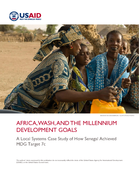
Nationally, Senegal met the MDG target for water supply access. It did this by engaging the public and private sectors to effectively invest and report on investments. It focused on larger population centers, less on remote regions of the country. Its achievements set the stage for more equitable an
...
d widespread service provision as the country now works to achieve the SDGs, requiring sustainable management of universal access. This case study documents the progression of the sector between 1990 and 2015, and analyzes the impact of local systems created in Senegal to respond to the water and sanitation challenge.
more
This external performance evaluation of the Malawi Girls’ Empowerment through Education and Health Activity (ASPIRE), conducted 2.5 years after ASPIRE began, establishes the activity’s progress against its objectives, proposes adaptations for the final year, and captures lessons for application
...
in future girls’ empowerment, health, and education programming in Malawi.
more
A comprehensive compilation is provided of the medicinal plants of the Southeast Asian country of Myanmar (formerly Burma). This contribution, containing 123 families, 367 genera, and 472 species, was compiled from earlier treatments, monographs, books, and pamphlets, with some medicinal uses and pr
...
eparations translated from Burmese to English. The entry for each species includes the Latin binomial, author(s), common Myanmar and English names, range, medicinal uses and preparations, and additional notes. Of the 472 species, 63 or 13% of them have been assessed for conservation status and are listed in the IUCN Red List of Threatened Species (IUCN 2017). Two species are listed as Extinct in the Wild, four as Threatened (two Endangered, two Vulnerable), two as Near Threatened, 48 Least Concerned, and seven Data Deficient. Botanic gardens worldwide hold 444 species (94%) within their living collections, while 28 species (6%) are not found any botanic garden. Preserving the traditional knowledge of Myanmar healers contributes to Target 13 of the Global Strategy for Plant Conservation
more

An action research conducted in Bang Shau village Northern Shan State, Myanmar
The training is targeted at all professionals involved in the management of drinking-water safety. The handbook is divided into three parts:
• Part 1 – Overview of the training approach, training structure and mode of training assessment
• Part 2 – Module learning material, which i ... ncludes module objectives, delivery information, key points and exercises
• Part 3 – How the material can be adapted to different utility contexts more
• Part 1 – Overview of the training approach, training structure and mode of training assessment
• Part 2 – Module learning material, which i ... ncludes module objectives, delivery information, key points and exercises
• Part 3 – How the material can be adapted to different utility contexts more
The workshop is structured around 13 learning modules. The first module (Introduction) gives an overview of WSPs. The last module (Module 12) introduces participants to the quality assurance tool for WSPs (WHO & IWA, 2012). Modules 1–11 relate explicitly to the WSP manual produced by IWA and WHO (
...
Bartram et al., 2009), from which the workshop is designed.
more
This publication presents guidance on good practice from the Ayeyarwaddy Delta in Myanmar, outlining the key factors which contributed to the successful implementation and outcome of a range of community-based Disaster Risk Reduction initiatives implemented by the Myanmar Consortium for Community Re
...
silience (MCCR).
The content was developed over a period of two months between November-December 2015, involving a desk review of MCCR project documents including impact studies, monitoring reports and newsletters. Field visits were undertaken to the Ayeyarwaddy Delta to document the perspectives of key stakeholders at community level, including a total of 93 adults (men and women) and 57 children (girls and boys) from eight communities targeted under the DIPECHO IX project. more
The content was developed over a period of two months between November-December 2015, involving a desk review of MCCR project documents including impact studies, monitoring reports and newsletters. Field visits were undertaken to the Ayeyarwaddy Delta to document the perspectives of key stakeholders at community level, including a total of 93 adults (men and women) and 57 children (girls and boys) from eight communities targeted under the DIPECHO IX project. more
The CBDRR Manual is a practical ‘how-to’ guide on community-based disaster risk reduction for government and non-government agencies in Lao PDR. It is a commonly agreed document to be referred to by agencies working on CBDRR in Lao PDR. It provides guidance and support for systematic implementat
...
ion of CBDRR programs by explaining each of the steps as well as tools used.
The manual will also support the Government of Lao PDR (GoL) to monitor CBDRR activities, oversee progress of activities implemented by different actors and locations, provide necessary support on CBDRR technical knowledge as well as provide a reference point for replication of initiatives for local government and implementing agencies. more
The manual will also support the Government of Lao PDR (GoL) to monitor CBDRR activities, oversee progress of activities implemented by different actors and locations, provide necessary support on CBDRR technical knowledge as well as provide a reference point for replication of initiatives for local government and implementing agencies. more

Green Climate Fund Proposal Toolkit 2017: Toolkit to develop a project proposal for the GCF
Fayolle, Virginie; Odianose, Serena
Acclimatise, Climate and Development Knowledge Network (CDKN)
(2017)
C1
The GCF aims to support developing countries in achieving a paradigm shift to low-emission and climate-resilient pathways. This is achieved by funding innovative and transformative lowemission (mitigation) and climate-resilient (adaptation) projects and programmes developed by the public and private
...
sectors to contribute to the implementation of national climate change priorities in developing countries. While it is relatively easy to tell what a mitigation project or programme is (i.e. its contribution to the reduction of greenhouse gases in the atmosphere, and/or whether it increases the capacity of an ecosystem to absorb them), the blurred line between a general development project and an adaptation project has been a contentious issue in the international climate finance debate. The relevant question is not whether a project is (also) a development project, but whether the project contributes to adaptation (i.e. what the adaptation/additionality argument is).
This toolkit helps governments and project developers understand how to fulfil the Green Climate Fund’s requirements when developing a fully-fledged funding proposal. more
This toolkit helps governments and project developers understand how to fulfil the Green Climate Fund’s requirements when developing a fully-fledged funding proposal. more
The BRACED Myanmar Alliance was a three-year project aiming to ‘build the resilience of 350,000 people across Myanmar to climate extremes’. The project worked in 7 states, 8 townships and 155 communities. The main impact for project populations was intended to be ‘improved well-being and reduc
...
ed loss and damage despite climate shocks’, and the project sought to do this by addressing immediate hazard-related needs at community level while encouraging longer-term solutions driven and delivered by communities and subnational and national government.
Community Resilience Assessments (CRAs) were the first activities delivered as part of the project, and the list of community-identified needs became the basis from which local-level project interventions were selected. The selection typically involved an infrastructure requirement (linked to addressing a natural hazard, and sometimes shared between communities); a package of livelihood support (assets and trainings); capacity-building on climate change/resilience topics; and village savings and loans association (VSLA) support. A particular emphasis was placed on women’s empowerment, and leadership trainings and support to women’s self-help groups were provided. more
Community Resilience Assessments (CRAs) were the first activities delivered as part of the project, and the list of community-identified needs became the basis from which local-level project interventions were selected. The selection typically involved an infrastructure requirement (linked to addressing a natural hazard, and sometimes shared between communities); a package of livelihood support (assets and trainings); capacity-building on climate change/resilience topics; and village savings and loans association (VSLA) support. A particular emphasis was placed on women’s empowerment, and leadership trainings and support to women’s self-help groups were provided. more
The “Case Study: CDI2WASH Program” depicts the benefits and lessons learnt by the beneficiaries and change agents in CDI2WASH program during the last 4 years. The document has contained the success of the project and accumulated learning have been documented in the publication. It upholds the ac
...
hievement of the process and will remain as the supportive document help while taking any types of WASH development interventions by any stakeholders.
No publication year indicated. more
No publication year indicated. more

The strategic priorities of the CCS 2014–2018 are:
(1) Strengthening the health system.
(2) Enhancing the achievement of communicable disease control targets.
(3) Controlling the growth of the noncommunicable disease burden.
(4) Promoting health throughout the life course.
... (5) Strengthening capacity for emergency risk management and surveillance systems for various health threats. more
(1) Strengthening the health system.
(2) Enhancing the achievement of communicable disease control targets.
(3) Controlling the growth of the noncommunicable disease burden.
(4) Promoting health throughout the life course.
... (5) Strengthening capacity for emergency risk management and surveillance systems for various health threats. more

The National Health Plan (NHP) aims to strengthen the country’s health system and pave the way towards Universal Health Coverage (UHC),choosing a path that is explicitly pro-poor. The main goal of NHP 2017-2021 is to extend access to a Basic Essential Package of Health Services (EPHS) to the entir
...
e population by 2020 while increasing financial protection.
more

The National Strategic Plan is based on the following guiding principles:
1) Life-course approach: adolescence is a key decade in the course of life that influences the health outcomes later in life.
2) Comprehensive approach: It recognizes the cross cutting health and development needs o ... f young people such as intentional and unintentional injuries and violence, SRH, HIV/AIDS, mental health, substance use, violence, substance use and substance use disorders, infectious diseases and common conditions.
3) Equity and rights-based approach: focusing on equitable access to services to all adolescents including vulnerable groups and the recognizing the need to move from aspirations to obligations in fulflling young people rights for the highest attainable standard of health.
4) Multisectoral approach: recognizing cognizant of the fact that holistic development of young people requires multisectoral approach involving education, social welfare. more
1) Life-course approach: adolescence is a key decade in the course of life that influences the health outcomes later in life.
2) Comprehensive approach: It recognizes the cross cutting health and development needs o ... f young people such as intentional and unintentional injuries and violence, SRH, HIV/AIDS, mental health, substance use, violence, substance use and substance use disorders, infectious diseases and common conditions.
3) Equity and rights-based approach: focusing on equitable access to services to all adolescents including vulnerable groups and the recognizing the need to move from aspirations to obligations in fulflling young people rights for the highest attainable standard of health.
4) Multisectoral approach: recognizing cognizant of the fact that holistic development of young people requires multisectoral approach involving education, social welfare. more

This implementation plan sets out a series of programmatic objectives, activities and outcomes for malaria surveillance strengthening in Myanmar over the next two years. This period represents a key phase as the National Malaria Control Programme (NMCP) strives to build on recent achievements in str
...
engthening core surveillance operations.
more
The primary aim of this assessment is to evaluate current approaches to malaria surveillance in Myanmar and to provide a set of practical and feasible recommendations to further strengthen the surveillance system in the short to medium term. The assessment focuses on the surveillance of malaria case
...
s (as distinct from more general surveillance to support monitoring and evaluation) and, more specifically, on instruments and systems to collect, collate, report and analyse malaria data as a basis for informing malaria control policy and practice.
more
