
Filter
852
Text search:
MSF
Featured
132
296
Language
Document type
515
101
87
53
40
18
16
8
4
4
3
2
1
Countries
71
64
59
45
26
24
24
23
20
19
18
18
17
15
13
13
12
12
12
11
10
10
10
9
8
8
8
8
7
7
7
7
6
6
5
5
5
5
5
4
4
4
4
4
4
3
3
3
3
3
3
3
3
2
2
2
2
2
2
2
2
2
2
2
2
2
2
1
1
1
1
1
1
1
1
1
1
1
1
1
1
1
1
1
1
1
1
1
1
Authors & Publishers
Publication Years
Category
241
106
91
36
25
12
4
Toolboxes
161
83
82
40
36
30
27
27
27
27
16
16
15
14
13
13
6
6
5
4
4
3
3
2
2

The document is a comprehensive practical guide for managing cholera epidemics. It includes detailed instructions on outbreak investigation, control measures, case management, and the organization of treatment facilities. It emphasizes strategies such as rehydration therapy, water sanitation, hygien
...

WHO has published the first-ever guidance on the clinical management of diphtheria. The only previously available guidance was an operational protocol. The new guidance followed the rigorous process for developing guidance at WHO.
It addresses the use of Diphtheria Antitoxin (DAT) in the treatmen
...

An essential component of the return process is counselling, which aims to support counselling beneficiaries to make an informed decision on their future migration pathways. Counselling provides the space for migrants to exert their agency, supports them to prepare for return and positively contr
...

The coronavirus disease (COVID-19) pandemic exacerbated pre-existing inequalities in the treatment and care of noncommunicable diseases (NCDs). This report examines the effect of the COVID-19 pandemic on access to NCD medicines, and the policies and strategies implemented by countries and health sys
...

Asthma is the most common non-communicable disease in children and remains one of the most common throughout the life course. The great majority of the burden of this disease is seen in low-income and middle-income countries (LMICs), which have disproportionately high asthma-related mortality relati
...

Asthma is the most common noncommunicable disease in children, and among the most common in adults. According to the most recent estimates from the Global Asthma Network Phase I study, around one in 10 children and adults have symptoms of asthma and one in 20 school-aged children have severe asthma
...

On August 13, 2024, the Africa CDC declared the mpox outbreak a Public Health Emergency of Continental Security (PHECS). The following day, the WHO declared it a Public Health Emergency of International Concern (PHEIC). A coordinated, continent-wide response is essential, co-led by the African Union
...

Malawi is a landlocked country with a surface area of 118,484 km2. Administratively, the country is divided into three regions, namely the Northern, Central and Southern regions. The country has 28 districts, which are further divided into traditional authorities (TA) ruled by chiefs. The TAs are su
...

The target audience of this document (and the associated online companion tool) includes WHO country offices in Member States of the African Region; Member States’ ministries of health and their public health emergency operation centres; relevant external assessment teams; and partners looking to
...
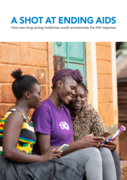
Breakthrough innovations have come to light that have proved to be more than 95% effective in preventing HIV infection with injections just twice a year. Once a year might even be possible. They could also be key for 40 million people living with HIV around the world who need better options for trea
...

Mpox, previously known as monkeypox, is a viral illness caused by the monkeypox virus (MPXV).1
It causes a painful rash, enlarged lymph nodes, fever, headache, muscle ache, back pain and low energy or feeling sick. In most cases, the symptoms of mpox go away within a few weeks with supportive care
...
recommandations à l’intention des agents de santé

The Lancet Infectious Disease Volume 25, Issue 2e77-e85February 2025
Each year since 2007, G-FINDER has provided policy-makers, donors, researchers and industry with a comprehensive analysis of global investment into research and development of new products to
prevent, diagnose, control or cure neglected diseases in low- and middle-income countries, making it the go
...
This publication provides a problem analysis of the U.S. cuts in global health and derives concrete recommendations for action for medical actors. The focus is on analyzing the direct effects on health-specific development cooperation.

This document is for public health specialists, health emergency responders, clinicians, health facility managers, health and care workers and IPC practitioners including but not limited to those working in primary care clinics, sexual health clinics, emergency departments, dental practices, infecti
...

This comprehensive reference document is intended for those responsible for training in SMC (Seasonal Malaria Chemoprevention). It assumes that SMC will be implemented using the Community Health Worker strategy.

Dans certaines parties d’Afrique, la transmission du paludisme a lieu principalement pendant les trois ou quatre mois de la saison des pluies. Environ 39 millions d’enfants de moins de cinq ans vivent dans les zones de transmission saisonnière, où on dénombre environ 34 millions de cas et où
...
