
Filter
1052
Text search:
hearing
problems
Featured
120
240
Language
Document type
725
87
82
68
62
11
8
4
3
1
1
Countries
66
31
29
24
24
23
22
21
17
17
17
16
16
13
11
11
11
11
9
8
7
6
6
5
5
5
5
5
5
4
4
4
4
4
4
4
4
3
3
3
3
3
3
3
2
2
2
2
2
2
2
2
2
2
2
2
2
2
2
1
1
1
1
1
1
1
1
1
1
1
1
1
1
1
1
1
1
1
1
Authors & Publishers
Publication Years
Category
354
63
61
56
50
40
3
Toolboxes
251
178
40
37
35
27
24
16
15
15
13
13
12
9
7
7
7
6
6
5
5
2
1
1
1

In disaster preparedness, the participation of women, children, older people, persons with disabilities (PWDs), and other minority groups and sectors is important because they are the most vulnerable against disasters. Inclusive disaster preparedness provides technical and logical frameworks that as
...
This handbook has been compiled as a source of ideas and experiences that can be used for CLTS orientation workshops, advocacy to stakeholders, training facilitators and natural leaders and implementing CLTS activities. It is a resource book especially for field staff, facilitators and trainers for
...
Wheelchair Service Training Package - Basic level | The main purpose of the training package is to develop the minimum skills and knowledge required by personnel involved in wheelchair service delivery. An important aim of the training package is to get it integrated into the regular paramedical/reh
...

This study aimed to estimate the cost-effectiveness of a community-based rehabilitation (CBR) programme known as Inspire2Care (I2C), implemented in Nepal by Karuna Foundation Nepal. In the absence of any gold standard methodology to measure cost-effectiveness, the authors developed a new methodology
...

This research aims to identify a core set of clinical skills for working in
a Community Based Rehabilitation (CBR) setting, and to discuss whether they are appropriate for task shifting to a new or an alternative cadre of rehabilitation workers.

The Community Action Research on Disability (CARD) programme in Uganda embraced and modified the EDR approach, recognising the need for including people with disability in the research process from concept to outcome, and nurturing participation and collaboration between all the stakeholders in achi
...

Living Conditions among People with Activity Limitations in Zambia: A National Representative Study.
This research report provides results from the study on living conditions among people with disabilities in Zambia. Comparisons are made between individuals with and without disabilities and also between households with and without a disabled family member. Results obtained in Zambia are also compar
...
This is a report from a National, representative household survey carried out in Swaziland in 2009 – 2010. A large amount of effort has been put into this two‐year exercise until finally we can present the results of the combined efforts. First of all, this is a credit to the Federation of Disab
...
This is a report from a National, representative household survey carried out in Botswana in 2012 – 2014. The study was carried out on behalf of the Norwegian Federation of Organisations of Disabled Persons (FFO), Southern Africa Federation of the Disabled (SASFOD) and Botswana Federation of Disab
...
This research report provided results from the study of living conditions among people with functional limitation in Mozambique. Two comparative studies of different indicators of living conditions were carried out. These studies include: (i) a comparative study of households with and without family
...

STUDY REPORT | This study of the impact of the Nepal earthquake of 25 April, 2015, aims to understand the impact factors leading to the exclusion of older people and persons with disabilities from humanitarian action, barriers to their inclusion, and the extent to which their skills and knowledge we
...
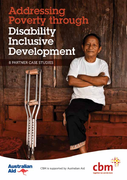
This booklet shows what disability inclusive development for poverty alleviation looks like in a range of settings and with different challenges through eight case studies of projects funded by CBM Australia through the Australian Government NGO Cooperation Program (ANCP).

Lessons learnt from the ADCAP programme | This guide shares good practices and challenges that have emerged through the experience of the Age and Disability Capacity Programme (ADCAP) implementing partners, in embedding inclusion of older people and people with disabilities within their humanitaria
...
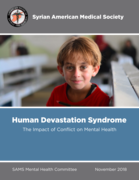
The magnitude and complexity of these mental health conditions caused by prolonged and extensive trauma requires a diagnosis fitting the unique context of the Syrian conflict. Over half a million people have been killed since the beginning of the conflict in 2011, and more than 6.4 million are inter
...

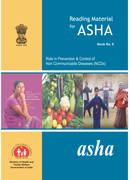
Reading Material for ASHA no.8

Post-traumatic symptoms in Ghanaian children. Thesis for Master of Philosophy in Peace and Conflict Studies (PECOS). This study investigated whether Ghanaian children exposed to low intensity warfare experience symptoms of PTSD as described in the DSM-IV. It also aimed to find out if there are cultu
...
