Filter
433
Text search:
mhGAP
Featured
100
69
Language
Document type
239
68
41
41
14
12
7
7
2
1
1
Countries
14
14
14
13
13
12
10
9
7
6
5
5
5
5
4
4
4
4
4
3
3
3
3
3
3
2
2
2
2
2
2
2
2
2
2
2
2
2
2
2
2
1
1
1
1
1
1
1
1
1
1
1
1
1
1
1
1
1
1
1
1
1
1
1
1
1
1
Authors & Publishers
Publication Years
Category
94
25
17
15
10
7
2
Toolboxes
266
41
25
12
9
9
8
6
6
6
5
3
2
2
2
2
1
Accessed: 10.03.2019
mhGAP Training Manual for the mhGAP Intervention Guide for mental, neurological and substance use disorders in non-specialized health settings – version 2.0 (for field test
...
WHO recommends interpersonal therapy (IPT) as a possible first line treatment for depression. With this new manual, the World Health Organization (WHO) gives guidance on the use of interpersonal therapy (IPT) using a 8 session group protocol. The manual - which is part of WHO’s
...
Данное руководство по применению групповой интерперсональной терапии (групповой ИПТ) в лечении депрессии дополняет собой mental health Gap Action Programme Intervention Guide (
...
utilisant le programme d'action de l'OMS «Combler les lacunes en santé mentale -Guide d'intervention humanitaire (mhGAP-GIH
Describir barreras y desafíos en la implementación del Programa de Acción Mundial para Reducir las Brechas de Atención en Salud Mental mhGAP, y determinar la asociación entre facilitadores de implementación, accesibilidad, aceptabilidad y supe
...

The handbook includes evidence-based mental health interventions, drawn from the WHO mhGAP guidelines for mental, neurological, and substance use disorders (3), particularly those listed in the UHC Compendium. Evidencebased interventions to reduce
...
Objectives and scope of the document
This document was developed to provide recommended management strategies for problems and disorders that are specifically related to the occurrence of a major stressful event. The recommended strategies will form the basis of a new module to be added to the WHO
...
The Thinking Health manual outlines an evidence-based approach describing how community health workers can reduce prenatal depression through evidence-based cognitive-behavioural techniques recommended by the mhGAP programme.
This manual is the fi
...
Este es un manual para capacitar a los agentes de salud de la comunidad sobre la manera de apoyar a las madres con depresión mediante técnicas cognitivo-conductuales basadas en datos científicos, que recomienda el programa mhGAP.
BMC Medicine201210:107
https://doi.org/10.1186/1741-7015-10-107© Katchanov and Birbeck; licensee BioMed Central Ltd. 2012
Received: 10 July 2012Accepted: 24 September 2012Published: 24 September 2012
In 2011, the World Health Organization’s (WHO) mental health Gap Action Programme (
...

SUI supporting material
• Person stories
• Role plays
• Multiple choice questions
• Video link
Activity 2: mhGAP SUI module – assessment and management
Q7. SCOPING QUESTION: In adults with moderate-severe depressive disorder, what is the effectiveness and safety of antidepressant medication (ADM) in comparison with psychological treatment?
The WHO mhGAP programme’s existing guidelines recommen
...

The world is facing an unprecedented range of emergencies. In reaction to these complex adversities, many people experience considerable distress and impairment, and a minority may even go on to develop mental health conditions. Meanwhile, those with pre-existing mental health conditions may experie
...
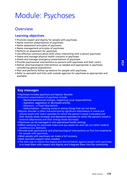
Overview
Learning objectives
• Promote respect and dignity for people with psychoses.
• Name common presentations of psychoses.
• Name assessment principles of psychoses.
• Name management principles of psychoses.
• Perform an assessment for psychoses.
• Use effective communicatio
...

Q11. SCOPING QUESTIONS: In people with psychotic disorders (including schizophrenia and bipolar disorder) are recovery-oriented psychosocial strategies enhancing independent living and social skills (such as life skills and social skills training) feasible and effective?
Q12. SCOPING QUESTION: In people with psychotic disorders, including schizophrenia and bipolar disorder, are recovery-oriented strategies enhancing vocational and economic inclusion (such as supported employment) feasible and effective?

Целью Стратегии является формирование современной системы охраны психического здоровья населения РФ, основанной на принципах непрерывности жизненного цикла чел
...
SUI supporting material
• Person stories
• Role plays
• Multiple choice questions
• Video link