
Filter
893
Text search:
know
your
response
Featured
Recommendations
101
New Publications
193
Language
Document type
No document type
501
Studies & Reports
113
Guidelines
112
Manuals
81
Training Material
45
Strategic & Response Plan
20
Fact sheets
14
Situation Updates
5
Resource Platforms
1
Online Courses
1
Countries / Regions
India
49
Global
39
Kenya
25
South Africa
22
Sierra Leone
19
Nigeria
17
Syria
16
Tanzania
15
Liberia
14
Western and Central Europe
14
Ethiopia
12
Ghana
11
Malawi
11
Uganda
9
Bangladesh
9
Nepal
8
Ukraine
8
Myanmar / Burma
8
Philippines
7
Lebanon
7
Latin America and the Carribbean
7
Cambodia
6
Rwanda
6
Namibia
6
South Sudan
5
Zambia
5
Indonesia
5
Asia
5
Guinea
4
Congo, Democratic Republic of
4
Zimbabwe
4
Afghanistan
4
Lesotho
4
South–East Asia Region
4
Yemen
3
West and Central Africa
3
Middle East and North Africa
3
Africa
3
Venezuela
3
Tajikistan
3
Senegal
2
USA
2
Haiti
2
Pakistan
2
Germany
2
Thailand
2
China
2
Malaysia
2
Colombia
2
East and Southern Africa
2
Eastern Europe
2
Southern Africa
2
Moldova
2
Vietnam
2
United Kingdom
2
Burkina Faso
1
Somalia
1
Jordan
1
Turkey
1
Egypt
1
Mozambique
1
Papua New Guinea
1
Eswatini/ Swaziland
1
Brazil
1
Serbia
1
Botswana
1
Libya
1
Western Pacific Region
1
Eastern Europe and Central Asia
1
Other region
1
Paraguay
1
Palestine
1
Laos
1
Russia
1
Estonia
1
Lithuania
1
Iran
1
Kyrgyzstan
1
Kazakhstan
1
Japan
1
France
1
Portugal
1
Spain
1
Authors & Publishers
Publication Years
Category
Countries
254
Key Resources
83
Women & Child Health
59
Clinical Guidelines
53
Public Health
49
Capacity Building
47
Pharmacy & Technologies
9
Toolboxes
HIV
97
Mental Health
83
COVID-19
80
Disability
51
Caregiver
50
Conflict
33
TB
33
Rapid Response
25
Ebola & Marburg
22
Planetary Health
22
Natural Hazards
17
NTDs
17
Refugee
16
Global Health Education
16
AMR
13
Pharmacy
13
2.0 Rapid Response
12
Social Ethics
10
Specific Hazards
9
NCDs
9
Zika
7
Cholera
6
Polio
5
Health Financing Toolbox
2
Typhoon
1
Malaria
1
Risk communication encompasses all the basics of health communication but differs in the need for speed and reliance on trust. At times of crisis, leaders are called on to provide a quick, sensitive and trustworthy response.

Accessed: 02.05.2020
These interim IPC recommendations for health settings have been developed through the contributions of many individuals and institutions, such as the Centers for Disease Control-Kenya; ITECH; US Agency for International Development (USAID) Medicines, Technologies, and Pharmaceu
...
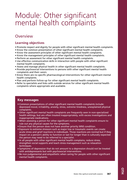
Overview
Learning objectives
• Promote respect and dignity for people with other significant mental health complaints.
• Know the common presentation of other significant mental health complaints.
•
...
The flip book is for pre-deployment trainings for Ebola response, and is based on frequently asked questions about Ebola virus disease (EVD):
What is Ebola virus disease?
How do people become infected with EVD?
Why WHO is focusing on
...
28 May 2021
Contact tracing is a key component of a public health response to infectious disease outbreaks. The purpose of this guidance is to reinforce the place of community engagement and participation in the contact tracing process. The guidanc
...
Research results of sexual and gender-based violence (SGBV) prevention and response before, during and after disasters in Indonesia, Lao PDR and the Philippines
This report contributes new evidence on why and how sexual and gender-based violence ...
This report contributes new evidence on why and how sexual and gender-based violence ...
This guide is intended to support teams working directly with communities during the Covid-19 pandemic. It provides general guidance on community engagement during outbreak responses, including how to support an integrated response, as well as outbr
...
The two-year impact report for the Access to COVID-19 Tools (ACT) Accelerator details impact, case studies and timelines of key milestones for the Diagnostics, Therapeutics and Vaccines pillars, as well as the Health Systems and Response Connector.
This practical guidance is designed to assist programme specialists to implement COVID19 RCCE activities for and with refugees, IDPs, migrants and host communities vulnerable to the pandemic. The guidance highlights key challenges and barriers faced by these people in accessing COVID19 health-relate
...

In March 2020 the IASC Reference Group on Mental Health and Psychosocial Support uniting 57 humanitarian organizations as member issued the Interim Briefing Note Addressing Mental Health and Psychosocial Aspects of COVID-19 Outbreak. This document has proven to be very useful in the
...

This booklet is intended to heighten awareness of the mental health needs of nurses and provide useful exercises to assist nurses to manage stress at work.
This book is not designed to be a substitute for professional advice. It should be used in conjunction with specific health advice from
...
The health impact of radiological and nuclear emergencies can last for decades. Lessons learned from past radiological and nuclear accidents have demonstrated that the mental health and psychosocial consequences can outweigh the direct physical health impacts of radiation exposure. International rad
...

Through technical consultations with countries and partners, WHO has led the development of Preparedness and Resilience for Emerging Threats Module 1: Planning for respiratory pathogen pandemics. Version 1.0. The Module, currently available as an advanced draft, builds on previous pandemic lessons a
...
COVID-19! How Can I Protect Myself and Others?
recommended
This curriculum will help you, and your community, understand the science of the virus that causes COVID-19 and other viruses like it. It will help you to figure out how this virus is impacting or affecting you or may impact you in the future. It wi
...
Person-centred recovery planning for mental health and well-being: self-help tool: WHO QualityRights
Ensuring mental health and well-being has become a worldwide imperative and an important target of the Sustainable Development Goals. But in all countries around the world, our response has been woefully insufficient, and we have made
little progre
...
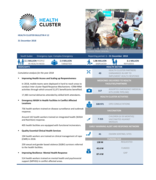
Emergency WASH in Health Facilities in Conflict Affected Locations 756 health workers trained on disease surveillance and outbreak response.
Around 142 health workers trained on integrated health (WASH and Nutrition)
...

The rapid assessment tool (RAT) is meant to assess health facilities within mpox-affected areas that have at least one inpatient bed. Depending on time and resources available, certain facilities may be prioritized during an mpox outbreak. The RAT evaluates 16 infection prevention and control (IPC)
...

The South African WHO Country Cooperation Strategy (CCS) 2023–2027 focuses on four key strategic priorities based on the country’s health needs and disease epidemiology, while also considering the need for building resilient health systems for UHC and health security in the post pandemic period.
...
This is a resource pack for a Knowledge, Attitudes and Practices (KAP) surveys about Zika virus and its suspected complications such as microcephaly and Guillain-Barré syndrome.
This resource and associated advice was requested by governments and respons
...
