
Filter
2775
Text search:
humanitarian
situation
Featured
294
859
Language
2537
210
63
48
26
23
20
12
12
7
5
5
4
4
4
4
4
4
4
3
3
3
3
3
3
3
2
2
2
2
2
2
2
2
2
1
1
1
1
1
1
1
1
1
1
1
1
1
1
1
1
1
1
Document type
1378
489
276
187
171
129
65
35
32
4
4
2
1
1
Countries
149
130
112
107
88
74
73
66
61
59
58
56
55
43
43
42
42
38
36
34
33
29
28
27
23
22
21
21
20
20
19
19
18
17
17
16
16
16
16
15
15
15
14
13
12
12
11
11
10
10
10
10
9
9
9
9
9
9
8
8
8
7
7
7
6
5
5
5
5
5
5
5
5
4
4
4
4
4
3
3
3
3
3
3
3
2
2
2
2
2
2
2
2
2
2
2
2
2
2
2
2
2
1
1
1
1
1
1
1
1
1
1
1
1
1
1
1
1
1
1
1
1
1
1
1
1
1
1
1
Authors & Publishers
276
75
72
70
55
52
49
49
47
45
38
38
33
31
28
27
27
25
25
23
23
20
17
17
16
16
14
14
13
13
12
12
11
11
11
10
10
10
9
9
9
9
9
8
8
8
8
8
8
8
7
7
7
7
7
7
7
7
7
7
7
7
7
6
6
6
6
6
6
6
6
6
6
6
6
6
6
6
6
6
6
6
6
6
5
5
5
5
5
5
5
5
5
5
5
5
5
5
5
5
5
4
4
4
4
4
4
4
4
4
4
4
4
4
4
4
4
4
4
4
4
4
4
4
4
3
3
3
3
3
3
3
3
3
3
3
3
3
3
3
3
3
3
3
3
3
3
3
3
3
3
3
3
3
3
3
3
3
3
3
3
3
3
3
3
3
3
3
3
3
2
2
2
2
2
2
2
2
2
2
2
2
2
2
2
2
2
2
2
2
2
2
2
2
2
2
2
2
2
2
2
2
2
2
2
2
2
2
2
2
2
2
2
2
2
2
2
2
2
2
2
2
2
2
2
2
2
2
2
2
2
2
2
2
2
2
2
2
2
2
2
2
2
2
2
2
2
2
2
2
2
2
2
2
2
2
2
2
2
2
2
2
2
2
2
2
2
2
2
2
2
2
2
2
2
2
2
2
2
2
2
2
2
2
2
2
2
2
2
2
2
2
2
2
2
2
2
2
2
2
2
2
2
2
2
2
2
2
2
2
2
2
2
2
2
2
2
2
2
2
2
2
2
2
2
2
2
2
1
1
1
1
1
1
1
1
1
1
1
1
1
1
1
1
1
1
1
1
1
1
1
1
1
1
1
1
1
1
1
1
1
1
1
1
1
1
1
1
1
1
1
1
1
1
1
1
1
1
1
1
1
1
1
1
1
1
1
1
1
1
1
1
1
1
1
1
1
1
1
1
1
1
1
1
1
1
1
1
1
1
1
1
1
1
1
1
1
1
1
1
1
1
1
1
1
1
1
1
1
1
1
1
1
1
1
1
1
1
1
1
1
1
1
1
1
1
1
1
1
1
1
1
1
1
1
1
1
1
1
1
1
1
1
1
1
1
1
1
1
1
1
1
1
1
1
1
1
1
1
1
1
1
1
1
1
1
1
1
1
1
1
1
1
1
1
1
1
1
1
1
1
1
1
1
1
1
1
1
1
1
1
1
1
1
1
1
1
1
1
1
1
1
1
1
1
1
1
1
1
1
1
1
1
1
1
1
1
1
1
1
1
1
1
1
1
1
1
1
1
1
1
1
1
1
1
1
1
1
1
1
1
1
1
1
1
1
1
1
1
1
1
1
1
1
1
1
1
1
1
1
1
1
1
1
1
1
1
1
1
1
1
1
1
1
1
1
1
1
1
1
1
1
1
1
1
1
1
1
1
1
1
1
1
1
1
1
1
1
1
1
1
1
1
1
1
1
1
1
1
1
1
1
1
1
1
1
1
1
1
1
1
1
1
1
1
1
1
1
1
1
1
1
1
1
1
1
1
1
1
1
1
1
1
1
1
1
1
1
1
1
1
1
1
1
1
1
1
1
1
1
1
1
1
1
1
1
1
1
1
1
1
1
1
1
1
1
1
1
1
1
1
1
1
1
1
1
1
1
1
1
1
1
1
1
1
1
1
1
1
1
1
1
1
1
1
1
1
1
1
1
1
1
1
1
1
1
1
1
1
1
1
1
1
1
1
1
1
1
1
1
1
1
1
1
1
1
1
1
1
1
1
1
1
1
1
1
1
1
1
1
1
1
1
1
1
1
1
1
1
1
1
1
1
1
1
1
1
1
1
1
1
1
1
1
1
1
1
1
1
1
1
1
1
1
1
1
1
1
1
1
1
1
1
1
1
1
1
1
1
1
1
1
1
1
1
1
1
1
1
1
1
1
1
1
1
1
1
1
1
1
1
1
1
1
1
1
1
1
1
1
1
1
1
1
1
1
1
1
1
1
1
1
1
1
1
1
1
1
1
1
1
1
1
1
1
1
1
1
1
1
1
1
1
1
1
1
1
1
1
1
1
1
1
1
1
1
1
1
1
1
1
1
1
1
1
1
1
1
1
1
1
1
1
1
1
1
1
1
1
1
1
1
1
1
1
1
1
1
1
1
1
1
1
1
1
1
1
1
1
1
1
1
1
1
1
1
1
1
1
1
1
1
1
1
1
1
1
1
1
1
1
1
1
1
1
1
1
1
1
1
1
1
1
1
1
1
1
1
1
1
1
1
1
1
1
1
1
1
1
1
1
1
1
1
1
1
1
1
1
1
1
1
1
1
1
1
1
1
1
1
1
1
1
1
1
1
1
1
1
1
1
1
1
1
1
1
1
1
1
1
1
1
1
1
1
1
1
1
1
1
1
1
1
1
1
1
1
1
1
1
1
1
1
1
1
1
1
1
1
1
1
1
1
1
1
1
1
1
1
1
1
1
1
1
1
1
1
1
1
1
1
1
1
1
1
1
1
1
1
1
1
1
1
1
1
1
1
1
1
1
1
1
1
1
1
1
1
1
1
1
1
1
1
1
1
1
1
1
1
1
1
1
1
1
1
1
1
1
1
1
1
1
1
1
1
1
1
1
1
1
1
1
1
1
1
1
1
1
1
1
1
1
1
1
1
1
1
1
1
1
1
1
1
1
1
1
1
1
1
1
1
1
1
1
1
1
1
1
1
1
1
1
1
1
1
1
1
1
1
1
1
1
1
1
1
1
1
1
1
1
1
1
1
1
1
1
1
1
1
1
1
1
1
1
1
1
1
1
1
1
1
1
1
1
1
1
1
1
1
1
1
1
1
1
1
1
1
1
1
1
1
1
1
1
1
1
1
1
1
1
1
1
1
1
1
1
1
1
1
1
1
1
1
1
1
1
1
1
1
1
1
1
1
1
1
1
1
1
1
1
1
1
1
1
1
1
1
1
1
1
1
1
1
1
1
1
1
1
1
1
1
1
1
1
1
1
1
1
1
1
1
1
1
1
1
1
1
1
1
1
1
1
1
1
1
1
1
1
1
1
1
1
1
1
1
1
1
1
1
1
1
1
1
1
1
1
1
1
1
1
1
1
1
1
1
1
1
1
1
1
1
1
1
1
1
1
1
1
1
1
1
1
1
1
1
1
1
1
1
1
1
1
1
1
1
1
1
1
1
1
1
1
1
1
1
1
1
1
1
1
1
1
1
1
1
1
1
1
1
1
1
1
1
1
1
1
1
1
1
1
1
1
1
1
1
1
1
1
1
1
1
1
1
1
1
1
1
1
1
1
1
1
1
1
1
1
1
1
1
1
1
1
1
1
1
1
1
1
1
1
1
1
1
1
1
1
1
1
1
1
1
1
1
1
1
1
1
1
1
1
1
1
1
1
1
1
1
1
1
1
1
1
1
1
1
1
1
1
1
1
1
1
1
1
1
1
1
1
1
1
1
1
1
1
1
1
1
1
1
1
1
1
1
1
1
1
1
1
1
1
1
1
1
1
1
1
1
1
1
1
1
1
1
1
1
1
1
1
1
1
1
1
1
1
1
1
1
1
1
1
1
1
1
1
1
1
1
1
1
1
1
1
1
1
1
1
1
1
1
1
1
1
1
1
1
1
1
1
1
1
1
1
1
1
1
1
1
1
1
1
1
1
1
1
1
1
1
1
1
1
1
1
1
1
1
1
1
1
1
1
1
1
1
1
1
1
1
1
1
1
1
1
1
1
1
1
1
1
1
1
1
1
1
1
1
1
1
1
1
1
1
1
1
1
1
1
1
1
1
1
1
1
1
1
1
1
1
1
1
1
1
1
1
1
1
1
1
1
1
1
1
1
1
1
1
1
1
1
1
1
1
1
1
1
1
1
1
1
1
1
1
1
1
1
1
1
1
1
1
1
1
1
1
1
1
1
1
1
1
1
1
1
1
1
1
1
1
1
1
1
1
1
1
1
1
1
1
1
1
1
1
1
1
1
1
1
1
1
1
1
1
1
1
1
1
1
1
1
1
1
1
1
1
1
1
1
1
1
1
1
1
1
1
1
1
1
1
1
1
1
1
1
1
1
1
1
1
1
1
1
1
1
1
1
1
1
1
1
1
1
1
1
1
1
1
1
1
1
1
1
1
1
1
1
1
1
1
1
1
1
1
1
1
1
1
1
1
1
1
1
1
1
1
1
1
1
1
1
1
1
1
1
1
1
Publication Years
1
1059
1523
174
16
1
1
Category
985
403
165
104
93
45
7
3
Toolboxes
376
361
190
163
161
145
127
72
63
47
42
36
32
32
24
24
22
20
20
19
18
12
11
8
7
4
2
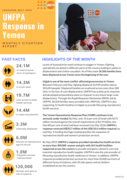
Levels of humanitarian need continue to stagger in Yemen. Fighting sporadically escalated in different parts of the country leading to spikes in displacement and civilian casualties. As of May some 36,506 families have been displaced across Yemen si
...
nce the beginning of the year. Hajjah is one of the most conflict-affected govern orates in Yemen.Between February and May, fighting displaced 33,949 families (about203,694 people). Displaced families are scattered across more than 300sites. In the face of such displacement, UNFPA has scaled up its response and developed preparedness plans to respond to any future large-scale displacement. Through the Rapid Response Mechanism (RRM), led byUNFPA, 30,504 families were provided wither kits. UNFPA is also supporting 12 health facilities in Hajjah to provide lifesaving reproductive health services.
more
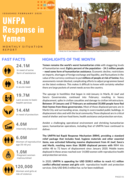
Yemen remains the world’s worst humanitarian crisis with staggering levels of humanitarian need. Eighty per cent of the population – 24.1 million people – need some form of
...
humanitarian assistance. Economic decline, restrictions on imports, shortages of foreign exchange and liquidity, and fluctuations in the value of the currency continues to put millions of people at risk of famine. Key assessments remain blocked, complicating efforts to adjust programmes based on the latest evidence. This makes it difficult to know with certainty whether there are large pockets of unmet needs across the country.
more

The humanitarian-development-peace nexus (HDPNX) is a new way of working that offers a framework for coherent joined-up planning and implementation of shared priorities between humanitarian de
...
velopment and peacebuilding actors in emergency settings. To advance the HDPNx in a given country a shared foundational understanding of the current situation is needed. However it can be challenging to find such a resource perpetuating poor understanding planning and operationalization. This is one of a series of country profiles that have been developed by WHO to address that need. Each profile provides an overview of health-related nexus efforts in the country and will be updated regularly.
more
Five years into a conflict that has left 80% of Yemen’s population in need of humanitarian aid, the UN has issued a broad and scathing report detailing violations of international human rights and humani
...
tarian law by all sides in the conflict.
A year of investigations by the Group of International and Regional Eminent Experts on Yemen found a disturbing pattern of violations ranging from arbitrary detention to sexual violence to child recruitment—and “a pervasive lack of accountability” for these violations.
more
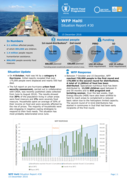
In Numbers
2.1 million affected people, of which 894,000 are children.
1.4 million people require humanitarian assistance.
806,000 people severely food insecure.
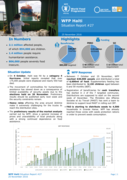
In Numbers
2.1 million affected people, of which 894,000 are children.
1.4 million people require humanitarian assistance.
806,000 people severely food insecure.
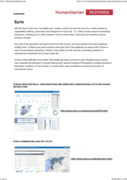
Syria. Humanitarian Response
recommended
With the Syria Crisis now in its eighth year, civilians continue to bear the brunt of a conflict marked by unparalleled suffering, destruction and disregard for human life. 13.1 million people require humanitarian assistance, including over 2 millio
...
n people in hard-to-reach areas, where they are exposed to grave protection threats.
Over half of the population has been forced from their homes, and many people have been displaced multiple times. Children and youth comprise more than half of the displaced, as well as half of those in need of humanitarian assistance. Parties to the conflict act with impunity, committing violations of international humanitarian and human rights law.
On this resource page you can download situation reports, maps, infographics and documents
more
Sudan recorded the first COVID-19 case on 13 March 2020 and, at the beginning of July, the Federal Ministry of Health had confirmed that nearly 10,000 people had contracted the virus, including over 600 who died from the disease across the country. Although more than 70 per cent of the confirmed cas
...
es are in the Khartoum area, COVID-19 has spread throughout the country, with the highest numbers recorded in the central and eastern states. With extremely low testing capacity — around 800 samples per day, the lowest in the region — the official figures of confirmed cases likely underestimate the extent of the pandemic and the actual situation is unknown.
more
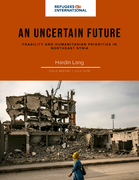
After almost eight bloody years, the war in Syria finally appears to be reaching the endgame. The Assad regime controls some two-thirds of the country. In the northwest, the regime of Syrian President Bashar al-Assad has launched an offensive against opposition-controlled Idlib governorate under the
...
cover of a brutal Russian bombing campaign. Upwards of 3 million Syrians in Idlib are under threat. Meanwhile, in northeast Syria, the Syrian Democratic Forces—the Syrian Kurdish dominated militia backed by the United States—have dislodged the Islamic State and now control one-third of the country. However, the humanitarian situation in the northeast remains extremely fragile and could deteriorate quickly. Indeed, over a third of the 4 million people in this area need humanitarian assistance and some 600,000 are displaced.
more
After the earthquake in Türkiye-Syria in February 2023 an emergency response was provided to the affected population. Young persons with disabilities were one of the social groups most affected by the crisis. These were either young persons who acquired a disability due to the earthquake, or young
...
persons with disabilities who were further isolated after the crisis due to compounded and structural barriers.
In response to this situation the Compact for Young People in Humanitarian Action reached out to the Youth2030 Disability Task Team with the aim of supporting humanitarian teams in the field. The current version of this checklist has been developed for a broader context not only for the Türkiye-Syria case, but also for other humanitarian crises. This checklist aims to provide guidance on how to ensure meaningful participation of young persons with disabilities in local humanitarian response. The expected users are humanitarian actors, especially those working in the field.
more
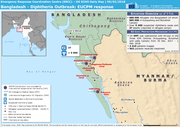
SITUATION OVERVIEW as of 30 Jan.
- 688 000 refugees into Bangladesh (of which 585 000 in Kutupalong and Bulukhali camps)
- over 5000 clinically suspected Diphtheria cases and 37 deaths (reported in refugee camps)
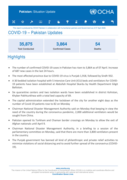
COVID-19 – Pakistan Updates
OCHA; Reliefweb; Humanitarian partners and Government
OCHA; Reliefweb; Humanitarian partners and Government
(2020)
C2
Pakistan: Situation Update
This report is produced by OCHA Pakistan in collaboration with humanitarian partners and Government as of 07 April 2020.
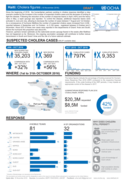
This document summarizes Haiti's cholera situation as of November 16, 2016. Between January and October 2016, Haiti reported 35,203 new suspected cholera cases (32% increase from 2015) and 369 deaths (56% increase). After Hurricane Matthew, cases ro
...
se dramatically, with 52% of new cases concentrated in Grand'Anse and South departments. Since the 2010 outbreak began, Haiti had experienced 797,000 total cases and 9,353 deaths. The report identifies key factors contributing to cholera persistence: weak water and sanitation infrastructure, limited healthcare access, underfunding, population density, and mobility. Despite concerning trends, humanitarian partners were cautiously optimistic as a feared nationwide outbreak following Hurricane Matthew had not materialized, and a vaccination campaign was underway. However, the cholera response was significantly underfunded, with only 42% of requested funds received.
more
the current surge in cases follows unprecedented flooding that began in mid-June 2022. With the current flood crisis affecting the national health system capacity and the growing humanitarian situation
...
, there is a high risk of serious health impacts from dengue fever and other concurrent disease outbreaks. High population movement between Pakistan and bordering countries (in particular, Afghanistan and the Islamic Republic of Iran) means that the international transmission of dengue fever cannot be ruled out.
more
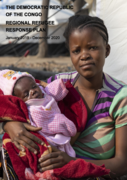
Looking forward, the 2019-2020 Regional Refugee Response Plan (RRRP) for the DRC situation aims at addressing the needs of new arrivals of Congolese refugees in the region, and those in protracted situations. By supporting livelihoods opportunities
...
and through a resilience-based approach, refugees will be able to contribute to the development of their host countries, and of their country of origin upon their return. Given the limited capacity of host communities to support the impact of massive numbers of refugees, the response strategy will also address the needs of local populations, strengthening peaceful co-existence and building social cohesion.
more
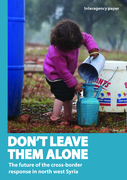
Don’t Leave Them Alone: The future of the cross-border response in north west Syria
ATAA Humanitarian Relief Association, BINAA for Development, Children Of One world, et al.
Save the Children
(2021)
C1
This report, written by ATAA Humanitarian Relief Association, BINAA for Development, Children Of One world, Hand in Hand for Aid and Development, Horan Foundation, Hurras Network, MARAM Foundation, Orange Organization, Syrian American Medical Societ
...
y, Save the Children and Shafak Organization, provides insights on the humanitarian situation on the ground in north west Syria.
more
Since late August 2022, cases of severe acute watery diarrhoea have been increasingly reported across Syria, concentrated
particularly along the Euphrates river. These were later confirmed to be cholera cases.3 Cholera is a disease caused by
bacteria that can be found in faeces, and spreads throug
...
h people consuming contaminated water or food. It causes severe
watery diarrhoea and vomiting which lead to dehydration. If treated immediately, less than 1% of cases result in patients
dying. However, if timely treatment is not available, cholera can lead to death within hours in 25 to 50% of cases. The
situation is critical in Syria as the local population is facing a severe water crisis due to drought, falling groundwater levels,
reduced flow in the Euphrates River, and reduced functionality of Alouk water station. REACH has been monitoring
developments in Northeast Syria through regular data collection cycles, remote sensing data, and rapid needs assessments
more
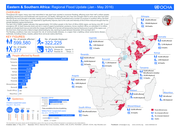
Throughout the region, heavy rains that intensified in late April have resulted in excessive flooding, affecting more than half a million people; damaging infrastructure and livelihoods and caused over 370 deaths. Although the rains have also brought relief to some areas that have been affected by t
...
he worst drought in decades, namely; parts of Ethiopia, Puntland, Somaliland and a number of countries in southern Africa, the food security situation in these areas is not expected to significantly improve, due to the scale and intensity of the El Nino-induced drought that has already depleted coping mechanisms.
more
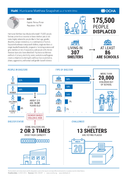
Hurricane Matthew has displaced around 175,500 people. Serious protection concerns in these shelters put at risk some highly vulnerable people due to their age, gender, disability, sexual orientation, or a combination of factors. Separated and unaccompanied children, single mothers or single-headed
...
households, pregnant or lactating women and girls, families at risk of separation, and people with chronic illnesses have also been identified. Psychosocial distress and lack of privacy, electricity, water, sanitation and hygiene create a situation in which girls and boys face exploitation, abuse, aggression, and sexual and gender based violence.
more
Depuis que le COVID-19a été confirmé au Tchad le 19 mars et les premiers cas de transmissions communautaires, les autorités tchadiennes ont pris des mesures de prévention et de réponse qui ont des conséquences sur le contexte et la nature des opérations humanitaires. Ainsi, u
...
n ajustement des plans, des cibles et des besoins financiersdes clusterss’est révélé opportunpour répondre non seulement à la crise sanitaire mais aussi aux impacts indirects de la pandémie sur la situation de million de personnesdéjà ciblées par l’aide humanitaire avant l’apparition du COVID.
more
