
Filter
1707
Text search:
facts
Featured
164
399
Language
Document type
889
252
173
123
99
63
45
15
12
10
9
9
4
2
1
Countries
93
62
37
37
34
34
33
33
29
28
27
27
25
24
21
21
20
19
19
16
14
14
12
12
11
10
10
10
10
9
9
9
9
9
8
8
8
8
8
8
8
7
7
7
7
6
5
5
5
5
5
4
4
4
4
4
4
4
4
4
3
3
3
3
3
3
3
3
3
3
3
2
2
2
2
2
2
2
2
2
2
2
2
2
2
2
2
2
2
2
1
1
1
1
1
1
1
1
1
1
1
1
1
1
1
1
1
1
1
1
1
1
1
1
1
1
1
1
1
1
Authors & Publishers
Publication Years
Category
534
121
109
108
99
83
8
Toolboxes
194
173
98
72
65
59
57
52
46
44
44
37
33
30
26
26
25
17
17
15
14
10
9
9
2
1
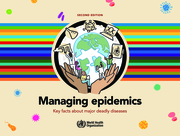
Epidemics and pandemics of infectious diseases are occurring more often, and spreading faster and further than ever, in many different regions of the world. The background factors of this threat are biological, environmental and lifestyle changes, among others. A potentially fatal combination of new
...
The number of people with diabetes has risen from 108 million in 1980 to 422 million in 2014.
The global prevalence of diabetes* among adults over 18 years of age has risen from 4.7% in 1980 to 8.5% in 2014.
Diabetes prevalence has been rising more rapidly in middle- and low-income countries.
Dia
...
Diabetes is a chronic disease that occurs either when the pancreas does not produce enough insulin or when the body cannot effectively use the insulin it produces. Insulin is a hormone that regulates blood glucose. Hyperglycaemia, also called raised blood glucose or raised blood sugar, is a common e
...

The World Health Organization's Regional Office for Africa webpage on diabetes provides an overview of the disease's impact in the African Region. It highlights that diabetes is a serious, chronic, and costly condition, with projections estimating cases to rise to 23.9 million by 2030. The page outl
...
The World Health Organization's Global Health Observatory (GHO) provides comprehensive data on noncommunicable diseases (NCDs), including cardiovascular diseases, cancers, chronic respiratory diseases, and diabetes. The portal offers country-specific statistics on NCD mortality rates, risk factors,
...
The World Health Organization's fact sheet on noncommunicable diseases (NCDs) highlights that NCDs, such as cardiovascular diseases, cancers, chronic respiratory diseases, and diabetes, are responsible for 74% of all global deaths, totaling 41 million annually. Notably, 86% of premature NCD deaths (
...

The WHO fact sheet on household air pollution highlights that around 2.1 billion people rely on solid fuels like wood and coal for cooking, using open fires or inefficient stoves. This leads to severe indoor air pollution, contributing to about 3.2 million premature deaths each year, including over
...
Asthma is a chronic lung disease affecting people of all ages. It is caused by inflammation and muscle tightening around the airways, which makes it harder to breathe.
Symptoms can include coughing, wheezing, shortness of breath and chest tightness. These symptoms can be mild or severe and can co
...
Asthma is a chronic lung disease affecting people of all ages. It is caused by inflammation and muscle tightening around the airways, which makes it harder to breathe.
Symptoms can include coughing, wheezing, shortness of breath and chest tightness. These symptoms can be mild or severe and can co
...
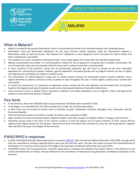
The document provides an overview of malaria in the Americas, describing its transmission, symptoms, vulnerable populations, and regional trends, while highlighting prevention strategies and the efforts of PAHO/WHO and member states to eliminate the disease by 2020.
Palliative care is an approach that improves the quality of life of patients (adults and children) and their families who are facing problems associated with life-threatening illness. It prevents and relieves suffering through the early identification, correct assessment and treatment of pain and ot
...
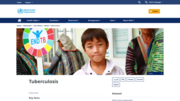

Don’t Panic” is a one-hour long documentary produced by Wingspan Productions and broadcasted on BBC on the 7th of November 2013.
The World Health Organization's fact sheet on Chronic Obstructive Pulmonary Disease (COPD) - arabic version
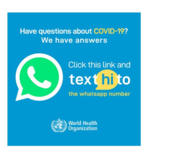
WHO is launching a messaging service with partners WhatsApp and Facebook to keep people safe from coronavirus.
WHO has launched a dedicated messaging services in Arabic, English, French, Hindi, Italian, Spanish and Portuguese with partners WhatsApp and Facebook to keep people safe from coronaviru
...
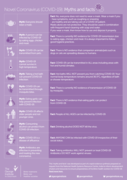
This fact sheet provides basic information about Coronavirus Disease (COVID-19)
Website last accessed on 18.03.2023
Early detection of cases is critical to complete cure with combined antibiotics. In its late stages, Buruli ulcer causes severe destruction of the skin, leading to permanent disability. #BeatNTDs
Soil-transmitted helminth (STH) infections are among the most common infections worldwide with an estimated 1.5 billion infected people or 24% of the world’s population. These infections affect the poorest and most deprived communities with poor access to clean water, sanitation and hygiene in tro
...

The World Health Organization (WHO) fact sheet on Chronic Obstructive Pulmonary Disease (COPD) provides an overview of this common lung condition characterized by persistent respiratory symptoms and airflow limitation.
