
Filter
3160
Text search:
draft
Featured
280
848
Language
2949
118
66
56
49
39
31
22
10
4
4
3
3
2
2
2
2
2
1
1
1
1
1
1
1
1
1
1
1
1
1
1
1
Document type
1677
567
444
204
135
53
42
24
5
4
3
1
Countries
137
119
101
86
74
70
69
67
66
62
62
55
52
52
51
43
39
37
36
33
30
28
25
24
24
24
22
22
19
19
19
18
17
17
17
17
16
15
14
14
13
11
10
10
10
9
9
9
8
7
7
7
7
7
7
7
6
6
6
5
5
5
5
5
5
5
5
4
4
4
4
4
3
3
3
3
3
3
2
2
2
2
2
2
2
2
2
2
2
2
2
2
2
1
1
1
1
1
1
1
1
1
1
1
1
1
1
1
1
1
1
1
1
1
1
1
1
1
1
1
1
1
1
1
1
Authors & Publishers
497
160
102
94
80
52
47
43
43
41
40
26
21
17
15
14
14
13
12
12
11
11
11
10
10
10
9
9
9
9
9
9
9
9
9
8
8
8
8
8
8
8
7
7
7
7
7
7
7
7
7
7
7
7
7
7
7
7
6
6
6
6
6
6
6
6
6
6
6
6
6
6
6
5
5
5
5
5
5
5
5
5
5
5
5
5
5
5
5
5
5
4
4
4
4
4
4
4
4
4
4
4
4
4
4
4
4
4
4
4
4
3
3
3
3
3
3
3
3
3
3
3
3
3
3
3
3
3
3
3
3
3
3
3
3
3
3
3
3
3
3
3
3
3
3
3
3
3
3
3
3
3
3
3
3
3
3
3
3
3
3
3
3
3
3
3
3
3
3
3
3
3
3
3
3
2
2
2
2
2
2
2
2
2
2
2
2
2
2
2
2
2
2
2
2
2
2
2
2
2
2
2
2
2
2
2
2
2
2
2
2
2
2
2
2
2
2
2
2
2
2
2
2
2
2
2
2
2
2
2
2
2
2
2
2
2
2
2
2
2
2
2
2
2
2
2
2
2
2
2
2
2
2
2
2
2
2
2
2
2
2
2
2
2
2
2
2
2
2
2
2
2
2
2
2
2
2
2
2
2
2
2
2
2
2
2
2
2
2
2
2
2
2
2
2
2
2
2
2
2
2
2
2
2
2
2
2
2
2
2
2
2
2
2
2
2
2
2
2
2
2
2
2
2
2
2
2
2
2
2
2
2
2
2
2
2
2
2
2
2
2
2
2
2
2
2
2
2
2
2
2
2
2
2
2
2
2
2
2
2
2
2
2
2
2
2
1
1
1
1
1
1
1
1
1
1
1
1
1
1
1
1
1
1
1
1
1
1
1
1
1
1
1
1
1
1
1
1
1
1
1
1
1
1
1
1
1
1
1
1
1
1
1
1
1
1
1
1
1
1
1
1
1
1
1
1
1
1
1
1
1
1
1
1
1
1
1
1
1
1
1
1
1
1
1
1
1
1
1
1
1
1
1
1
1
1
1
1
1
1
1
1
1
1
1
1
1
1
1
1
1
1
1
1
1
1
1
1
1
1
1
1
1
1
1
1
1
1
1
1
1
1
1
1
1
1
1
1
1
1
1
1
1
1
1
1
1
1
1
1
1
1
1
1
1
1
1
1
1
1
1
1
1
1
1
1
1
1
1
1
1
1
1
1
1
1
1
1
1
1
1
1
1
1
1
1
1
1
1
1
1
1
1
1
1
1
1
1
1
1
1
1
1
1
1
1
1
1
1
1
1
1
1
1
1
1
1
1
1
1
1
1
1
1
1
1
1
1
1
1
1
1
1
1
1
1
1
1
1
1
1
1
1
1
1
1
1
1
1
1
1
1
1
1
1
1
1
1
1
1
1
1
1
1
1
1
1
1
1
1
1
1
1
1
1
1
1
1
1
1
1
1
1
1
1
1
1
1
1
1
1
1
1
1
1
1
1
1
1
1
1
1
1
1
1
1
1
1
1
1
1
1
1
1
1
1
1
1
1
1
1
1
1
1
1
1
1
1
1
1
1
1
1
1
1
1
1
1
1
1
1
1
1
1
1
1
1
1
1
1
1
1
1
1
1
1
1
1
1
1
1
1
1
1
1
1
1
1
1
1
1
1
1
1
1
1
1
1
1
1
1
1
1
1
1
1
1
1
1
1
1
1
1
1
1
1
1
1
1
1
1
1
1
1
1
1
1
1
1
1
1
1
1
1
1
1
1
1
1
1
1
1
1
1
1
1
1
1
1
1
1
1
1
1
1
1
1
1
1
1
1
1
1
1
1
1
1
1
1
1
1
1
1
1
1
1
1
1
1
1
1
1
1
1
1
1
1
1
1
1
1
1
1
1
1
1
1
1
1
1
1
1
1
1
1
1
1
1
1
1
1
1
1
1
1
1
1
1
1
1
1
1
1
1
1
1
1
1
1
1
1
1
1
1
1
1
1
1
1
1
1
1
1
1
1
1
1
1
1
1
1
1
1
1
1
1
1
1
1
1
1
1
1
1
1
1
1
1
1
1
1
1
1
1
1
1
1
1
1
1
1
1
1
1
1
1
1
1
1
1
1
1
1
1
1
1
1
1
1
1
1
1
1
1
1
1
1
1
1
1
1
1
1
1
1
1
1
1
1
1
1
1
1
1
1
1
1
1
1
1
1
1
1
1
1
1
1
1
1
1
1
1
1
1
1
1
1
1
1
1
1
1
1
1
1
1
1
1
1
1
1
1
1
1
1
1
1
1
1
1
1
1
1
1
1
1
1
1
1
1
1
1
1
1
1
1
1
1
1
1
1
1
1
1
1
1
1
1
1
1
1
1
1
1
1
1
1
1
1
1
1
1
1
1
1
1
1
1
1
1
1
1
1
1
1
1
1
1
1
1
1
1
1
1
1
1
1
1
1
1
1
1
1
1
1
1
1
1
1
1
1
1
1
1
1
1
1
1
1
1
1
1
1
1
1
1
1
1
1
1
1
1
1
1
1
1
1
1
1
1
1
1
1
1
1
1
1
1
1
1
1
1
1
1
1
1
1
1
1
1
1
1
1
1
1
1
1
1
1
1
1
1
1
1
1
1
1
1
1
1
1
1
1
1
1
1
1
1
1
1
1
1
1
1
1
1
1
1
1
1
1
1
1
1
1
1
1
1
1
1
1
1
1
1
1
1
1
1
1
1
1
1
1
1
1
1
1
1
1
1
1
1
1
1
1
1
1
1
1
1
1
1
1
1
1
1
1
1
1
1
1
1
1
1
1
1
1
1
1
1
1
1
1
1
1
1
1
1
1
1
1
1
1
1
1
1
1
1
1
1
1
1
1
1
1
1
1
1
1
1
1
1
1
1
1
1
1
1
1
1
1
1
1
1
1
1
1
1
1
1
1
1
1
1
1
1
1
1
1
1
1
1
1
1
1
1
1
1
1
1
1
1
1
1
1
1
1
1
1
1
1
1
1
1
1
1
1
1
1
1
1
1
1
1
1
1
1
1
1
1
1
1
1
1
1
1
1
1
1
1
1
1
1
1
1
1
1
1
1
1
1
1
1
1
1
1
1
1
1
1
1
1
1
1
1
1
1
1
1
1
1
1
1
1
1
1
1
1
1
1
1
1
1
1
1
1
1
1
1
1
1
1
1
1
1
1
1
1
1
1
1
1
1
1
1
1
1
1
1
1
1
1
1
1
1
1
1
1
1
1
1
1
1
1
1
1
1
1
1
1
1
1
1
1
1
1
1
1
1
1
1
1
1
1
1
1
1
1
1
1
1
1
1
1
1
1
1
1
1
1
1
1
1
1
1
1
1
1
1
1
1
1
1
1
1
1
1
1
1
1
1
1
1
1
1
1
1
1
1
1
1
1
1
1
1
1
1
1
1
1
1
1
1
1
1
1
1
1
1
1
1
1
1
1
1
1
1
1
1
1
1
1
1
1
1
1
1
1
1
1
1
1
1
1
1
1
1
1
1
1
1
1
1
1
1
1
1
1
1
1
1
1
1
1
1
1
1
1
1
1
1
1
1
1
1
1
1
1
1
1
1
1
1
1
1
1
1
1
1
1
1
1
1
1
1
1
1
1
1
1
1
1
1
1
1
1
1
1
1
1
1
1
1
1
1
1
1
1
1
1
1
1
1
1
1
1
1
1
1
1
1
1
1
1
1
1
1
1
1
1
1
1
1
1
1
1
1
1
1
1
1
1
1
1
1
1
1
1
1
1
1
1
1
1
1
1
1
1
1
1
1
1
1
1
1
1
1
1
1
1
1
1
1
1
1
1
1
1
1
1
1
1
1
1
1
1
1
1
1
1
1
1
1
1
1
1
1
1
1
1
1
1
1
1
1
1
1
1
1
1
1
1
1
1
1
1
1
1
1
1
1
1
1
1
1
1
1
1
1
1
1
1
1
1
1
1
1
1
1
1
1
1
1
1
1
1
1
1
1
1
1
1
1
1
1
1
1
1
1
1
1
1
1
1
1
1
1
1
1
1
1
1
1
1
1
1
1
1
1
1
1
1
1
1
1
1
1
1
1
1
1
1
1
1
1
1
1
1
1
1
1
1
1
1
1
1
1
1
1
1
1
1
1
1
1
1
1
1
1
1
1
1
1
1
1
1
1
1
1
1
1
1
1
1
1
1
1
1
1
1
1
1
1
1
1
1
1
1
1
1
1
1
1
1
1
1
1
1
1
1
1
1
1
1
1
1
1
1
1
1
1
1
1
1
1
1
1
1
1
1
1
1
1
1
1
1
1
1
1
1
1
1
1
1
1
1
1
1
1
1
1
1
1
1
1
1
1
1
1
1
1
1
1
1
1
1
1
1
1
1
1
1
1
1
1
1
1
1
1
1
1
1
1
1
1
1
1
1
1
1
1
1
1
1
1
1
1
1
1
1
1
1
1
1
1
1
1
1
1
1
1
1
1
1
1
1
1
1
1
1
1
1
1
1
1
1
1
1
1
1
1
1
1
1
1
1
1
1
1
1
1
1
1
1
1
1
1
1
1
1
1
1
1
1
1
1
1
1
1
1
1
1
1
1
1
1
1
1
1
1
1
1
1
1
1
1
1
1
1
1
1
1
1
1
1
1
1
1
1
1
1
1
1
1
1
1
1
1
1
1
1
1
1
1
1
1
1
1
1
1
1
1
1
1
1
1
1
1
1
1
1
1
1
1
1
1
1
1
1
1
1
1
1
1
1
1
1
1
1
1
1
1
1
1
1
1
1
1
1
1
1
1
1
1
1
1
1
1
1
1
1
1
1
1
1
1
1
1
1
1
1
1
1
1
1
1
1
1
1
1
1
1
1
1
1
1
1
1
1
1
1
1
1
1
1
1
1
1
1
1
1
1
1
1
1
1
1
1
1
1
1
1
1
1
1
1
1
1
1
1
1
1
1
1
1
1
1
1
1
1
1
1
1
1
1
1
1
1
1
1
1
1
1
1
1
1
1
1
1
1
1
1
1
1
1
1
1
1
1
1
1
1
1
1
1
1
1
1
1
1
1
1
1
1
1
1
1
1
1
1
1
1
1
1
1
1
1
1
1
1
1
1
1
1
1
1
1
1
1
1
1
1
1
1
1
1
1
1
1
1
1
1
1
1
1
1
1
1
1
1
1
1
1
1
1
1
1
1
1
1
1
1
1
1
1
1
1
1
1
1
1
1
1
1
1
1
1
1
1
1
1
1
1
1
1
1
1
1
1
1
1
1
1
1
1
1
1
1
1
1
1
1
1
1
1
1
1
1
1
1
1
1
1
1
1
1
1
1
1
1
1
1
1
1
1
1
1
1
1
1
1
1
1
1
1
1
1
1
1
1
1
1
1
1
1
1
1
1
1
1
1
1
1
1
1
1
1
1
1
1
1
1
1
1
1
1
1
1
1
1
1
1
1
1
1
1
1
1
1
1
1
1
1
1
1
1
1
1
1
1
1
1
1
1
1
1
1
1
1
1
1
1
1
1
1
1
1
1
1
1
1
1
1
1
1
1
1
1
1
1
1
1
1
1
1
1
1
1
1
1
1
1
1
1
1
1
1
1
1
1
1
1
1
1
1
1
1
1
1
1
1
1
1
1
1
1
1
1
1
1
1
1
1
1
1
1
1
1
1
1
1
1
1
1
1
1
1
1
1
1
1
1
1
1
1
1
1
1
1
1
1
1
1
1
1
1
1
1
1
1
1
1
1
1
1
1
1
1
1
1
1
1
1
1
1
1
1
1
1
1
1
1
1
1
1
1
1
Publication Years
897
1913
329
18
2
1
Category
1261
239
238
225
177
72
33
Toolboxes
216
194
134
125
115
115
105
92
89
83
76
72
61
61
58
54
53
48
43
39
29
22
18
13
10
2
This report provides the context, underlying evidence, content and process related to the
development of the draft global strategic directions for nursing and midwifery 2021–2025.

Through technical consultations with countries and partners, WHO has led the development of Preparedness and Resilience for Emerging Threats Module 1: Planning for respiratory pathogen pandemics. Version 1.0. The Module, currently available as an advanced
...
draft, builds on previous pandemic lessons and guidance, and has the following new elements:
It presents an integrated and efficient respiratory pathogen pandemic planning approach covering both novel pathogens and those known to have pandemic potential;
It enables coherence in addressing pathogen-agnostic and pathogen-specific elements for better preparedness;
It gives an organizing framework including operational stages and triggers for escalation and de-escalation between pandemic preparedness and response periods;
It contextualizes 12 IHR (2005) core capacities within the five components of health emergency preparedness, response and resilience (HEPR), from the respiratory threats perspective; and
It describes the critical sectors for respiratory pathogen pandemic preparedness to trigger multisectoral collaboration.
WHO will finalize and publish this Module after a global technical meeting that will be held on 24-26 April 2023.
more
The longlist of knowledge gaps is based on existing research agendas published in 2015 or later and expert input from reviewers of the first draft of the longlist. It only includes knowledge gaps focussing on a better
understanding of the relations
...
hip between global environmental change and human health, and finding an answer to the question of how best to protect human health against these new threats.
more
The Global Strategic Preparedness and Response Plan (SPRP) for mpox, covering the six-month period from September 2024 to February 2025, provides a framework for public health preparedness and response to the mpox emergency. The current draft, subje
...
ct to Member State input, outlines the urgent actions needed at global, regional, and national levels.
more

This paper was commissioned by N´weti and Wemos as part
of the project “Equitable health financing for a strong health
system in Mozambique”. Its purpose is to contribute to the
debate of the Mozambican Ministry of Health’s draft Health
S
...
ector Financing Strategy (HSFS) 2025 – 2034
more

Advances have been made through expanded interventions delivered through five public health approaches: innovative and intensified disease management; preventive chemotherapy; vector ecology and management; veterinary public health services; and the provision of safe water, sanitation and hygiene. I
...
n 2015 alone nearly one billion people were treated for at least one disease and significant gains were achieved in relieving the symptoms and consequences of diseases for which effective tools are scarce; important reductions were achieved in the number of new cases of sleeping sickness, of visceral leishmaniasis in South-East Asia and also of Buruli ulcer.
The report also considers vector control strategies and discusses the importance of the draft WHO Global Vector Control Response 2017–2030. more
The report also considers vector control strategies and discusses the importance of the draft WHO Global Vector Control Response 2017–2030. more
The 12th Meeting of the Regional Certification Commission (RCC) for the Polio Endgame in the Region of the Americas was conducted virtually due to the pandemic of COVID-19. The meeting was composed of 5 steps:
Step 1: An introductory meeting between RCC members and Secretariat
Step 2: Assessment
...
of the annual and containment reports by the reviewers
Step 3: Observations and recommendations review
Step 4: A meeting between RCC Chair and the Secretariat to review the draft report and general recommendations of the meeting
Step 5: RCC meeting to review and approve the recommendations to each country and the final report and recommendations of the meeting
more

The purpose of the toolkit is to bring together existing learning and guidance as a starting point for stakeholders to begin SRH preparedness work. Within the SRH sector the field of preparedness is relatively new and growing. More collective effort is required to further evaluate the impact of prep
...
aredness efforts and push the field forward. This effort is a first attempt at a draft guidance for SRH preparedness, and is intended for field testing. The toolkit recognizes the longstanding work of the field of emergency and disaster risk management, and endeavors to bridge that work with the human rights-oriented and peoplecentered field of sexual and reproductive health.
more
Antimicrobial resistance (AMR) is a multifaceted, international public health problem, which poses a direct threat to the safety of the population of South Africa. A national response is required to complement the development of a global plan, as articulated in the WHO’s
...
draft resolution EB134/37 “Combating antimicrobial resistance including antibiotic resistance”, adopted by theWorld Health Assembly in May 2014. The overuse of antimicrobials is driving resistance. A return to appropriate, targeted antimicrobial use in humans, animals and the environment is critical if we are to conserve the antimicrobial armamentarium. Various interventions have been put in place to address antimicrobial resistance in South Africa. However, these are insufficient to effectively tackle the threat faced by the country. The strengths of the current system are outweighed by its weaknesses.
more
Integrating neglected tropical diseases into global health and development: fourth WHO report on neglected tropical diseases evaluates the changing global public health landscape; assesses progress towards the 2020 targets; and considers the possible core elements of a strategic vision to integratin
...
g neglected tropical diseases into the 2030 Agenda of the Sustainable Development Goals.
Advances have been made through expanded interventions delivered through five public health approaches: innovative and intensified disease management; preventive chemotherapy; vector ecology and management; veterinary public health services; and the provision of safe water, sanitation and hygiene. In 2015 alone nearly one billion people were treated for at least one disease and significant gains were achieved in relieving the symptoms and consequences of diseases for which effective tools are scarce; important reductions were achieved in the number of new cases of sleeping sickness, of visceral leishmaniasis in South-East Asia and also of Buruli ulcer.
The report also considers vector control strategies and discusses the importance of the draft WHO Global Vector Control Response 2017–2030. It argues that veterinary public health requires a multifaceted approach across the human–animal interface as well as a multisectoral programme of work to protect and improve the physical, mental and social well-being of humans, including veterinary, water, sanitation and hygiene.
Integration of activities and interventions into broader health systems is crucial, and despite challenges, has the potential to accelerate progress towards universal health coverage while advancing the 2030 Agenda.
In short, this report drives the message home that “no one must be left behind”.
more
This report aims to outline the current available knowledge on the health and wellbeing of older persons in the Region of the Americas during the United Nations Decade of Healthy Ageing (2021-2030). It also seeks to guide political actions towards ensuring the human rights of older persons, and desc
...
ribes the negotiation and drafting process behind the Inter-American Convention on Protecting the Human Rights of Older Persons. It reports on the doctrinal and legal developments that led the Region of the Americas to draft the Convention and describes its action areas and guaranteed rights, as well as the obligations assumed by the States Parties. The Convention is an essential tool to advance the strategies of the Decade of Healthy Ageing. This publication reflects on the importance of having a major legal instrument for this purpose at the international level. The demographic transition in Latin America and the Caribbean will continue to shape the ability of countries and health systems to respond to the needs of the population. Given this reality, international instruments will be needed to guarantee the full enjoyment of the human rights of older persons. In order to design inclusive and sustainable systems, accurate, updated, and effective information is required. The Decade of Healthy Ageing––the initiative that constitutes the framework for this document––is a strategic period in which to focus on data generation and monitoring.
more

A year ago, the second Special Session of the World Health Assembly (WHASS) unanimously agreed to start a diplomatic process for a new binding instrument aimed at ensuring the international community is better prepared for the next health emergencies. The establishment of an Intergovernmental Negoti
...
ating Body (INB) at the WHO paved the terrain for a proper negotiation, which has started to unfold. The INB will be releasing the “conceptual zero draft” of the treaty text in early December 2022.
more

This Implementation Kit (I-Kit), developed by the Health Communication Capacity Collaborative (HC3), which is funded by USAID and based at the Johns Hopkins Center for Communication Programs, offers structured guidance for improving social and behavioural change communication (SBCC) strategies relat
...
ed to malaria in pregnancy (MiP). Designed for programme managers and stakeholders, the toolkit addresses critical communication gaps in MiP programming, particularly among service providers. It provides tools to help users integrate MiP into situation analyses, segment audiences, define behavioural objectives and draft strategic communication plans.
MiP poses a significant public health challenge, contributing to maternal and neonatal mortality and morbidity in sub-Saharan Africa. Although effective interventions exist, such as the use of insecticide-treated nets, intermittent preventive treatment in pregnancy (IPTp) and timely diagnosis and treatment, their implementation remains inconsistent. The I-Kit supports more effective SBCC planning and implementation, with the aim of increasing the uptake and impact of these interventions and ultimately reducing malaria-related deaths and illness among pregnant women and newborns.
more

Each humanitarian setting provides distinct opportunities and challenges for actors to coordinate and collaborate at strategic and operational levels. The Health and Protection Joint Operational Framework has been developed to ensure that the health and protection response during humanitarian emerge
...
ncies can adapt to each environment and is adequately coordinated to ensure high-quality services to meet the needs of affected individuals and at-risk groups based on their situation or vulnerabilities.
The Health and Protection JOF was conceived in 2019 as a collaboration between the Global Health Cluster (GHC), the Global Protection Cluster (GPC) and its Areas of Responsibility (AoRs), the Inter-Agency Standing Committee Reference Group on Mental Health and Psychosocial Support in Emergency Settings (IASC MHPSS RG), and the Inter-Agency Working Group for Reproductive Health in Crisis (IAWG), in addition to key technical experts.
A Steering Group (SG) comprised of representatives from each of these entities guided the framework through a joint global analysis of good practices, gaps, and barriers to integrated and inter-sectoral response coordination. This included a mixed methods review of policy and practice, a survey of humanitarian experts, multiple case studies, structured stakeholder interviews, and field visits. This exercise produced a zero-draft which was then reviewed by field practitioners in three operational contexts to clarify and fully coordinate its operationally focused lens. Finally, the JOF was reviewed by the SG including via a series of consultations in early 2023 to consolidate the current framework.
more
This resource consists of technical guidelines for District Medical Officers, counselors and laboratory technicians for second-line antiretroviral therapy drugs, operational guidelines for pilot roll-out in two centres and laboratory guidelines for viral-load testing and standard operating procedure
...
s.
more

Monitoring and evaluation framework
recommended
COVID‑19 strategic preparedness and response
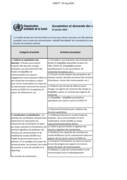
Ce modèle de plan de communication est conçu pour donner aux pays une idée générale des activités de communication à considérer lorsqu'ils préparent l'introduction des vaccins contre la COVID-19. Le tableau ci-dessous doit être complété, avec un plan de communication narratif fournissant
...
des orientations et comprenant les objectifs stratégiques, les publics cibles, etc. Les pays peuvent adapter ce modèle au contexte local et y ajouter des activités en fonction du contexte national.
more
