
Filter
393
Text search:
World
Health
Organisation
Zimbabwe
Featured
Recommendations
30
New Publications
79
Language
Document type
No document type
235
Studies & Reports
86
Guidelines
33
Manuals
12
Strategic & Response Plan
10
Situation Updates
6
Fact sheets
5
Training Material
3
Infographics
2
Brochures
1
Countries / Regions
Zimbabwe
33
Africa
33
South Africa
23
Zambia
20
Uganda
10
Malawi
10
Mozambique
10
Kenya
9
Global
8
Nigeria
6
Ethiopia
6
Ghana
6
Tanzania
6
Namibia
6
Eswatini/ Swaziland
6
Botswana
6
Sierra Leone
5
Rwanda
5
East and Southern Africa
5
Congo, Democratic Republic of
4
Cameroon
4
Guinea
3
Senegal
3
Mali
3
Indonesia
3
Lesotho
3
Liberia
2
Haiti
2
India
2
South Sudan
2
Bangladesh
2
Benin
2
Ukraine
2
Angola
2
Myanmar / Burma
2
West and Central Africa
2
Asia
2
Burkina Faso
1
Côte d’Ivoire / Ivory Coast
1
Niger
1
Philippines
1
Nepal
1
Pakistan
1
Syria
1
Chad
1
Cambodia
1
Gambia
1
Sudan
1
Central African Republic
1
Madagascar
1
Middle East and North Africa
1
South–East Asia Region
1
Southern Africa
1
Laos
1
Moldova
1
Gabon
1
Mauritius
1
Authors & Publishers
Publication Years
Category
Countries
145
Clinical Guidelines
29
Public Health
27
Key Resources
18
Women & Child Health
15
Capacity Building
7
Pharmacy & Technologies
2
Toolboxes
HIV
60
Disability
43
AMR
26
COVID-19
22
TB
19
Global Health Education
18
Mental Health
15
Planetary Health
14
NTDs
13
Cholera
11
Caregiver
11
Rapid Response
6
Ebola & Marburg
5
Conflict
5
Natural Hazards
5
Social Ethics
5
2.0 Rapid Response
5
Health Financing Toolbox
4
Refugee
3
NCDs
3
Malaria
2
Progress Report
We need to be concerned about mental health in the context of climate change
Advising principles. The purpose of this document is to support competent authorities in charge of IHR implementation to improve national capacities for the prevention, detection and control of events, by strengthening communications and coordination between points of entry and the national
...


Living Conditions Among Persons with Disability Survey Report
DIAGNOSIS, MANAGEMENT OF UNCOMPLICATED AND SEVERE MALARIA
The GHS Index is intended to be a key resource in the face of increasing risks of high-consequence and globally catastrophic biological events and in light of major gaps in international financing for preparedness. These risks are magnified by a rapidly changing and interconnected
...

This situation analysis has gathered information about the current state of AMR, contributing factors and antimicrobial use in Zimbabwe from the human, animal, agricultural and environmental sectors. Data has been gathered from different sectors suc
...

Journal of Virus Eradication 2016; 2 (Supplement 4): 1–6
Review
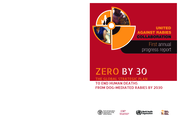
Rabies is entirely preventable, and vaccines, medicines, tools and technologies have long
been available to prevent people from dying of dog-mediated rabies. Nevertheless, rabies still
kills about 60 000 people a year, of whom over 40% are children under 15, mainly in rural areas
of economically
...
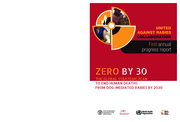
Rabies is entirely preventable, and vaccines, medicines, tools and technologies have long been available to prevent people from dying of dog-mediated rabies. Nevertheless, rabies still kills about 60 000 people a year, of whom over 40% are children under 15, mainly in rural areas of economically dis
...
Guide de réadaptation à base communautaire (RBC)
En 2003, une Consultation internationale consacrée à l’examen de la réadaptation à base communautaire organisée à Helsinki a émis un certain nombre de recommandations essentielles. Par la suite, la RBC a été redéfinie, dans un document
...
Recommendations to develop guidelines on community-based rehabilitation (CBR) were made during the International Consultation to Review Community-based Rehabilitation which was held in Helsinki, Finland in 2003. WHO; the International Labour Organization; the United Nations Educational, Scientific a
...
La schistosomiase humaine est une maladie parasitaire chronique et aigüe causée par une infection par des douves du sang (vers trématodes) du genre Schistosoma. Cette maladie est un problème de santé publique dans les zones tropicales et
subtropicales d’Afrique, d’Asie, des Caraïbes et dâ
...
Les coronavirus forment une vaste famille de virus qui peuvent être pathogènes chez l’homme et chez l’animal. On sait que, chez l’être humain, plusieurs coronavirus peuvent entraîner des infections respiratoires dont les manifestations vont du simple rhume à des maladies plus graves comme
...
