
Filter
1550
Text search:
The
National
Institute
for
Communicable
Diseases
Featured
148
414
Language
Document type
734
357
224
87
81
23
19
12
8
2
2
Countries
128
83
61
57
48
43
41
36
36
36
35
27
25
23
22
22
21
20
20
18
16
16
15
13
13
12
12
10
10
10
10
9
9
9
8
7
7
6
6
5
5
5
5
4
4
4
4
4
4
4
4
4
4
4
3
3
3
3
3
3
3
3
3
3
3
3
3
3
2
2
2
2
2
2
2
2
2
2
2
2
1
1
1
1
1
1
1
1
1
1
1
1
1
1
1
1
1
1
1
1
1
1
1
1
1
1
1
1
1
Authors & Publishers
Publication Years
Category
661
207
131
61
38
20
18
Toolboxes
141
95
94
85
77
54
50
48
35
33
32
31
27
26
26
19
14
14
13
12
10
10
7
5
3
1

This country cooperation strategy (CCS) outlines how the World Health Organization (WHO) will work with the Lao People’s Democratic Republic over the
...
The Demographic Dividend study on Rwanda assessed the socio-economic and human development potential of our country in the short, medium and long-t
...
2nd edition. Children with TB comprise about 10-12% of the total TB cases diagnosed in the country. This burden is likely to be higher given the ch
...
The Demographic Dividend study on Rwanda assessed the socio-economic and human development potential of our country in the short, medium and long-t
...

Africa CDC Non Communicable Diseases, Injuries Prevention and Control and Mental Health Promotion Strategy
recommended
Non-communicable diseases (NCDs) & injuries and mental health conditions constitute a serious impediment to achieving the vision of Agenda 2063 to
...
Monitoring is a crucial element in any successful programme. It is important to
know if health care facilities – and ultimately countries – are meeting the agreed
goals and objectives for prev
...
The document outlines strategies for reducing salt intake to combat high blood pressure, strokes, and heart disease in the Eastern Mediterranean Re
...
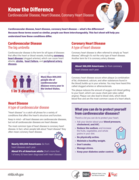
Cardiovascular disease, heart disease, and coronary heart disease may sound similar but they are not one in the same. This fact sheet will help you understand how these conditions differ.
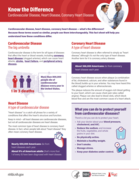
Cardiovascular disease, heart disease, and coronary heart disease may sound similar but they are not one in the same. This fact sheet will help you understand how these conditions differ.
The Demographic Dividend study on Rwanda assessed the socio economic and human development potential of our country in the short, medium and long-t
...

Chronic kidney disease (CKD) is an important contributor to mortality from noncommunicable diseases. No decrease has been seen for CKD mortality contrary to many other important non-
...
The documents focus on promoting healthier nutrition by addressing issues like sugar, salt, and fat intake, emphasizing their role in non-communicable dis
...

The aim of the present paper is to review capacity building in public health nutrition (PHN), the need
...
Guidance for General Medical and Specialised Mental Health Care Settings

The document “Guidelines for the Investigation and Control of Disease Outbreaks” provides practical guidance
...
This revision covers the main non-communicable diseases in Mozambique as well as the
...

In Control. A Practical Handbook for Professionals Working in Health Emergencies Internationally
recommended
In Control imparts knowledge, provokes reflection and triggers curiosity. The first half of the book provides an overview of the organisations, pri
...
Excessive consumption of salt (more than 5 g per day) raises blood pressure, a major risk factor for cardiovascular diseases such as heart disease and stroke, and is
...

In 2015, the United Nations set important targets to reduce premature
cardiovascular disease (CVD) deaths by 33% by 2030. Africa disproportionately
bears the brunt of CVD burden and has one of
...
This document outlines Rwanda's policy on non-communicable diseases. The overall goal of NCDs Policy is to alleviate
...
