Filter
75
Text search:
Syrian
Arab
Red
Crescent
Featured
Recommendations
7
New Publications
28
Language
Document type
No document type
34
Studies & Reports
15
Manuals
7
Situation Updates
6
Strategic & Response Plan
6
Guidelines
3
Infographics
2
Training Material
1
Resource Platforms
1
Countries / Regions
Syria
40
Turkey
4
Jordan
3
Iraq
2
Lebanon
2
Bangladesh
2
Sudan
2
Myanmar / Burma
2
Global
2
Nigeria
1
Congo, Democratic Republic of
1
Ethiopia
1
Haiti
1
India
1
Somalia
1
South Sudan
1
Afghanistan
1
Germany
1
Kenya
1
Central African Republic
1
Madagascar
1
Yemen
1
Middle East and North Africa
1
Africa
1
Authors & Publishers
Publication Years
Category
Countries
25
Key Resources
12
Clinical Guidelines
3
Women & Child Health
3
Public Health
2
Capacity Building
1
Toolboxes
Conflict
33
COVID-19
10
Natural Hazards
6
Refugee
6
Mental Health
4
Disability
2
Ebola & Marburg
2
Cholera
2
Polio
2
Rapid Response
2
TB
2
Planetary Health
2
Specific Hazards
1
Global Health Education
1
Health Financing Toolbox
1
2.0 Rapid Response
1
In 2024, we need US$1.5 billion to provide live-saving health care to millions of people in emergencies. An alarming combination of conflict, climate-related threats and increasing economic hardship mean an estimated 166 million people require health assistance.
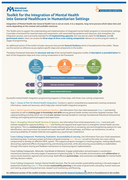
This Toolkit aims to support the understanding and implementation of integrated mental health programs in humanitarian settings. It provides a framework for essential steps and components, with associated key guidance and resources, that strengthen the integration process, and is primarily intended
...
COVID-19 has heavily emphasized how contact tracing is crucial for managing outbreaks, and as part of the strategy for adjusting, and eventually lifting, lockdowns and other stringent public health and social measures. As the pandemic develops further, it will be a core measure to manage further wav
...
The use of explosive weapons, such as bombs, rockets, and mortar and
artillery shells, in cities, towns and villages and in other populated areas
has devastating humanitarian consequences. Explosive weapons act mainly
through the projection of blast and fragmentation wi
...
At the World Humanitarian Summit in Istanbul in May 2016, leaders made over 3,700 commitments to advance the Agenda for Humanity. In their first self-reports against these commitments, 142 stakeholders described the efforts they made from June to December 2016 to realize this ambitious vision.
The
...

mhGAP is based on evidence-based technical guidelines (4) and provides a set of tools and
training packages to extend service provision. The mhGAP Intervention Guide (mhGAP-IG)
for MNS disorders in non-specialized health settings (8) is a clinical decision-making tool
for assessing and managing p
...
Guidance | Preparedness - Response and early recovery - Recovery and reconstruction

The document contains preliminary report on all aspects of WHO’s response in the Ebola outbreak. WHO Member States will discuss the report at the sixty-eighth World Health Assembly.

In an ambitious new era for health development under the 2030 Agenda for Sustainable Development, WHO and
its partners have a solid foundation of success on which to build. Health plays a fundamental role in development
and is the central focus of Sustainable Development Goal 3, “Ensure healthy
...
This rapid review report has identified the wastewater treatment plant (WWTP) options used in emergency settings, with decentralised wastewater treatment systems (DEWATS) and mobile wastewater treatment units performing most effectively and with minimal costs. Examples are taken from refugee camps a
...