
Filter
102
Text search:
Religions
for
Peace
Featured
9
28
Language
Document type
54
24
8
6
5
3
1
1
Countries / Regions
7
5
4
4
3
2
2
2
2
2
2
2
2
2
1
1
1
1
1
1
1
1
1
1
1
1
1
1
1
1
Authors & Publishers
Publication Years
Category
26
9
9
3
2
1
Toolboxes
20
11
9
9
7
3
3
2
2
1
1
1
1
1
1
This study emphasizes the contribution that women can play in the prevention of violent extremism within the family and society and analyzes the drivers and roles of women taking part in violent extremism and supporting violent and extremist groups.
UNDP Iraq is pleased to make this study and its r
...


This report outlines and analyses the implementation of the Bridge Builder Model. This is a two-way, capacity-sharing model aimed at bringing together local faith actors (LFAs) and international humanitarian actors to increase understanding, trust, coordination and collaboration.
Catholic Social Teaching (CST) has often been called ‘the Church’s best kept secret’. Thankfully, particularly with the release of Pope Francis’ encyclical Laudato Si’, and with the new RE GCSE, this is changing. CST is part of our Catholic young people’s heritage and a treasure they sho
...
CAFOD Policy Briefing Paper
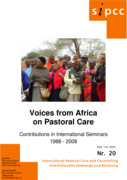
Contributions in International Seminars 1988 -2008
Intercultural Pastoral Care and Counselling, no. 20

Amoris laetitia: Post-Synodal Apostolic Exhortation on love in the family (19 March 2016)

This open access book not only describes the challenges of climate disruption, but also presents solutions. The challenges described include air pollution, climate change, extreme weather, and related health impacts that range from heat stress, vector-borne diseases, food and water insecurity and ch
...
Global Happiness Council

Das Grundgesetz. English Version: The Basic Law
recommended
Cornerstone of our society
Non-discrimination disability and ethnic rights

(Health Systems in Transition, Vol. 4, No. 3, 2014)
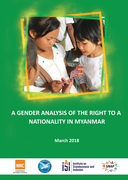
According to 2014 Census data, almost a third of the population in Myanmar do not have adequate identity and civil documentation. Of these, 54 percent are women.
Women who live in remote or conflict affected areas, who are displaced or belong to stateless ethnic and religious minorities face the ...
Women who live in remote or conflict affected areas, who are displaced or belong to stateless ethnic and religious minorities face the ...
Risk Communication and Community Engagement (RCCE) is an essential part of any disease outbreak response. Risk communication in the context of an Ebola outbreak refers to real time exchange of information, opinion and advice between frontline responders and people who are faced with the threat of Eb
...
