
Filter
304
Text search:
Mitchell,
S.
Featured
Recommendations
19
New Publications
34
Language
Document type
No document type
148
Studies & Reports
84
Guidelines
41
Manuals
14
Strategic & Response Plan
7
Fact sheets
7
Training Material
2
Situation Updates
1
Countries / Regions
Global
18
India
7
South Africa
7
Ukraine
6
Russia
6
Kenya
5
Western and Central Europe
5
Africa
5
Brazil
4
Eastern Europe
4
Philippines
3
Rwanda
3
Burkina Faso
2
Uganda
2
Malawi
2
Chile
2
Latin America and the Carribbean
2
Paraguay
2
Armenia
2
North America
2
Liberia
1
USA
1
Ethiopia
1
Cameroon
1
Ghana
1
Zimbabwe
1
Haiti
1
Nepal
1
Jordan
1
Germany
1
Lebanon
1
Zambia
1
Egypt
1
Syria
1
China
1
Indonesia
1
Bangladesh
1
Sudan
1
Argentina
1
North Macedonia
1
Bolivia
1
Madagascar
1
Eastern Europe and Central Asia
1
Venezuela
1
Albania
1
Canada
1
Georgia
1
Belgium
1
Belarus
1
Authors & Publishers
Publication Years
Category
Countries
49
Public Health
33
Clinical Guidelines
20
Key Resources
15
Women & Child Health
8
Pharmacy & Technologies
1
Toolboxes
Mental Health
39
Planetary Health
31
Disability
29
HIV
29
COVID-19
26
NCDs
23
TB
17
NTDs
15
Caregiver
9
Conflict
8
Global Health Education
7
AMR
5
Natural Hazards
4
Rapid Response
3
Refugee
3
Social Ethics
3
Pharmacy
3
Ebola & Marburg
2
Polio
1
Health Financing Toolbox
1
Malaria
1
2.0 Rapid Response
1

The article outlines the prioritized research agenda for the prevention and control of chronic respiratory diseases (CRDs) as part of the World Health Organization's (WHO) action plan on noncommunicable diseases (NCDs) from 2008 to 2013. It highligh
...

Over the ages, human societies have altered local ecosystems and modified regional climates. Today the human influence has attained a global scale. This reflects the recent rapid increase in population size, energy consumption, intensity of land use, international trade and travel, and other human a
...

This purpose of this guide is to inform robust evaluations of the WHO training package – a package aimed at personnel whose primary role in health-care facilities is environmental cleaning, hereafter referred to as cleaners.
The WHO training package – Environmental cleaning and infection prev
...
The chapter Dementia in Latin America and the Caribbean: Prevalence, Incidence, Impact, and Trends over Time, is part of the publication series titled “Decade of Healthy Aging: situation and challenges”. This document aims to provide an outline of the current situation in Latin America and the C
...
We will soon be piloting a project titled “Integrating Spirituality into Patient Care” that will form “spiritual care teams” to assess and address patients’ spiritual needs in physician outpatient practices within Adventist Health System, the largest Protestant healthcare system
...
The National Tuberculosis Programme (NTP) of Rwanda (known as TB & ORD Division/IHDPC/RBC) is preparing to write their next National Strategic Plan and for this reason Rwanda was selected as a country to received technical assistance (TA) to conduct an assessment of their surveillance system using t
...
More than 700 000 people lose their life to suicide every year. The world is not on track to reach the 2030 suicide reduction targets. WHO advocates for countries to take action to prevent suicide, ideally through a comprehensive national suicide prevention strategy. Governments and communities can
...
Risk factors for asthma among schoolchildren who participated in a casecontrol study in urban Uganda
Data on asthma aetiology in Africa are scarce. We investigated the risk factors for asthma among schoolchildren (5–17 years) in urban Uganda. We conducted a case-control study, among 555 cases and 1115 controls. Asthma was diagnosed by study clinicians. The main risk factors for asthma were tertia
...

Bonchial asthma is the most common chronic respiratory disease in the world. In Kenya, it has been estimated that about 7.5% of the Kenyan population, nearly 4 million people, are currently living with asthma. Many cases tend to be underdiagnosed and undertreated which leads to high levels of morbid
...
En 2015, murieron 5,9 millones de niños menores de cinco años (1). Las principales causas de muerte en los niños a nivel mundial son la neumonía, la prematuridad, las complicaciones durante el parto, la sepsis neonatal, las anomalías congénitas, las enfermedades diarreicas, las lesiones
...

How should humanitarian organisations prepare and respond to COVID-19 in humanitarian settings in low- and middle-income countries?
This Rapid Learning Review outlines 14 actions, insights and ideas for humanitarian actors to consider in their COVID-19 responses. It summarises and synthesises the
...

Nature Medicine, https://doi.org/10.1038/s41591-021-01283-z
This compilation of publications focuses on Core Competencies needed for implementing a One Health approach.

ABSTRACT
More than 500 million people worldwide live with cardiovascular disease (CVD). Health systems today face fundamental challenges in delivering optimal care due to ageing populations, healthcare workforce constraints, financing, availability and affordability of CVD medicine, and service del
...
Plos Neglected Tropical Diseases 8(11): e3229 (20 November 2014)
Parasites & Vectors volume 11, Article number: 264 (2018)
Dengue creates a staggering epidemiological and economic burden for endemic countries. Without a specific therapy and with a commercial vaccine that presents some problems relative to its full effectiveness, initiatives to improve vector
...
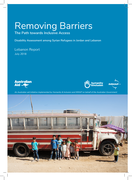
Disability. Assessment among Syrian Refugees in Jordan and Lebanon
he aetiology of asthma and allergic disease remains poorly understood, despite considerable research. The International Study of Asthma and Allergies in Childhood (ISAAC), was founded to maximize the value of epidemiological research into asthma and allergic disease, by establishing a standardized m
...
This Toolkit is intended to guide humanitarian programme managers and healthcare providers to ensure that sexual and reproductive health interventions put into place both during and after a crisis are responsive to the unique needs of adolescents.
