
Filter
375
Text search:
Hygiene
Hub
Featured
Recommendations
46
New Publications
110
Language
Document type
No document type
149
Studies & Reports
76
Guidelines
51
Strategic & Response Plan
44
Manuals
20
Fact sheets
14
Situation Updates
12
Infographics
4
Training Material
3
Resource Platforms
2
Countries / Regions
Global
22
India
20
Nigeria
17
Bangladesh
16
Sierra Leone
14
Syria
13
Kenya
13
Congo, Democratic Republic of
12
Myanmar / Burma
12
Liberia
11
South Sudan
9
Uganda
8
Philippines
7
Ukraine
7
Guinea
6
Western and Central Europe
6
Nepal
5
South Africa
5
Senegal
4
Ethiopia
4
Rwanda
4
Central African Republic
4
Yemen
4
Mali
3
Ghana
3
Jordan
3
Malawi
3
Mozambique
3
Namibia
3
Sri Lanka
3
West and Central Africa
3
South–East Asia Region
3
Venezuela
3
Guinea-Bissau
2
Cameroon
2
Togo
2
Zimbabwe
2
Germany
2
Zambia
2
Turkey
2
Chad
2
Tanzania
2
Cambodia
2
Benin
2
Burundi
2
Libya
2
East and Southern Africa
2
Latin America and the Carribbean
2
Eastern Europe and Central Asia
2
Africa
2
Bhutan
2
Vietnam
2
Burkina Faso
1
Côte d’Ivoire / Ivory Coast
1
Niger
1
Haiti
1
Somalia
1
Pakistan
1
Afghanistan
1
Lebanon
1
Thailand
1
Gambia
1
China
1
Indonesia
1
Sudan
1
Vanuatu
1
Peru
1
Eswatini/ Swaziland
1
Brazil
1
Colombia
1
Angola
1
Middle East and North Africa
1
Western Pacific Region
1
Asia
1
Palestine
1
Congo-Brazzaville
1
France
1
Tunisia
1
United Kingdom
1
Portugal
1
Spain
1
Algeria
1
Authors & Publishers
Publication Years
Category
Countries
161
Key Resources
31
Public Health
21
Clinical Guidelines
20
Women & Child Health
9
Capacity Building
4
Pharmacy & Technologies
1
Toolboxes
COVID-19
82
Conflict
29
Ebola & Marburg
28
HIV
16
AMR
16
Natural Hazards
14
Planetary Health
14
Rapid Response
13
Refugee
12
Global Health Education
12
Caregiver
10
2.0 Rapid Response
8
Pharmacy
7
Cholera
6
Mental Health
6
Disability
5
Health Financing Toolbox
4
Typhoon
2
TB
2
NTDs
2
NCDs
2
Polio
1
Malaria
1
The Monitoring Report, which covers the first two months of the response from 25 August to 31 October, highlights the work of the Government of Bangladesh, in cooperation with humanitarian partners who are working to provide relief services for the refugee population and Bangladeshi host communities
...
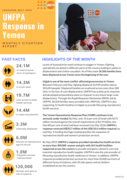
Levels of humanitarian need continue to stagger in Yemen. Fighting sporadically escalated in different parts of the country leading to spikes in displacement and civilian casualties. As of May some 36,506 families have been displaced across Yemen since the beginning of the year. Hajjah is one of the
...

This purpose of this guide is to inform robust evaluations of the WHO training package – a package aimed at personnel whose primary role in health-care facilities is environmental cleaning, hereafter referred to as cleaners.
The WHO training package – Environmental cleaning and infection prev
...

This document describes the key areas that national governments should consider for the introduction and scale-up of point-of-care (POC) diagnostics within national programmes, as new innovative POC technologies are being introduced into the market. The next steps taken to include these new innovati
...

COVID-19 outbreak is associated with the generation of many types of infectious wastes, including infected masks, gloves and other protective equipment, together with a higher volume of general waste of the same nature.
In September 2021, the UN and its partners presented a response plan to mitigate the impact of the water crisis in northern and north-east Syria which requested US$200 million to assist up to 3.4 million of the over five million people estimated to be affected by the water crisis in northern Syria b
...
Recent increases in family planning (FP) use have been reported among women of reproductive age in union (WRAU) in Senegal. However, trends have not been monitored among harder-to-reach groups (including adolescents, unmarried and rural poor women), key to understanding whether FP progress is equita
...

Now entering its ninth year, the crisis in north-east Nigeria has created vulnerabilities and humanitarian concerns. An estimated 7.7 million men, women, boys and girls are in acute need of protection and assistance. While the humanitarian community has provided life-saving assistance to over 5.6 mi
...
GUIDELINES FOR AWWs/ASHAs/ANMs/PRIs
Cholera remains an issue of major public health importance in Kenya. Kenya has in recent years experienced outbreaks affecting different parts of the country
Update - 27 June 2018
During the reporting week, the monsoon rains brought 252 mm of rainfall compared to 95 mm during the previous week. The downpour caused 65% of the week’s weather-related incidents (i.e. landslides, wind-storms and floods). Three rain gauges were installed in Chakmarkul ( ...
During the reporting week, the monsoon rains brought 252 mm of rainfall compared to 95 mm during the previous week. The downpour caused 65% of the week’s weather-related incidents (i.e. landslides, wind-storms and floods). Three rain gauges were installed in Chakmarkul ( ...
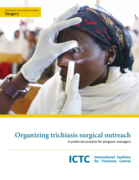
A key component of elimination is to reduce the number
of unmanaged trachomatous trichiasis cases to less than
1 per 1,000 population in affected areas. This will require
not only a large increase in the number of surgeries
performed, but also improvements in the quality of surgery
and in the e
...
Sudan has a long history of hosting refugees and asylum seekers with 991,787 individuals, 51 per cent female and 53 per cent children, expected to live in Sudan by the end of 2020.
The report reviews progress with the task of planning and implementing measures necessary to secure a completely polio-free world. It also examines actions aimed at ensuring successful transfer of polio assets, innovations developed and lessons learned to countries’ public health programmes and ot
...
This brief focuses specifically on the Grand Nord (Great North): the Beni and Lubero territories of northern North Kivu that are the epicentre of the outbreak. Further participatory enquiry should be undertaken with the affected populations, but given ongoing transmission, conveying key consideratio
...
The Greater Horn of Africa is experiencing one of the worst food insecurity situations in decades. It is estimated
that more than 37 million people are in Integrated Food Security Phase Classification (IPC)1 phase 3 or above and approximately 7 million children under the age of five are acutely mal
...
In many conflicts around the world, more children die from diseases linked to unsafe water than from direct violence. UNICEF is releasing Water Under Fire volume 3, a report that highlights the issues children face in accessing water in times of war. The report demonstrates the humanitarian impact o
...
