
Filter
7902
Text search:
methods
Featured
Recommendations
674
New Publications
1993
Language
Document type
No document type
4355
Studies & Reports
1435
Guidelines
1013
Manuals
456
Strategic & Response Plan
215
Training Material
159
Fact sheets
158
Situation Updates
38
Infographics
27
Resource Platforms
16
Online Courses
14
Brochures
8
Videos
5
App
2
Countries / Regions
Global
381
India
346
Kenya
213
Ethiopia
169
South Africa
165
Nepal
158
Uganda
141
Sierra Leone
139
Nigeria
137
Western and Central Europe
136
Malawi
124
Tanzania
123
Myanmar / Burma
120
Zambia
119
Rwanda
119
Liberia
118
Bangladesh
110
Latin America and the Carribbean
103
Africa
99
Ghana
98
Namibia
72
Syria
68
Ukraine
60
Eastern Europe
58
Zimbabwe
54
Philippines
52
Indonesia
51
Congo, Democratic Republic of
49
Senegal
48
Cambodia
48
Lesotho
48
Russia
41
Germany
40
South–East Asia Region
39
Haiti
38
Mozambique
38
Burkina Faso
35
Botswana
35
West and Central Africa
34
Asia
33
East and Southern Africa
32
Brazil
31
Guinea
30
South Sudan
29
Cameroon
27
Middle East and North Africa
27
Pakistan
23
Lebanon
21
Eswatini/ Swaziland
21
Yemen
21
Eastern Europe and Central Asia
21
China
19
Colombia
19
Vietnam
19
Afghanistan
18
Benin
18
Jordan
17
Iraq
15
Tajikistan
15
Venezuela
14
Mali
13
USA
13
Thailand
13
Peru
13
Sri Lanka
12
Western Pacific Region
12
Albania
12
Côte d’Ivoire / Ivory Coast
11
Sudan
11
Madagascar
10
Georgia
10
Turkey
9
Laos
9
Moldova
9
Somalia
8
Central African Republic
8
Argentina
8
North Macedonia
8
Paraguay
8
Kyrgyzstan
8
Chile
7
Southern Africa
7
Iran
7
Burundi
6
Kazakhstan
6
North America
6
Egypt
5
Chad
5
Ecuador
5
Angola
5
Guatemala
5
Mexico
5
Palestine
5
Timor Leste/ East Timor
5
Niger
4
Gambia
4
Serbia
4
Honduras
4
Libya
4
Armenia
4
Spain
4
Togo
3
Dominican Republic
3
Hungary
3
El Salvador
3
Bolivia
3
Greece
3
Poland
3
Canada
3
Turkmenistan
3
Portugal
3
Bosnia and Herzegovina
3
Morocco
2
Saudi Arabia
2
Singapore
2
Papua New Guinea
2
Croatia
2
Nicaragua
2
Other region
2
Bhutan
2
Italy
2
Djibouti
2
Qatar
2
Estonia
2
Romania
2
Lithuania
2
Uzbekistan
2
Jamaica
2
Japan
2
Azerbaijan
2
Malaysia
1
Mauritania
1
Fiji
1
Mongolia
1
Congo-Brazzaville
1
Bulgaria
1
Slovakia
1
Gabon
1
Belgium
1
France
1
Maldives
1
Mauritius
1
Tunisia
1
United Kingdom
1
Norway
1
Belarus
1
Latvia
1
Belize
1
Costa Rica
1
Guyana
1
Panama
1
Authors & Publishers
Publication Years
Category
Countries
2864
Clinical Guidelines
553
Key Resources
516
Women & Child Health
450
Public Health
434
Capacity Building
203
Pharmacy & Technologies
91
Toolboxes
HIV
626
Mental Health
580
COVID-19
502
TB
425
Disability
322
Planetary Health
295
NTDs
295
Caregiver
229
AMR
209
Ebola & Marburg
172
NCDs
160
Conflict
158
Pharmacy
140
Global Health Education
135
Rapid Response
131
Refugee
126
Malaria
117
Health Financing Toolbox
113
Natural Hazards
100
2.0 Rapid Response
93
Cholera
67
Zika
61
Specific Hazards
56
Social Ethics
40
Polio
34
Typhoon
2

This paper was commissioned by N´weti and Wemos as part
of the project “Equitable health financing for a strong health
system in Mozambique”. Its purpose is to contribute to the
debate of the Mozambican Ministry of Health’s draft Health
Sector Financing Strategy (HSFS) 2025 – 2034
We investigate whether and to what extent Chinese development finance affects infant mortality, combining 92 demographic and health surveys (DHS) for a maximum of 53 countries and almost 55,000 sub-national locations over the 2002-2014 period. We address causality by instrumenting aid with a set of
...
To realize Agenda 2030, aid agencies, private philanthropies, and their partners in the Global South need better data to monitor how official development finance (ODF) dollars advance the Sustainable Development Goals (SDGs) and avoid missing the mark. In this report, we summarize the results of a n
...

Insufficient funding is hindering the achievement of malaria elimination targets in Africa, despite the pressing need for increased investment in malaria control. While Western donors attribute their inaction to financial constraints, the global health community has limited knowledge of China’s ex
...
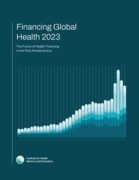
IHME’s Financing Global Health report provides an overview of health spending around the world, with a special focus on investments in health in low- and middle-income countries. The report examines how this funding for health is changing each year and forecasts how it may change in the future. Fi
...

In the last three decades, health financialization has surged in
several creative ways, yet this growing phenomenon remains surprisingly
unknown, and neglected, in the global health arena. Financialization in the
health domain could be described as the uncontrolled expansion of finance along vari
...

Reflecting its commitment to achieving the Sustainable Development Goals (SDGs), Namibia volunteered to undertake a second national review of the SDGs in 2021. The focus is on three SDG dimensions, namely, Economic, Social, and Environmental. These three dimensions are comprehensively integrated in
...

Achieving financial risk protection for the whole population requires significant financing for health. Health systems in low- and middle-income countries (LMIC) are plagued with persistent underfunding, and recent reductions in official development assistance have been registered. To create fiscal
...

This comprehensive HPFM report thoroughly explores Kenya’s health financing landscape. It provides an in-depth analysis of the current state of affairs and sheds light on required strategic changes in health financing. The report points out the need to improve public financial management within th
...
This paper examines the implications of the IMF’s April 2024 macro-fiscal forecast updates on government health expenditure (GHE) across 170 economies through 2029, covering nearly all years remaining to achieve the Sustainable Development Goals (SDGs). The findings reveal wide disparities in gove
...

Conditioned domestic financing policy, referring to the domestic financing of health projects, programs, and national responses conditioned by global health funding agencies and recipient country governments, is one mechanism to promote sustainability and country ownership. We aim to understand how
...

The COVID-19 pandemic exposed critical gaps in the global response to health crises, particularly in the financing of pandemic prevention, preparedness, response, recovery, and reconstruction. This chapter presents a comprehensive framework for pandemic financing that spans the entire pandemic cycle
...
There has never been a more critical moment to invest in WHO, and strengthen the unique role it plays in global health. Now is the time to sustainably finance WHO and invest in a healthy return for all.
Questions concerning the relevance and reform of official development assistance (ODA), and how ODA and broader development finance could—or should—change to better reflect shifting demands are not new, with academics and policymakers suggesting a range of options for reform. In this background
...
Frequent efforts to revise the official development assistance (ODA) accounting rules have raised important questions about the integrity and relevance of what currently “counts” as ODA spending. In this note, we outline a brief history of the evolution of the ODA accounting rules to date, highl
...

The Plan subscribes to the goals and pillars of the WHO Global Technical Strategy against Malaria 2016-2030 (GTS), while presenting key elements to address the specific challenges of the Region.

The guidelines are primarily intended for health-care professionals working in first- or second-level health-care facilities, including emergency, inpatient and outpatient services. They are also directed at policy-makers, health-care planners and programme managers, academic institutions, non-gover
...

The objectives of this guideline are the same as those of the 2011 edition, namely to provide evidence-based normative guidance on interventions to improve adolescent morbidity and mortality by reducing the chances of early pregnancy and its resulting poor health outcomes. The specific objectives of
...

Only 10 per cent of households have electricity. Less than one half (46 per cent) of the households use basic sanitation facilities. Three in every four of the household population had basic drinking water services. More than one third of under-5 Malawian children (boys 39 per cent than girls 32 per
...
