
Filter
871
Text search:
formulations
Featured
128
239
Language
Document type
405
223
114
55
20
20
13
10
4
3
2
1
Countries
54
40
28
20
17
15
14
12
11
11
11
10
10
9
9
9
8
8
8
8
7
7
7
7
7
7
6
5
5
5
4
4
4
4
4
4
4
3
3
3
3
3
2
2
2
2
2
2
2
2
2
2
2
2
2
2
1
1
1
1
1
1
1
1
1
1
1
1
1
1
1
1
1
1
1
1
1
1
1
Authors & Publishers
Publication Years
Category
292
142
61
61
41
15
14
Toolboxes
91
68
60
56
54
43
43
25
23
21
14
13
11
10
10
10
8
7
7
6
5
4
4
2
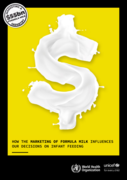
This report - the largest of its kind to date - draws on the experiences of over 8,500 women and 300 health professionals across eight countries. It exposes the aggressive marketing practices used by the formula milk industry, and highlights impacts on families’ decisions about how to feed their b
...
The African Centers for Disease Control and Prevention and the African Union together have called for a New Public Health Order which will safeguard the health and economic security of the continent as it strives to meet the aspirations of the Agenda 2063. A key pillar of this mandate seeks to expan
...

The Adult Standard Treatment Guidelines and Essential Medicines List for Hospital Level provide a platform for transparency to enable equitable access to safe, effective, and affordable treatment options at hospital level taking into consideration the changing clinical needs of our population and th
...
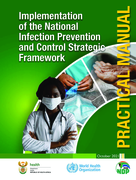
The strategic framework gives guidance to public and private health facilities and health workers on compliance with standards relating to IPC practices. To further assist health facilities to implement the IPC strategic framework, this practical implementation manual has been developed in parallel
...
Reviewed Essential Medicines List July 2021
Clinical Microbiology and Infection Volume 21, Issue 5, May 2015, Pages 433-443;
The neglected zoonotic diseases (NZDs) have been all but eradicated in wealthier countries, but remain major causes of ill-health and mortality across Africa, Asia, and Latin America. This neglect is, in part, a conse
...
The new review paper, The Impacts of Climate Change on Health, identifies the extent to which increasing emissions, extreme weather and temperatures elevate health risks, from infectious disease to malnutrition, and assesses the associated health burden. It concludes that the health burden will exce
...
A view of global supply chains, pressure points, and implications for antimicrobial resistance response

Front. Public Health, 30 April 2021 | https://doi.org/10.3389/fpubh.2021.628744

The PHC STGs and EML should be used by healthcare workers providing care at clinics, community health centres, and gateway clinics at hospitals.
Pharmaceutical and Therapeutics Committees (PTCs) are responsible for ensuring the availability of medicines listed in the PHC EML at those facilities, as
...

The leishmaniases are a group of diseases caused by Leishmania spp., which occur in cutaneous, mucocutaneous and visceral forms. They are neglected tropical diseases (NTDs), which disproportionately affect marginalized populations who have limited access to health care. HIV co-infected patients with
...
The goal of the global outbreak response for monkeypox is to stop human-to-human transmission of monkeypox, with a priority focus on communities at high risk of exposure which may differ according to context, and to effectively use strong public health measures to prevent onward spread of the diseas
...
2nd edition. These guidelines include several notable changes from the first edition. For cutaneous leishmaniasis, ketoconazole has been removed from the list of treatment options; the number of Leishmania species for which there is strong evidence for the efficacy of miltefosine has increased from
...
Patient-centred care (PCC) is a pillar of quality health services, where decision-making power is shared between the clinician and the patient. Although, this approach could be adopted with easiness in high income settings or in countries with unified health systems, in settings such as Peru, where
...

These guidelines provide updated evidence-based recommendations on the priority HCV-related topics from the 2018 WHO Guidelines for the care and treatment of persons diagnosed with chronic hepatitis C infection and the 2017 WHO Guidelines on hepatitis B and C testing. These priority areas are:
...
Le Groupe spécial mondial de lutte contre le choléra (GTFCC) a lancé Mettre fin au choléra : Une feuille de route mondiale pour 2030 (la Feuille de route mondiale. Cette stratégie vise à réduire de 90 % le nombre de décès dus au choléra dans le monde et à mettre fin à la maladie dans a
...
On 15–16 December 2020, WHO and the Medicines for Malaria Venture co-convened a technical consultation to consider the preferred product characteristics (PPCs) for drugs used in malaria chemoprevention. The main goal of the technical consultation was to agree on the most important PPCs for drugs t
...
