
Filter
1872
Text search:
Centers
of
Disease
Control
CDC
Featured
196
501
Language
Document type
986
299
190
111
78
72
47
28
25
18
9
4
2
2
1
Countries / Regions
88
83
70
58
54
45
45
45
42
37
34
29
29
27
27
27
26
26
26
25
24
24
21
19
19
18
17
17
17
16
15
14
14
14
14
13
13
13
13
11
11
10
9
9
9
9
8
8
7
6
6
6
5
5
5
5
5
4
4
4
3
3
3
3
3
3
3
3
2
2
2
2
2
2
1
1
1
1
1
1
1
1
1
1
1
1
1
1
1
1
1
1
1
1
1
1
1
1
1
1
1
Authors & Publishers
Publication Years
Category
607
171
103
99
62
33
29
Toolboxes
217
187
151
117
98
66
64
59
54
45
44
39
34
34
29
29
24
24
21
17
13
9
8
7
2
Coding of causes of death mentioning Multisystemic Inflammatory Syndrome associated with coronavirus disease

The goal of the United States Government for the President's Emergency Plan for AIDS Relief (PEPFAR) in Mozambique is to support country efforts to achieve epidemic control by 2020 through evidence
...
The World Health Organization (WHO) Global Status Report on Noncommunicable Diseases 2010 projects that noncommunicable diseases (NCDs) will be responsible for over 44 million deaths during the next decade, representing an increase of about 15% sinc
...
The objectives of pertussis surveillance are to:hmonitor disease burden and the impact of the pertussis vaccination programme, with a special focus
...

This guide provides an overview of the major elements that must be considered before, during and after the implementation of antigen-detecting rapid diagnostic tests (Ag-RDTs) for SARS-CoV-2. This g
...
The context of the Ebola epidemic presented extreme challenges for Oxfam, as it did for many organisations. At the onset of the epidemic, there was a general lack
...

Outbreak surveillance in humanitarian emergencies involves rapid detection, data collection, and analysis to identify disease threats, while response focuses on implementing timely control measures
...

About one fourth of the world’s population is estimated to have been infected with the tuberculosis (TB) bacilli, and about 5–10% of those infected develop TB
...

The Journal of Infectious Diseases, jiy435, https://doi.org/10.1093/infdis/jiy435.
Many outbreaks reported high proportions of infected HWs. Similar HW infection rates and exposure risk factors in
...
The document explains why vector control is important in national programmes and describes the preparation of a tailor-made vector control plan for
...
Water, sanitation, hygiene, and waste management for SARS-CoV-2, the virus that causes COVID-19
recommended
Updated Interim guidance 29 July 2020
The provision of safe water, sanitation and waste management and hygienic conditions is essential for preventing and for protecting human health during all infectious
...

Social and Behaviour Change Communication (SBCC) is essential for the effective control, prevention and elimination of malaria. The 2018–2030 Strategic Framework for Malaria SBCC guides countries
...
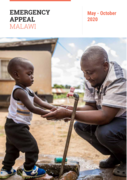
Coronavirus Disease-19 (COVID-19) was declared a global pandemic on 11 March 2020, and Malawi declared its first case on 2 April. As of 30 April, there were 36 confirmed positive cases
...
The Zimbabwe Multi-Sectoral Cholera Elimination Plan (2018–2028) aims to eradicate cholera by improving water, sanitation, and healthcare infrastructure, strengthening disease surveillance, and expanding oral cholera vaccination (OCV). The strateg
...

This guide includes information relevant for tuberculosis (TB) program and laboratory managers, as well as Ministry of Health officials across disease programs interested in establishing integrated
...
22 July 2022. This document summarizes current WHO guidance for public health surveillance of coronavirus disease 2019 (COVID-19) in humans caused by infection with severe acute respiratory syndrome
...
Covid-19 Epidemiological Surveillance Guide: Public Health Emergency of National Importance for Coronavirus Disease 2019 - version 4
WHO Guideline. Since 2010, countries in the meningitis belt have started to introduce a new serogroup A meningococcal conjugate vaccine conferring individual protection and herd immunity. Following the successful roll-out of this vaccine, epidemics
...
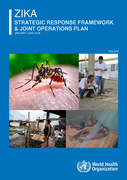
The strategy focuses on mobilizing and coordinating partners, experts and resources to help countries enhance surveillance of the Zika virus and disorders that could be linked to it, improve vector control
...
This guidance is intended for use in developing standalone TB strategic plans, or TB interventions as part of multidisease or health sector plans. It describes key considerations and steps for strategic planning for TB in line with the World Health
...
