
Filter
1109
Text search:
AIDS
indicator
survey
Featured
91
441
Language
Document type
806
150
65
39
27
8
5
4
3
1
Countries
72
59
46
46
44
42
42
39
35
33
31
28
27
24
24
23
22
18
18
18
16
14
14
12
11
11
11
10
10
9
8
7
6
5
4
4
4
4
4
3
3
3
2
2
2
2
2
2
2
2
2
2
2
2
2
2
2
1
1
1
1
1
1
1
1
1
1
1
1
1
1
1
1
1
1
1
1
1
1
1
1
1
1
Authors & Publishers
Publication Years
Category
723
51
51
49
41
7
5
Toolboxes
72
49
46
38
21
18
17
16
14
14
12
10
10
9
7
6
6
5
5
4
4
4
2
1
1
1
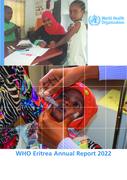
During the year 2022, COVID-19 continued to be a significant challenge in Eritrea as in many other countries across the world. As COVID-19 devastated communities around the world, WHO worked with the MoH to strengthen the National and Sub-National health systems in order to meet community needs and
...
Violence against women and girls is widespread in the Region of the Americas, resulting in enormous consequences for the health and wellbeing of women and girls, their families and communities. These costs are unacceptable and they can be prevented through evidence-based action, including the health
...

La violencia contra las mujeres y las niñas es generalizada en la Región de las Américas, y tiene enormes consecuencias para su salud y bienestar, así como el de sus familias y sus comunidades. Se trata de un costo inaceptable que puede ser prevenido mediante acciones basadas en la evidencia, pr
...

This report started with a simple question—“How can we tell how much funding is devoted to global health programs?”—and ended (more than two years later) with an answer that is far from simple. As those who have tried know well, tracking health-related funding is challenging in any setting,
...
The 2018 global health financing report presents health spending data for all WHO Member States between 2000 and 2016 based on the SHA 2011 methodology. It shows a transformation trajectory for the global spending on health, with increasing domestic public funding and declining external financing. T
...

The Creditor Reporting System was analysed for official development assistance funding disbursements towards TB control in 11 conflict-affectedstates, 17 non-conflict-affected fragile states and 38 comparable non-fragile states. The amounts of funding, funding relative to burden, funding relative to
...
With sustained economic growth in many parts of the developing world, an increasing number of countries are transitioning away from the most subsidized development finance as they exceed income and other qualification requirements. Cross-country evidence suggests that Development Assistance Committe
...

Since the Alma Ata Declaration in 1978, community health volunteers (CHVs) have been at the forefront, providing health services, especially to underserved communities, in low-income countries. However, consolidation of CHVs position within formal health systems has proved to be complex and continue
...

The Government of Malawi is committed to improving health and livelihoods in Malawi through community health – the
provision of basic health services in rural and urban communities with the participation of people who live there.
Historically, Community Health has significantly contributed to im
...

Adolescence is a critical stage in life for physical, cognitive and emotional development, shaping future health and well-being. Comprehensive measurement of adolescent health is essential to prioritize health issues, guide interventions and track progress. However, global, regional and national ado
...

About one fourth of the world’s population is estimated to have been infected with the tuberculosis (TB) bacilli, and about 5–10% of those infected develop TB disease in their lifetime. The risk for TB disease after infection depends on several factors, the most important being the person’s im
...

The Country Cooperation Strategy is the World Health Organization (WHO)’s reference for country work guiding planning and resource allocation through alignment with national health priorities and harmonization with other development partners. It clarifies roles and functions of WHO in supporting t
...

Malawi is a landlocked country with a surface area of 118,484 km2. Administratively, the country is divided into three regions, namely the Northern, Central and Southern regions. The country has 28 districts, which are further divided into traditional authorities (TA) ruled by chiefs. The TAs are su
...

The social protection landscape for people affected by TB in the WHO South-East Asia Region

Challenges and Opportunities. This report presents a comprehensive assessment of the education and labor markets for nurses in the ECSA region. It documents the main challenges to train and deploy nurses and discusses opportunities for government and private sector employers to overcome these chall
...

The National Strategic Plan for Malaria Elimination in India (2023-2027) focuses on achieving malaria elimination by 2030, in alignment with the Global Technical Strategy. The document outlines the strategies, targets, and goals for malaria elimination, aiming for zero indigenous malaria cases by 20
...
The Guidelines for the Use of the APCA African Palliative Outcome Scale (POS) has been developed by the APCA, in collaboration with
stakeholders, to help appropriately trained health practitioners and researchers across the region to utilise the APCA African POS in their work place (Powell et
...
Empowering Health Workers to Improve Service Delivery. This training program is designed to build the capacity of program managers and health providers in quality management, and improve the provision of high-quality health services.
Please download the chapters directly from the website: https://w
...
