
Filter
767
Text search:
World
Health
Organization
(WHO),
Regional
Office
of
the
Western
Pacific
Featured
112
177
Language
Document type
290
182
167
62
33
11
9
6
4
1
1
Countries / Regions
67
28
23
19
14
12
12
11
10
10
8
7
7
7
6
6
5
4
4
4
4
4
4
3
3
3
3
3
3
2
2
2
2
2
2
2
2
2
2
2
1
1
1
1
1
1
1
1
1
1
1
1
1
1
1
1
1
1
1
1
1
Authors & Publishers
Publication Years
Category
133
93
60
58
51
15
13
Toolboxes
72
64
52
49
43
34
31
28
27
27
27
26
23
22
20
14
14
13
12
12
5
5
3
3
3
Education of children with disabilities in India and Pakistan: An analysis of developments since 2000 | Background paper prepared for the Education
...

The Global Asthma Report (GAR) 2022, prepared by the Global Asthma Network (GAN), is the fourth such report (others 2011, 2014, 2018). GAN builds u
...

Antimicrobials are medicines, including antibiotics, antivirals, antifungals, and antiparasitics, that are used to prevent and treat infections in humans, animals, and plants. Antimicrobial Resistance (AMR) arises when bacteria, viruses, fungi, and parasites no longer respond to these medicines, ren
...
World Drug Report 2018
-5-

This guide aims to provide an overview of successful practice from the field for the disaster risk reduction/management practitioner interested in
...
The threat posed by Zika virus infection highlights the need to reinforce preparedness arrangements for mosquito-borne diseases in EU/EEA countries, especially for pathogens transmitted by Aedes aeg
...
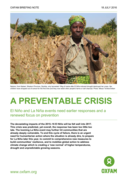
The devastating impacts of the 2015–16 El Niño will be felt well into 2017. This crisis was predicted, yet overall,
...

What near-term climate impacts should worry us most?
Supporting the most exposed and vulnerable societies to reduce
regional and global climate risks
The Fourth National Climate Assessment (NCA4) fulfills that mandate in two volumes. This report, Volume II, draws on the foundational science described in Volume I,
...

The 2012 NDRMP lays out the Disaster Risk Management (DRM) architecture of the country and provi
...

The 2020 Financing for Sustainable Development Report, the fifth report of the Inter-agency Task
...
The purpose of this document is to provide a comprehensive overview of existing institutional arrangement for disaster management in Myanmar at all
...
The Indonesian government has reformed its laws, policies, and institutions to better manage disaster risk since the significant 2004 Indian Ocean Tsunami.
...

Non-communicable diseases (NCDs) are of increasing concern for society and national governments, as well as globally due to their high mortality rate. The main risk factors
...

Myanmar has made significant progress in its disaster management policies, plans, and procedures since 2008, when Cyclone Nargis impacted the country leaving devastation in its aftermath. The Govern
...
n Autumn 2013, HHI Executive Director, Vincenzo Bollettino, traveled to the Philippines to participate in an assessment of civil-military engagement in th
...
Timor-Leste’s vulnerability to natural hazards means if particular care is not taken in the development of the country’s infrastructure, it wil
...

The 2022 Financing for Sustainable Development Report identifies a “great finance divide” as a main driver of the divergent recovery. Developed
...
What at first glance appears to be simple causality – climate change leading to more and more migration – has triggered intense academic debate over the past ten years because the circumstances
...

Recently, Sri Lanka has been impacted by multiple natural disasters. Sri Lanka experienced a landslide in October 2014, and flooding in December 2014.8 Sri Lanka withstood the worst drought conditions witnessed in four decades in 2016;
...
