
Filter
3872
Filtered Results: 3872
Text search:
Government
of
South
Africa
Featured
Recommendations
278
New Publications
887
Language
Document type
No document type
2040
Studies & Reports
978
Guidelines
315
Manuals
197
Strategic & Response Plan
143
Fact sheets
71
Training Material
49
Situation Updates
40
Infographics
27
Resource Platforms
10
Brochures
1
App
1
Countries / Regions
Global
243
South Africa
241
Kenya
128
Africa
121
Nigeria
109
Ethiopia
96
Uganda
89
Sierra Leone
67
India
66
Malawi
65
Liberia
65
Rwanda
61
Lesotho
58
Tanzania
58
Congo, Democratic Republic of
58
Namibia
58
Zambia
57
South Sudan
57
Ghana
51
East and Southern Africa
44
Zimbabwe
40
Mozambique
39
West and Central Africa
39
Nepal
37
Syria
33
Bangladesh
33
Asia
30
Senegal
27
Guinea
25
Botswana
25
Western and Central Europe
24
Middle East and North Africa
23
Cameroon
22
Central African Republic
22
Myanmar / Burma
22
Burkina Faso
21
South–East Asia Region
20
Eswatini/ Swaziland
20
Yemen
19
Latin America and the Carribbean
18
Indonesia
16
Haiti
14
Somalia
14
China
13
Afghanistan
12
Cambodia
12
Madagascar
12
Philippines
11
Sudan
11
Pakistan
11
Thailand
10
Ukraine
10
Brazil
10
Russia
10
Colombia
9
Benin
9
Mali
9
Eastern Europe and Central Asia
8
Southern Africa
8
Lebanon
8
Vietnam
8
Angola
8
Côte d’Ivoire / Ivory Coast
7
Eastern Europe
7
Togo
6
Venezuela
6
Iran
5
Burundi
5
Sri Lanka
5
Iraq
5
Mexico
4
Niger
4
Guinea-Bissau
4
Jordan
4
Western Pacific Region
4
Japan
4
Portugal
4
Chad
4
Tajikistan
3
Serbia
3
Gambia
3
Chile
3
Laos
3
Kyrgyzstan
3
Germany
3
Turkmenistan
3
Jamaica
3
Mauritius
3
Spain
3
Bosnia and Herzegovina
3
Moldova
3
Palestine
3
Libya
3
North Macedonia
2
Albania
2
Canada
2
Peru
2
Malaysia
2
Morocco
2
Italy
2
Gabon
2
France
2
Tunisia
2
United Kingdom
2
Argentina
2
Papua New Guinea
2
Egypt
2
Greece
2
North Korea
1
Timor Leste/ East Timor
1
Turkey
1
Kazakhstan
1
Estonia
1
Congo-Brazzaville
1
Vanuatu
1
Mongolia
1
Qatar
1
Armenia
1
USA
1
Croatia
1
Hungary
1
North America
1
Norway
1
Morocco
1
Azerbaijan
1
Israel
1
Djibouti
1
Romania
1
Georgia
1
Poland
1
Ecuador
1
Solomon Islands
1
Authors & Publishers
Publication Years
Category
Countries
1402
Key Resources
227
Public Health
226
Women & Child Health
197
Clinical Guidelines
196
Capacity Building
55
Pharmacy & Technologies
29
Toolboxes
HIV
362
COVID-19
337
Mental Health
273
Planetary Health
208
TB
194
Disability
193
Health Financing Toolbox
107
Global Health Education
106
AMR
106
Conflict
104
NTDs
97
Ebola & Marburg
94
Caregiver
91
Refugee
81
NCDs
70
Rapid Response
67
Pharmacy
52
Natural Hazards
46
2.0 Rapid Response
40
Malaria
38
Zika
18
Polio
18
Cholera
17
Social Ethics
16
Specific Hazards
13
South Sudan
2
Typhoon
2
During the first two years of the project (2019–2020), through a ‘One Health’ approach, comprehensive engagement was established with AMR coordinating committees, WHO regional and country offices and SORT IT partners in Asia, Africa, Europe and the Americas. Thirty-seven research studies were ...
Special Issue: Special Education in Sub-Saharan Africa | This special issue of our Communication*Support*World*Network*Newsletter attempts to share practical ideas and information about special education for children with disabilities in sub-Saharan Africa. Our intent is to begin a dialogue among th...
Examining the needs of at‐risk youth in the Middle East and North Africa: A multi‐method landscape analysis and systematic literature review
HUMANITIES AND SOCIAL SCIENCES COMMUNICATIONS | (2022)9:295 | https://doi.org/10.1057/s41599-022-01312-3 .
Sub-Saharan Africa (SSA), particularly Southern and East Africa, has the highest AIDS deaths
and HIV-infected people in the world. Even though considerable effort has been made over
the yea...
The Syrian Government’s Widespread and Systematic Use of Chemical Weapons
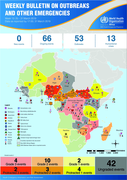
Response to the tropical cyclone in southern Africa
Ebola virus disease outbreak in the Democratic Republic of the Congo
Meningitis outbreak in Togo
Lassa fever outbreak in Liberia.
The pandemic presents tough choices for governments, local communities, health and school systems, as well as families and businesses: How to re-open safely? How to safeguard people’s lives and protect their livelihoods? Where to allocate scarce resources? How to protect those unable to protect th...
This policy brief examines the implications of COVID-19 and the government’s preventative measure for political stability,9 especially in the short to medium term. It argues that in the short term the disease and the preventative measures could make the country less vulnerable to organised politic...
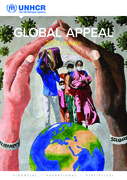
The Global Appeal provides updated information for government, private donors, partners and other readers interested in UNHCR's priorities and budgeted activities for 2021 to protect and improve the lives of tens of millions of people of concern (refugees, internally displaced people, stateless pers...
This tool is a living document that provides guidance on good partnership practices that promote strong relationships between civil society organizations and government representatives on engaging men and boys in gender equality and sexual and reproductive health and rights
(SRHR). ...
An estimated 59 000 people die from rabies each year. That’s one person every nine minutes of every day, 40% of whom are children living in Asia and Africa. As dog bites cause almost all human cases, we can prevent rabies deaths by increasing awareness, vaccinating dogs to prevent the disease at i...
A guide to facilitating community-managed disaster risk reduction in the Horn of Africa.
This manual describes how to help communities implement disaster risk reduction activities. It was written for development workers and community-based organizations in the Horn of Africa, but practitioners can ...
Emergency medical teams (EMT) are first response health care providers – doctors, nurses, paramedics, and others – during outbreaks and emergencies or disasters, working with governments, charities such as nongovernmental organizations (NGOs), armies, and international organizations such as the ...
UNAIDS is calling on governments to ensure that the right to health is realized by all by prioritizing public investments in health. At least half of the world’s population cannot access essential health services. Every two minutes a woman dies while giving birth. Among the people being left behin...
Men are underrepresented in HIV testing services throughout sub-Saharan Africa. HIV testing is critical to achieve the UNAIDS 95-95-95 goals, as it is the first entry point to HIV care. In Malawi, an estimated 14% of HIV positive men are undiagnosed, while only 6% of HIV positive women remain undiag...
A lack of knowledge about the threat of vaccine-preventable diseases, risks and benefits of vaccines, mistrust of government and health workers, poor service delivery and alternative health or religious beliefs play a role in lower uptake of some vaccines. These challenges underscore the importance ...
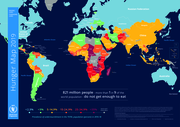
WFP's Hunger Map depicts the prevalence of undernourishment in the population of each country in 2016-18. From Africa and Asia to Latin America and the Near East, there are 821 million people - more than 1 in 9 of the world population - who do not get enough to eat. Our downloadable Hunger Map provi...
The authors state that researchers, governments and global agencies should proceed with particular care in the evaluation of candidate SARS-CoV-2 vaccines in LMICs, with effective communication to build trust and avoid generation of vaccine hesitancy. Vaccine efficacy is often highly variable betwee...
