
Filter
1051
Text search:
hazard
approach
Featured
123
300
Language
Document type
464
191
170
112
60
31
11
7
2
2
1
Countries / Regions
53
42
38
30
24
21
21
19
15
15
14
13
12
12
11
11
10
10
10
8
7
7
7
7
7
7
7
6
6
6
5
5
4
4
4
4
4
4
3
3
3
3
3
3
2
2
2
2
2
2
2
2
2
2
2
1
1
1
1
1
1
1
1
1
1
1
1
1
1
1
1
1
1
1
1
1
1
1
1
1
1
1
1
Authors & Publishers
Publication Years
Category
294
199
75
55
24
18
14
1
Toolboxes
115
82
79
70
49
48
43
40
37
33
31
27
25
24
23
18
17
16
14
7
6
5
3
3
2
1
1
For practitioners in humanitarian and development contexts
Towards the Peoples Health Assembly Book -4
DHS Working Papers No. 69
This paper uses data from the three Indian National Family Health Surveys (1992-93, 1998-99, 2005-06) to examine how the relationship between household wealth and child mortality evolved during a time of significant economic change in India. The main predictor is a new ...
This paper uses data from the three Indian National Family Health Surveys (1992-93, 1998-99, 2005-06) to examine how the relationship between household wealth and child mortality evolved during a time of significant economic change in India. The main predictor is a new ...
The EHSP in Botswana seeks to attain universal coverage of high-quality package of essential health services. The EHSP is an integrated collection of cost-effective interventions, promotive, preventive, curative, and rehabilitative, that address the main diseases, injuries and risk factors that affe
...
Policy framework.

Document No. : FDA/SMC/SMD/GL-RAR/2013/01
5th revised edition.
This document provides a ranking of medically important antimicrobials for risk management of antimicrobial resistance due to non-human use. The current revision took place at the seventh meeting of the AGISAR held in Raleigh, United States of America in 2016.

Made under Section 5 (c) of the Tanzania Food, Drugs and Cosmetics Act, 2003 | Second Edition

IAEA Safety Standards for protecting people and the environment
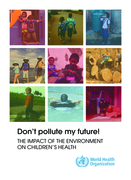
In 2015, 5.9 million children under age five died (1). The major causes of child deaths globally are pneumonia, prematurity, intrapartum-related complications, neonatal sepsis, congenital anomalies, diarrhoea, injuries and malaria (2). Most of these diseases and conditions are at least partially cau
...

SIGN 143. A national clinical guideline
Published May 2015, Revised 2018
