
Filter
3587
Text search:
United
Nations
Population
Fund
Featured
255
1152
Language
3400
150
57
46
40
21
12
8
6
5
4
3
3
3
2
2
2
2
2
2
2
1
1
1
1
1
1
1
1
1
1
1
1
1
1
Document type
2140
689
289
167
153
49
42
40
10
4
1
1
Countries / Regions
194
119
98
98
96
96
86
83
82
72
65
60
59
54
53
50
48
46
46
45
43
40
39
38
38
36
35
34
32
32
27
26
26
26
24
23
23
21
19
19
18
18
16
16
15
14
14
13
13
11
11
10
10
9
9
9
9
9
8
8
8
7
7
7
6
6
6
6
6
6
6
5
5
4
4
4
4
4
4
4
3
3
3
3
3
3
3
3
3
3
2
2
2
2
2
2
2
2
2
2
2
2
1
1
1
1
1
1
1
1
1
1
1
1
1
1
1
1
1
1
1
1
1
1
1
1
1
1
Authors & Publishers
423
133
129
125
101
90
87
84
65
48
40
37
30
28
25
23
21
21
19
18
18
16
16
16
16
16
15
15
15
14
14
13
13
13
13
13
12
12
12
12
11
11
11
10
10
10
10
9
9
9
8
8
8
8
8
8
8
8
8
8
7
7
7
7
7
7
7
7
7
6
6
6
6
6
6
6
6
6
6
6
6
6
6
6
6
6
6
5
5
5
5
5
5
5
5
5
5
5
5
5
5
5
5
5
5
5
5
5
5
4
4
4
4
4
4
4
4
4
4
4
4
4
4
4
4
4
4
4
4
4
4
4
4
4
4
4
4
4
4
4
4
4
4
4
4
4
3
3
3
3
3
3
3
3
3
3
3
3
3
3
3
3
3
3
3
3
3
3
3
3
3
3
3
3
3
3
3
3
3
3
3
3
3
3
3
3
3
3
3
3
3
3
3
3
3
3
3
3
3
3
3
3
3
3
3
3
3
3
3
3
3
3
3
3
3
3
3
3
3
3
3
3
3
3
3
3
3
3
3
3
3
3
3
3
2
2
2
2
2
2
2
2
2
2
2
2
2
2
2
2
2
2
2
2
2
2
2
2
2
2
2
2
2
2
2
2
2
2
2
2
2
2
2
2
2
2
2
2
2
2
2
2
2
2
2
2
2
2
2
2
2
2
2
2
2
2
2
2
2
2
2
2
2
2
2
2
2
2
2
2
2
2
2
2
2
2
2
2
2
2
2
2
2
2
2
2
2
2
2
2
2
2
2
2
2
2
2
2
2
2
2
2
2
2
2
2
2
2
2
2
2
2
2
2
2
2
2
2
2
2
2
2
2
2
2
2
2
2
2
2
2
2
2
2
2
2
2
2
2
2
2
2
2
2
2
2
2
2
2
2
2
2
2
2
2
2
2
2
2
2
2
2
2
2
2
2
2
2
2
2
2
2
2
2
2
2
2
2
2
2
2
2
2
2
2
2
2
2
2
2
2
2
2
2
2
2
2
2
2
2
2
2
2
2
2
2
2
2
2
2
2
2
2
2
2
2
2
2
2
2
1
1
1
1
1
1
1
1
1
1
1
1
1
1
1
1
1
1
1
1
1
1
1
1
1
1
1
1
1
1
1
1
1
1
1
1
1
1
1
1
1
1
1
1
1
1
1
1
1
1
1
1
1
1
1
1
1
1
1
1
1
1
1
1
1
1
1
1
1
1
1
1
1
1
1
1
1
1
1
1
1
1
1
1
1
1
1
1
1
1
1
1
1
1
1
1
1
1
1
1
1
1
1
1
1
1
1
1
1
1
1
1
1
1
1
1
1
1
1
1
1
1
1
1
1
1
1
1
1
1
1
1
1
1
1
1
1
1
1
1
1
1
1
1
1
1
1
1
1
1
1
1
1
1
1
1
1
1
1
1
1
1
1
1
1
1
1
1
1
1
1
1
1
1
1
1
1
1
1
1
1
1
1
1
1
1
1
1
1
1
1
1
1
1
1
1
1
1
1
1
1
1
1
1
1
1
1
1
1
1
1
1
1
1
1
1
1
1
1
1
1
1
1
1
1
1
1
1
1
1
1
1
1
1
1
1
1
1
1
1
1
1
1
1
1
1
1
1
1
1
1
1
1
1
1
1
1
1
1
1
1
1
1
1
1
1
1
1
1
1
1
1
1
1
1
1
1
1
1
1
1
1
1
1
1
1
1
1
1
1
1
1
1
1
1
1
1
1
1
1
1
1
1
1
1
1
1
1
1
1
1
1
1
1
1
1
1
1
1
1
1
1
1
1
1
1
1
1
1
1
1
1
1
1
1
1
1
1
1
1
1
1
1
1
1
1
1
1
1
1
1
1
1
1
1
1
1
1
1
1
1
1
1
1
1
1
1
1
1
1
1
1
1
1
1
1
1
1
1
1
1
1
1
1
1
1
1
1
1
1
1
1
1
1
1
1
1
1
1
1
1
1
1
1
1
1
1
1
1
1
1
1
1
1
1
1
1
1
1
1
1
1
1
1
1
1
1
1
1
1
1
1
1
1
1
1
1
1
1
1
1
1
1
1
1
1
1
1
1
1
1
1
1
1
1
1
1
1
1
1
1
1
1
1
1
1
1
1
1
1
1
1
1
1
1
1
1
1
1
1
1
1
1
1
1
1
1
1
1
1
1
1
1
1
1
1
1
1
1
1
1
1
1
1
1
1
1
1
1
1
1
1
1
1
1
1
1
1
1
1
1
1
1
1
1
1
1
1
1
1
1
1
1
1
1
1
1
1
1
1
1
1
1
1
1
1
1
1
1
1
1
1
1
1
1
1
1
1
1
1
1
1
1
1
1
1
1
1
1
1
1
1
1
1
1
1
1
1
1
1
1
1
1
1
1
1
1
1
1
1
1
1
1
1
1
1
1
1
1
1
1
1
1
1
1
1
1
1
1
1
1
1
1
1
1
1
1
1
1
1
1
1
1
1
1
1
1
1
1
1
1
1
1
1
1
1
1
1
1
1
1
1
1
1
1
1
1
1
1
1
1
1
1
1
1
1
1
1
1
1
1
1
1
1
1
1
1
1
1
1
1
1
1
1
1
1
1
1
1
1
1
1
1
1
1
1
1
1
1
1
1
1
1
1
1
1
1
1
1
1
1
1
1
1
1
1
1
1
1
1
1
1
1
1
1
1
1
1
1
1
1
1
1
1
1
1
1
1
1
1
1
1
1
1
1
1
1
1
1
1
1
1
1
1
1
1
1
1
1
1
1
1
1
1
1
1
1
1
1
1
1
1
1
1
1
1
1
1
1
1
1
1
1
1
1
1
1
1
1
1
1
1
1
1
1
1
1
1
1
1
1
1
1
1
1
1
1
1
1
1
1
1
1
1
1
1
1
1
1
1
1
1
1
1
1
1
1
1
1
1
1
1
1
1
1
1
1
1
1
1
1
1
1
1
1
1
1
1
1
1
1
1
1
1
1
1
1
1
1
1
1
1
1
1
1
1
1
1
1
1
1
1
1
1
1
1
1
1
1
1
1
1
1
1
1
1
1
1
1
1
1
1
1
1
1
1
1
1
1
1
1
1
1
1
1
1
1
1
1
1
1
1
1
1
1
1
1
1
1
1
1
1
1
1
1
1
1
1
1
1
1
1
1
1
1
1
1
1
1
1
1
1
1
1
1
1
1
1
1
1
1
1
1
1
1
1
1
1
1
1
1
1
1
1
1
1
1
1
1
1
1
1
1
1
1
1
1
1
1
1
1
1
1
1
1
1
1
1
1
1
1
1
1
1
1
1
1
1
1
1
1
1
1
1
1
1
1
1
1
1
1
1
1
1
1
1
1
1
1
1
1
1
1
1
1
1
1
1
1
1
1
1
1
1
1
1
1
1
1
1
1
1
1
1
1
1
1
1
1
1
1
1
1
1
1
1
1
1
1
1
1
1
1
1
1
1
1
1
1
1
1
1
1
1
1
1
1
1
1
1
1
1
1
1
1
1
1
1
1
1
1
1
1
1
1
1
1
1
1
1
1
1
1
1
1
1
1
1
1
1
1
1
1
1
1
1
1
1
1
1
1
1
1
1
1
1
1
1
1
1
1
1
1
1
1
1
1
1
1
1
1
1
1
1
1
1
1
1
1
1
1
1
1
1
1
1
1
1
1
1
1
1
1
1
1
1
1
1
1
1
1
1
1
1
1
1
1
1
1
1
1
1
1
1
1
1
1
1
1
1
1
1
1
1
1
1
1
1
1
1
1
1
1
1
1
1
1
1
1
1
1
1
1
1
1
1
1
1
1
1
1
1
1
1
1
1
1
1
1
1
1
1
1
1
1
1
1
1
1
1
1
1
1
1
1
1
1
1
1
1
1
1
1
1
1
1
1
1
1
1
1
1
1
1
1
1
1
1
1
1
1
1
1
1
1
1
1
1
1
1
1
1
1
1
1
1
1
1
1
1
1
1
1
1
1
1
1
1
1
1
1
1
1
1
1
1
1
1
1
1
1
1
1
1
1
1
1
1
1
1
1
1
1
1
1
1
1
1
1
1
1
1
1
1
1
1
1
1
1
1
1
1
1
1
1
1
1
1
1
1
1
1
1
1
1
1
1
1
1
1
1
1
1
1
1
1
1
1
1
1
1
1
1
1
1
1
1
1
1
1
1
1
1
1
1
1
1
1
1
1
1
1
1
1
1
1
1
1
1
1
1
1
1
1
1
1
1
1
1
1
1
1
1
1
1
1
1
1
1
1
1
1
1
1
1
1
1
1
1
1
1
1
1
1
1
1
1
1
1
1
1
1
1
1
1
1
1
1
1
1
1
1
1
1
1
1
1
1
1
1
1
1
1
1
1
1
1
1
1
1
1
1
1
1
1
1
1
1
1
1
1
1
1
1
1
1
1
1
1
1
1
1
1
1
1
1
1
1
1
1
1
1
1
1
1
1
1
1
1
1
1
1
1
1
1
1
1
1
1
1
1
1
1
1
1
1
1
1
1
1
1
1
1
1
1
1
1
1
1
1
1
1
1
1
1
1
1
1
1
1
1
1
1
1
1
1
1
1
1
1
1
1
1
1
1
1
1
1
1
1
1
1
1
1
1
1
1
1
1
1
1
1
1
1
1
1
1
1
1
1
1
1
1
1
1
1
1
1
1
1
1
1
1
1
1
1
1
1
1
1
1
1
1
1
1
1
1
1
1
1
1
1
1
1
1
1
1
1
1
1
1
1
1
1
1
1
1
1
1
1
1
1
1
1
1
1
1
1
1
1
1
1
1
1
1
1
1
1
1
1
1
1
1
1
1
1
1
1
1
1
1
1
1
1
1
1
1
1
1
1
1
1
1
1
1
1
1
1
1
1
1
1
1
1
1
1
1
1
1
1
1
1
1
1
1
1
1
1
1
1
1
1
1
1
1
1
1
1
1
1
1
1
1
1
1
1
1
1
1
1
1
1
1
1
1
1
1
1
1
1
1
1
1
1
1
1
1
1
1
1
1
1
1
1
1
1
1
1
1
1
1
1
1
1
1
1
1
1
1
1
1
1
1
1
1
1
1
1
1
1
1
1
1
1
1
1
1
1
1
1
1
1
1
1
1
1
1
1
1
1
1
1
1
1
1
1
1
1
1
1
1
1
1
1
1
1
1
1
1
1
1
1
1
1
1
1
1
1
1
1
1
1
1
1
1
1
1
1
1
1
1
1
1
1
1
1
1
1
1
1
1
1
1
1
1
1
1
1
1
1
1
1
1
1
1
1
1
1
1
1
1
1
1
1
1
1
1
1
1
1
1
1
1
1
1
1
1
1
1
1
1
1
1
1
1
1
1
1
1
1
1
1
1
1
1
1
1
1
1
1
1
1
1
1
1
1
1
1
1
1
1
1
1
1
1
1
1
1
1
1
1
1
1
1
1
1
1
1
1
1
1
1
1
1
1
1
1
1
1
1
1
1
1
1
1
1
1
1
1
1
1
1
1
1
1
1
1
1
1
1
1
1
1
1
1
1
1
1
1
1
1
1
1
1
1
1
1
1
1
1
1
1
1
1
1
1
1
1
1
1
1
1
1
1
1
1
1
1
1
1
1
1
1
1
1
1
1
1
1
1
1
1
1
1
1
1
1
1
1
1
1
1
1
1
1
1
1
1
1
1
1
1
1
1
1
1
1
1
1
1
1
1
1
1
1
1
1
1
1
1
1
1
1
1
1
1
1
1
1
1
1
1
1
1
1
1
1
1
1
1
1
1
1
1
1
1
1
1
1
1
1
1
1
1
1
1
1
1
1
1
1
1
1
1
1
1
1
1
1
1
1
1
1
1
1
1
1
1
1
1
1
1
1
1
1
1
1
1
1
1
1
1
1
1
1
1
1
1
1
1
1
1
1
1
1
1
1
1
1
1
1
1
1
1
1
1
1
1
1
1
1
1
1
1
1
1
1
1
1
1
1
1
1
1
1
1
1
1
1
1
1
1
1
1
1
1
1
1
1
1
1
1
1
1
1
1
1
1
1
1
1
1
1
1
1
1
1
1
1
1
1
1
1
1
1
1
1
1
1
1
1
1
1
1
1
1
1
1
1
1
1
1
1
1
1
1
1
1
1
1
1
1
1
1
1
1
1
1
1
1
1
1
1
1
1
1
1
1
1
1
1
1
1
1
1
1
1
1
1
1
1
1
1
1
1
1
1
1
1
1
1
1
1
1
1
1
1
1
1
1
1
1
1
1
1
1
1
1
1
1
1
1
1
1
1
1
1
1
1
1
1
1
1
1
1
1
1
1
1
1
1
1
1
1
1
1
1
1
1
1
1
1
1
1
1
1
1
1
1
1
1
1
1
1
1
1
1
1
1
1
1
1
1
1
1
1
1
1
1
1
1
1
1
1
1
1
1
1
1
1
1
1
1
1
1
1
1
1
1
1
1
1
1
1
1
1
1
1
1
1
1
1
1
1
1
1
1
1
1
1
1
Publication Years
1002
2323
248
13
1
Category
1578
319
252
161
147
58
14
Toolboxes
268
201
184
173
156
147
142
97
78
75
73
64
59
47
36
35
34
31
27
27
22
14
9
8
4
2
2

Uganda hosts approximately 1.1 million refugees making it Africa’s largest refugee hosting country and one of the five largest refugee hosting countries in the world. Most recently, throughout 2016- 2018, Uganda was impacted by three parallel emergencies from South Sudan, the Democratic Republic o
...
f the Congo (DRC), and Burundi. In view of the on-going conflicts and famine
vulnerabilities in the Great Lakes Region, more refugee influxes and protracted refugee situations are anticipated in the foreseeable future. The unprecedented mass influx of refugees into Uganda in 2016-2018 has put enormous pressure on
the country’s basic service provision, in particular health and education services. Refugees share all social services with the local host communities. The refugee hosting districts are among the least developed districts in the country, and thus the additional refugee population is putting a high strain on already limited resources.
more
Data from 22 countries across the region featured in the study shows children are bearing the heaviest burden of the economic crisis caused by the war in Ukraine. While children make up 25 per cent of the population, they account for nearly 40 per c
...
ent of the additional 10.4 million people experiencing poverty this year.
The Russian Federation has experienced the most significant increase in the number of children living in poverty, with an additional 2.8 million children now living in households below the poverty line, accounting for nearly three-quarters of the total increase across the region. Ukraine is home to half a million additional children living in poverty, the second largest share. It is important to note that this is a conservative estimate which uses a GDP drop of 10 per cent.
more

The Regional Action Framework for Noncommunicable Disease Prevention and Control provides a unified vision of objectives and recommended actions to combat the noncommunicable disease (NCD) epidemic in the Western Pacific Region. Implementation should be supported by cross-sectoral coordination
...
, sustainable financing, evidence-based policy, and community engagement, tailored to each Member State’s unique context. In doing so, Member States are encouraged to transform a disease treatment-centered “sick system” into a “health system” in which a population’s health and well-being enable socioeconomic development.
more

The Ministry of Health and Social Services has the mandate to fulfil one of the aspirations in Namibia’s Vision 2030 to “transform Namibia into a healthy and food-secure nation”. Namibia strives to provide quality health and social welfare services efficiently and effectively to the
...
population across the country in its quest to achieve universal health coverage. Namibia has identified eHealth as one of its key enablers to achieve universal health coverage.
more
In 2022, WFP continued to implement its Country Strategic Plan (CSP) 2017-2023 in Namibia, contributing to the achievement of Sustainable Development Goals (SDG) 2 (Zero Hunger) and 17 (Partnerships for the Goals). Through WFP’s projects in 2022, a total of 32,610 people were reached, which is ne
...
arly 10 per cent of the total population experiencing limited or uncertain access to adequate food.
more
As part of the project ‘Equitable health financing for a strong health system in Mozambique’, N’weti and Wemos developed this policy brief with actionable policy recommendations for the Mozambican government and international organizations on how to increase resources for health in a sustainab
...
le and equitable manner. With global cooperation and adequate fiscal reforms, Mozambique can secure quality healthcare for its population and move toward a more self-reliant and healthy future.
more
This paper introduces a new dataset of official financing—including foreign aid and other forms of concessional and non-concessional state financing—from China to 138 countries between 2000 and 2014. We use these data to investigate whether and to what extent Chinese aid affects economic growth
...
in recipient countries. To account for the endogeneity of aid, we employ an instrumental-variables strategy that relies on exogenous variation in the supply of Chinese aid over time resulting from changes in Chinese steel production. Variation across recipient countries results from a country’s probability of receiving aid. Controlling for year- and recipient-fixed effects that capture the levels of these variables, their interaction provides a powerful and excludable instrument. Our results show that Chinese official development assistance (ODA) boosts economic growth in recipient countries. For the average recipient country, we estimate that one additional Chinese ODA project produces a 0.7 percentage point increase in economic growth two years after the project is committed. We also benchmark the effectiveness of Chinese aid vis-á-vis the World Bank, the United States, and all members of the OECD’s Development Assistance Committee (DAC).
more
Global Experience of Community Health Workers for Delivery of Health Related Millennium Development Goals
Zulfiqar A. Bhutta, Zohra S. Lassi, George Pariyo and Luis Huicho
World Health Organization WHO; Global Health Workforce Alliance
(2010)
C_WHO
A Systematic Review, Country Case Studies, and Recommendations for Integration into National Health Systems
Alliance Report
Participation of community health workers (CHWs) in the provision of primary health care has been experienced all over the world for several decades, and there is an amount
...
of evidence showing that they can add significantly to the efforts of improving the health of the population, particularly in those settings with the highest shortage of motivated and capable health professionals.
more
Zambia has about 1.2 physicians, nurses, and midwives per 1000 population while the minimum acceptable density threshold is 2.3 per 1000 population. The estimated shortage of doctors, nurses and mid
...
wives in Zambia is about 14,960. However, with the projected population growth the deficit more than doubles disproportionately to, 25,849 in 2020, and 46,549 in 2035, at the current rate of HRH production. Worryingly, the human resources for health crisis has persisted for over 20 years. The efforts before and leading up to the development and implementation of the 2013 – 2016 National Training Operational Plan (NTOP) and the National Human Resources for Health Strategic Plan (2011 – 2016) yielded certain achievements, however, the HRH numbers and skill-mix gap remained disturbingly enormous.
more
The framework sets out a response to current mental health challenges arising from the negative impact that the COVID-19 pandemic has had on population mental health and well-being. The EFAMH provides a coherent basis for intensified efforts to main
...
stream, promote and safeguard mental well-being as an integral element of COVID-19 response and recovery; to counter the stigma and discrimination associated with mental health conditions;
more

Lao People’s Democratic Republic (Lao PDR), also referred to as Laos, or Lao, is exposed to natural disasters such as flooding, typhoons, cyclones, drought, and earthquakes. The country is vulnerable to recurrent, sudden-onset and slow onset natural disasters with flooding, storms and typhoons hav
...
ing a large effect on the population. The country remains highly vulnerable to agricultural shocks and natural disasters.
Lao has established Community Based Disaster Risk Reduction (CBDRR) practices as a result of the many natural disasters the country faces. CBDRR is implemented at the village level to enhance community preparedness and to decrease village vulnerabilities to disasters.
Lao established the National Disaster Management Committee (NDMC) as its national disaster management platform and the National Disaster Management Office (NDMO) to be responsible for DRM (Disaster Risk Management) and DRR activities in the country. more
Lao has established Community Based Disaster Risk Reduction (CBDRR) practices as a result of the many natural disasters the country faces. CBDRR is implemented at the village level to enhance community preparedness and to decrease village vulnerabilities to disasters.
Lao established the National Disaster Management Committee (NDMC) as its national disaster management platform and the National Disaster Management Office (NDMO) to be responsible for DRM (Disaster Risk Management) and DRR activities in the country. more
The world is off track to make significant progress towards universal health coverage (UHC) (SDG target 3.8) by 2030 as improvements to health services coverage have stagnated since 2015, and the proportion of the population that faced catastrophic
...
levels of out-of-pocket (OOP) health spending has increased.
more
I examine the effectiveness of donors in targeting the highest burden of malaria in the Democratic Republic of Congo when health information structure is fragmented. I exploit local variations in the burden of malaria induced by mining activities as well as financial and epidemiological data from he
...
alth facilities to estimate how local aid is matching local health needs. Using a regression discontinuity design, I find significant but quantitatively small variations in aid to health facilities located within mining areas. Comparing local aid with the additional cost of treatment and prevention associated with the increased risk of malaria transmission, I find suggestive evidence that local populations with the highest burden of the disease receive a proportionately lower share of aid compared to neighbouring areas with reduced exposure to malaria infection. The evidence of disparities in the allocation of aid for malaria supports the view that donors may have inaccurate information about local population needs.
more
In recent years, high prices of pharmaceutical products have posed challenges in high- and low-income countries alike. In many instances, high prices of pharmaceutical products have led to significant financial hardship for individuals and negatively impacted on healthcare systems’ ability to prov
...
ide population-wide access to essential medicines.
Pharmaceutical pricing policies need to be carefully planned, carried out, and regularly checked and revised according to changing conditions. Strong, well-thought-out policies can guide well-informed and balanced decisions to achieve affordable access to essential health products.
This guideline replaces the 2015 WHO guideline on country pharmaceutical pricing policies, revised to reflect the growing body of literature since the last evidence review in 2010. This update also recognizes country experiences in managing the prices of pharmaceutical products.
more
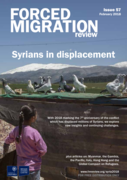
This important issue of Forced Migration Review draws our attention to the current challenges facing displaced Syrians and the continuing search for solutions. The statistics of Syrian displacement are staggering – and the numbers continue to rise. Half of Syria’s
...
population has been displaced: five and a half million are registered refugees and over six million are internally displaced.
more

This report aims to raise awareness about the role that the reform of public health laws can play in advancing the right to health and in creating the conditions for people to live healthy lives. By encouraging a better understanding of how public health law can be used to improve the health of the
...
population, the report aims to encourage and assist governments to reform their public health laws in order to advance the right to health.
The report highlights important issues that may arise during the process of public health law reform. It provides guidance about issues and requirements to be addressed during the process of developing public health laws. It also includes case studies and examples of legislation from a variety of countries to illustrate effective law reform practices and some features of effective public health legislation. more
The report highlights important issues that may arise during the process of public health law reform. It provides guidance about issues and requirements to be addressed during the process of developing public health laws. It also includes case studies and examples of legislation from a variety of countries to illustrate effective law reform practices and some features of effective public health legislation. more
Estimating the size of key affected populations (KAP) provides important data for planning and implementing an effective response to the HIV epidemic. In the Philippines, these KAP include males who have sex with males (MSM), female sex workers (FSW), and injecting drug users (IDU). Given the diffic
...
ulty in reaching these populations, as well as their high mobility, the process consequently entailed a specific methodology to directly estimate the size of KAP.
The national estimate of MSM was 531,500 or 2.2% (1.8%-3.2%) of males aged 15-49. Within this MSM estimate, figures for transgender women (TGW) and male transactional sex workers (MSW) were determined. The national estimate for TGW was 122,800 or about 0.50% (0.40%-0.75%) of males aged 15-49, and 23% of the MSM population. Meanwhile, MSW comprised 0.35% (0.29%-0.53%) of the male population aged 15-49 and 16% of the MSM population, giving a best estimate of 86,600.
The estimate of combined RFSW and FFSW was 66,100 or 0.28% (0.19%-0.40%) of females aged 15-49. Meanwhile, there are approximately 10,000 to 21,700 IDU or 0.04%-0.09% of males aged 15-49. more
The national estimate of MSM was 531,500 or 2.2% (1.8%-3.2%) of males aged 15-49. Within this MSM estimate, figures for transgender women (TGW) and male transactional sex workers (MSW) were determined. The national estimate for TGW was 122,800 or about 0.50% (0.40%-0.75%) of males aged 15-49, and 23% of the MSM population. Meanwhile, MSW comprised 0.35% (0.29%-0.53%) of the male population aged 15-49 and 16% of the MSM population, giving a best estimate of 86,600.
The estimate of combined RFSW and FFSW was 66,100 or 0.28% (0.19%-0.40%) of females aged 15-49. Meanwhile, there are approximately 10,000 to 21,700 IDU or 0.04%-0.09% of males aged 15-49. more
Journal of the International AIDS Society 2017, vol. 20:e25026
In Myanmar, men who have sex with men (MSM) experience high risk of HIV infection. However, access to HIV testing and prevention services remains a challenge among this marginalized popula ... tion. The objective of this study was to estimate population prevalence and correlates of prior HIV testing among young MSM (YMSM) and informs the development of HIV testing and intervention programmes that respond to the specific needs of this population.
https://doi.org/10.1002/jia2.25026 more
In Myanmar, men who have sex with men (MSM) experience high risk of HIV infection. However, access to HIV testing and prevention services remains a challenge among this marginalized popula ... tion. The objective of this study was to estimate population prevalence and correlates of prior HIV testing among young MSM (YMSM) and informs the development of HIV testing and intervention programmes that respond to the specific needs of this population.
https://doi.org/10.1002/jia2.25026 more
The WHO Regional Office for Europe, the WHO Collaborating Centre on Culture and Health at the University of Exeter (United Kingdom) and the National Institute of Mental Health (Czechia) convened a workshop on culture and reform of mental health care
...
in central and eastern Europe on 2–3 October 2017 in Klecany, Czechia. The aim of this workshop was to improve understanding of the key cultural aspects that impact and drive mental health-care reform in the central and eastern European region. This report outlines the key points and recommendations made by participants in relation to this objective.
more
The COVID-19 pandemic poses an additional and critical challenge in a fragile humanitarian context, where the population is already highly vulnerable and lives in often overcrowded settlements where distancing is impossible, and with limited access
...
to basic health services and hygiene. Further spread of COVID-19 in the EHoA region will burden the already complex humanitarian situation with devastating consequences.
more
