
Filter
6660
Text search:
national
standards
Featured
Recommendations
613
New Publications
1884
Language
Document type
No document type
3691
Studies & Reports
1041
Guidelines
918
Manuals
402
Strategic & Response Plan
318
Training Material
104
Fact sheets
102
Situation Updates
49
Resource Platforms
12
Infographics
12
Brochures
8
Online Courses
2
Videos
1
Countries / Regions
Global
260
India
233
Kenya
210
Uganda
143
Nepal
139
South Africa
133
Sierra Leone
126
Western and Central Europe
124
Ethiopia
123
Nigeria
121
Liberia
118
Myanmar / Burma
114
Zambia
98
Rwanda
98
Congo, Democratic Republic of
96
Bangladesh
96
Tanzania
92
Africa
89
Malawi
86
Ghana
82
Syria
73
Namibia
69
Ukraine
64
Latin America and the Carribbean
63
Senegal
61
Philippines
60
Haiti
48
Guinea
46
Eastern Europe
46
South Sudan
45
Burkina Faso
44
Benin
43
Indonesia
42
Zimbabwe
40
Germany
40
Lesotho
39
Cambodia
36
South–East Asia Region
36
Asia
31
Yemen
30
East and Southern Africa
30
West and Central Africa
30
Cameroon
29
Botswana
29
Venezuela
29
Mozambique
26
Eastern Europe and Central Asia
26
Russia
25
Pakistan
20
Afghanistan
20
Central African Republic
20
Eswatini/ Swaziland
20
Madagascar
20
Middle East and North Africa
20
Lebanon
19
Jordan
16
Brazil
15
Colombia
15
Mali
14
Sudan
14
Côte d’Ivoire / Ivory Coast
12
Thailand
12
China
12
Western Pacific Region
12
USA
10
Chad
10
Laos
10
Vietnam
10
Iraq
9
Peru
9
Tajikistan
9
Somalia
8
Georgia
8
Niger
7
Turkey
7
Argentina
7
Burundi
7
Paraguay
7
Albania
7
Moldova
7
Togo
6
Papua New Guinea
6
North Macedonia
6
Sri Lanka
6
Southern Africa
6
Iran
6
Greece
5
Libya
5
Mexico
5
Palestine
5
Kyrgyzstan
5
North America
5
Morocco
4
Gambia
4
Chile
4
Fiji
4
Poland
4
Timor Leste/ East Timor
4
Kazakhstan
4
United Kingdom
4
Saudi Arabia
3
Malaysia
3
Hungary
3
Croatia
3
Ecuador
3
Angola
3
Guatemala
3
Romania
3
Turkmenistan
3
Mauritius
3
Portugal
3
Spain
3
Belarus
3
Guinea-Bissau
2
Egypt
2
Mauritania
2
Singapore
2
Serbia
2
Honduras
2
El Salvador
2
Bolivia
2
Bhutan
2
Armenia
2
Mongolia
2
Estonia
2
Lithuania
2
Uzbekistan
2
Gabon
2
Jamaica
2
Japan
2
Tunisia
2
Israel
2
Ireland
1
Vanuatu
1
Dominican Republic
1
Switzerland
1
Nicaragua
1
Other region
1
Italy
1
Congo-Brazzaville
1
Qatar
1
Bulgaria
1
Australia
1
Uruguay
1
Denmark
1
Belgium
1
Maldives
1
Norway
1
Azerbaijan
1
Bosnia and Herzegovina
1
Authors & Publishers
Publication Years
Category
Countries
2615
Key Resources
524
Clinical Guidelines
435
Women & Child Health
383
Public Health
329
Capacity Building
107
Pharmacy & Technologies
87
Annual Report MEDBOX
1
Toolboxes
COVID-19
444
Mental Health
396
HIV
392
TB
325
Disability
290
Planetary Health
250
AMR
239
Conflict
214
Caregiver
211
Ebola & Marburg
179
Pharmacy
144
Refugee
141
Rapid Response
134
Global Health Education
128
Natural Hazards
102
2.0 Rapid Response
102
NTDs
99
NCDs
95
Malaria
63
Health Financing Toolbox
59
Specific Hazards
51
Polio
43
Cholera
35
Zika
35
Social Ethics
29
Typhoon
5
This document highlights the latest WHO recommendations designed to optimize health outcomes, streamline delivery and address persistent barriers to prevention and care. It especially focuses on people often left behind in service delivery, including adolescents and young people, key populations and
...

This publication provides guidance for planning country-specific programming to achieve the triple elimination of mother-to-child (or vertical) transmission of HIV, syphilis and hepatitis B virus. It is based on the WHO Triple Elimination Framework, which promotes an integrated, person-centred appro
...

WHO guidelines for clinical management of arboviral diseases: dengue, chikungunya, Zika and yellow fever
recommended
The new WHO guidelines provide clinical management recommendations for four of the most widespread arboviruses affecting humans: dengue, chikungunya, Zika, and yellow fever.
An integrated approach is vital, as these four diseases often present with similar symptoms, especially in the early stages
...
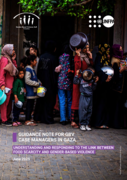
The Gaza Strip is experiencing one of the most severe food security crises globally, with the entire population of approximately 2.1 million people now facing crisis-level food insecurity or worse (IPC Phase 3+). As of May 2025, more than one in five Gazans—about
470,000 people—are at risk of s
...

Growing emergencies and displacements across the world demand increasingly complex interventions and responses. The World Health Organization (WHO) has developed Malaria control in emergencies: a field manual to provide technical guidance to help partners respond effectively to malaria in emergency
...

The 2022 report reviews the global malaria diagnostics market and technological landscape to support Unitaid’s 2023–2027 strategy for quality malaria case management. The report highlights the stalled progress of malaria control efforts, the gaps in access to diagnostics and the public health im
...
Tuberculosis (TB) remains a significant global health challenge, with an estimated annual death rate of approximately one per 100,000 people in countries with low TB prevalence. Rapid reductions in TB cases and deaths worldwide depend on research breakthroughs, including the development of new vac
...
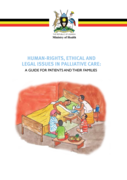
The guide helps patients to understand their rights in relation to the care received and provides insights into the common legal and
human rights issues they may encounter, and encourages them to share these with the health care provider for support. This booklet covers key issues that you mig
...

The Guidelines for the Use of the APCA African Palliative Outcome Scale (POS) has been developed by the APCA, in collaboration with
stakeholders, to help appropriately trained health practitioners and researchers across the region to utilise the APCA African POS in their work place (Powell et
...

IDMC's Global Report on Internal Displacement (GRID) is the authoritative source for data and analysis on the state of internal displacement for the previous year.

Public health challenges over the past decade have highlighted the importance of approaching health through a holistic lens of human, animal, and environmental sectors, recognizing the need for a collaborative response against shared threats. Zoonotic diseases, transmitted between humans and animals
...

The health impacts of climate change are no longer a distant threat. They are being felt here and now and becoming more extreme.
To address these threats, the WHO Asia-Pacific Centre for Environment and Health in the Western Pacific Region (ACE) was established in 2019 through a partnership with
...

On Global Handwashing Day, WHO and UNICEF have released the first-ever global Guidelines on Hand Hygiene in Community Settings to support governments and practitioners in promoting effective hand hygiene outside health care – across households, public spaces and institutions. Framing hand hygiene
...

Building on the WHO guidelines for disclosure to children up to age 12 in 2011, this implementation guidance provides evidence on existing interventions that support children and adolescents living with HIV in the process of disclosure. It includes interventions that focuses on safe disclosure, as w
...

Adolescents and young adults aged 10-24 remain underserved in the global response against HIV. Combination prevention, treatment and care programmes use a mix of evidence-based interventions to meet the current HIV prevention needs of adolescents and young adults. However, there needs to be a focus
...

This document, with a focus on the built environment and health care facilities, intends to guide the audience in preparing for and responding to SARI pandemics caused by existing and novel pathogens. It provides technical guidance on designing, establishing, and managing health care facilities for
...

These guidelines update earlier WHO recommendations to maximize the HIV prevention impact of safe VMMC services and aim to guide the transition to the sustained provision of interventions with a focus on the health and well-being of both adolescent boys and men.

We can't stop at almost. 2025 Goalkeeper Report
recommended
2025 is the first year of this century where child deaths will increase.
But we can stop this reversal before it becomes a trend, even in a time of tight budgets.
With proven solutions and next-generation innovations that do more with less, we can save millions of children's lives, protect the pro
...

World malaria report 2025
recommended
Addressing the threat of antimalarial drug resistance. This year’s report spotlights the growing threat of antimalarial drug resistance. Partial resistance to artemisinin derivatives – the backbone of malaria treatments after failures of chloroquine and sulfadoxine-pyrimethamine – has now b
...

The window to 2030, the SDG target year, is closing. Without accelerated and sustained progress, hard-won UHC gains risk being lost. Using revised and improved UHC indicators the report presents the latest available UHC data and concludes with a call to shared action.
