
Filter
1649
Text search:
Indonesia
Featured
117
397
Language
Document type
929
310
171
86
40
37
29
13
12
10
4
2
2
1
Countries
312
118
46
41
32
27
26
26
25
24
20
17
16
15
14
13
11
11
10
10
9
9
9
9
9
8
8
8
7
7
7
7
7
7
7
7
6
6
6
6
6
6
5
5
5
5
5
5
5
5
5
4
4
4
4
4
4
3
3
3
3
3
3
3
3
3
3
2
2
2
2
2
2
2
2
2
2
2
2
2
1
1
1
1
1
1
1
1
1
1
1
1
1
1
1
1
1
1
1
1
1
1
1
1
1
1
1
1
1
1
1
1
1
1
1
Authors & Publishers
Publication Years
Category
542
140
124
110
97
41
11
Toolboxes
137
114
100
92
88
59
56
50
50
31
30
28
28
28
27
21
20
18
15
12
12
12
8
5
3
2

This publication provides a problem analysis of the U.S. cuts in global health and derives concrete recommendations for action for medical actors. The focus is on analyzing the direct effects on health-specific development cooperation.

The Social and Behaviour Change Communication (SBCC) Strategy for the Prevention of the Re-establishment of Malaria Transmission in Timor-Leste forms part of the National Strategic Plan (NSP) for 2021–2025. The strategy aims to support Timor-Leste's efforts to sustain malaria elimination by promot
...
Presentation

The National Strategic Plan on Malaria Prevention and Elimination Period 2021 – 2025 seeks to build on the previous national successes of the National Institute of Malariology, Parasitology, and Entomology (NIMPE) while addressing current challenges to reduce the overall burden of malaria in the S
...

Despite being a preventable and curable infectious disease, tuberculosis (TB) has continued to elude global controll efforts. In 2023, 8.2 milion people with TB were diagnosed and notified to the WHO, the hightest number ever reported since WHO began tracking.

The annual bulletin of the Mekong Malaria Elimination (MME) programme is a yearly report that reviews ongoing efforts to combat multidrug resistance and eliminate malaria in the 6 countries of the Greater Mekong subregion (GMS): Cambodia, China (Yunnan province), Lao People's Democratic Republic, My
...

This brief report summarizes recent information on HIV drug resistance (HIVDR) in the era of integrase-strand transfer inhibitors (INSTI) for HIV prevention and treatment.
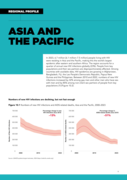
In 2023, 6.7 million [6.1 million–7.5 million] people living with HIV were residing in Asia and the Pacific, making this the world’s largest epidemic after eastern and southern Africa. The region accounts for a quarter of annual new HIV infections globally (23%). People from key populations and
...
By 2030, without accelerated scale-up of prevention and treatment coverage there may be an estimated 320 000 new HIV infections and 7.6 million people living with HIV
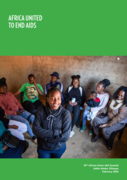
39th African Union (AU) Summit, Addis Ababa, Ethiopia, February 2026

The International Federation of Red Cross and Red Crescent Societies (IFRC) is the world’s largest volunteer-based humanitarian network. With our 190 member National Red Cross and Red Crescent Societies worldwide, we are in every community reaching 160.7 million people annually through long-term s
...
Nosotros, la comunidad global de Salud Planetaria, levantamos una alarma de que la continua degradación de los sistemas naturales de nuestro planeta es un peligro claro y presente para la salud de todas las personas en todas partes. Se requiere una transición justa y global en la forma en
...

The module is currently available in English, French, Nepali, Portuguese, Russian, and Spanish
The Manual for Participants is primarily meant for the participants of a 3 and a half day training course in Emergency Triage, Assessment and Treatment.

The power relations around global decisions which shape population health can be changed through new alliances and information flows. The Democratising Global Health Governance Initiative, of which WHO Watch is a project, is designed to contribute to improved population health (and health equity) th
...
Manual with Scale

The Camp Managment Toolkit
recommended
Applicable to both IDP and refugee scenarios, the Toolkit incorporates a wide range of relevant information on managing displaced populations living in communal settings (collective centres, spontaneous sites, established camps, etc.). Large scale displacements caused by recent conflict and natural
...
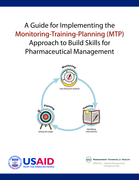
In the mid-1980s, recognizing the limitations of traditional training and that the knowledge and skills acquired are not necessarily applied back in the workplace, MSH developed the Monitoring‐Training-Planning (MTP) approach to assist the Ecuadorian Ministry of Health to implement its Child Survi
...
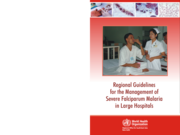
hese are two parallel guidelines, one for small hospitals and another one for large hospitals. In view of heavy burden of malaria and prevalence of drug resistant falciparum malaria in the South-East Asia Region, the guidelines were developed for use by medical personnel who treat severe malaria pat
...
The Good Enough Guide
recommended
A set of basic guidelines on how to be accountable to local people and measure program impact in emergency situations. The "good enough" approach emphasizes simple and practical solutions and encourages the user to choose tools that are safe, quick, and easy to implement
