
Filter
1601
Text search:
Clinical
documentation
Featured
157
437
Language
Document type
857
280
188
135
65
41
18
9
3
3
1
1
Countries
109
63
61
56
49
43
40
39
31
30
29
29
27
26
24
24
24
23
22
19
18
17
15
13
13
13
13
12
11
11
11
10
9
8
8
8
7
6
6
6
6
6
6
6
5
5
5
5
4
4
4
4
3
3
3
3
3
3
3
3
3
3
3
3
2
2
2
2
2
2
2
2
2
2
2
2
2
2
2
1
1
1
1
1
1
1
1
1
1
1
1
1
1
1
1
1
1
1
Authors & Publishers
Publication Years
Category
683
144
101
96
77
34
33
1
Toolboxes
121
111
87
76
66
58
51
50
50
41
37
27
26
24
20
18
16
16
13
12
10
9
8
7
6

The update of the ESTC was conducted as a joint endeavour with ERS, consulting experts from international societies and organisations, national TB programmes, civil society and affected communities. The second edition of the ESTC includes 21 standards in the areas of diagnosis, treatment, HIV and co
...
This analytical report reviews and discusses the potential role and influence of political commitment in implementing endorsements and conducting policy in the field of tuberculosis (TB) prevention and care. It promotes discussion by comparing and analysing the extent to which selected international
...

The International Rescue Committee (IRC) and the United Nations Children’s Fund (UNICEF) have newly developed "Caring for Child Survivors of Sexual Abuse Guidelines" for health and psychosocial providers in humanitarian settings - “CCS Guidelines”. The CCS Guidelines are based on global resear
...
White Paper from the National Child Traumatic Stress Network Refugee Trauma Task Force

В сборнике представлены статьи специалистов в сфере охраны психического здоровья по различным академическим дисциплинам, включая общую медицину, психиатрию, псиÑ
...
What can you expect?
As a future facilitator your role will be to learn about the structure of mhGAP-IG, how to teach the materials and utilize opportunities to prastice facilitation and supervision skills.
As a supervisor your role will be to serve as a point of reference for non-specialized heal
...
Introduction
Chapitre A.3
Edition en français Traduction : Laure Bera, Elodie Smette
Sous la direction de : Priscille Gérardin
Avec le soutien de la SFPEADA
(New 2015)
Scoping question: Within the context of mental health and developmental assessment of children and youth, what are the effective strategies for detecting maltreatment?
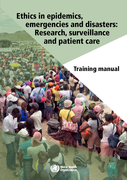
Responses to epidemics, emergencies and disasters raise many ethical issues for the people involved, including public health specialists and policy makers. This training manual provides material on ethical issues in research, surveillance and patient care in these difficult contexts.
Introduction
Chapter A.13
Mental health conditions affect one in 10 people at any one time and account for a large proportion of non-fatal disease burden. There is a high degree of comorbidity between mental health conditions such as depression and other noncommunicable diseases (NCDs), including cardiovascular disease, diab
...
Int J Environ Res Public Health. 2018 Jun; 15(6): 1279.
Published online 2018 Jun 16. doi: 10.3390/ijerph15061279


Accessed April 25,2019
