Filter
2194
Text search:
humanitarian
situation
report
Featured
223
711
Language
Document type
1144
419
196
142
128
84
36
27
12
2
1
1
1
Countries
118
106
93
69
62
62
57
51
50
50
44
43
41
39
37
34
32
29
29
28
27
26
24
24
19
18
16
16
16
15
14
14
13
13
13
12
12
12
12
11
10
10
9
9
9
9
9
8
8
8
8
8
8
8
8
7
7
7
7
7
7
6
6
5
4
4
4
4
4
4
4
4
4
3
3
3
3
3
2
2
2
2
2
2
2
2
2
2
2
2
2
2
2
2
2
2
2
2
1
1
1
1
1
1
1
1
1
1
1
1
1
1
1
1
1
1
1
1
Authors & Publishers
Publication Years
Category
751
327
139
94
72
37
4
3
Toolboxes
274
255
162
133
120
111
104
60
57
39
33
33
25
23
23
18
17
17
17
14
14
10
7
7
7
3
2

The National Strategy for Natural Disaster, Prevention, Response and Mitigation to 2020, which outlines Vietnam’s main disaster risk management objectives and the National Target Program (NTP) form the overarching policy framework for disaster risk management and climate change adaption activities
...
Cambodia drafted and adopted the National Action Plan for Disaster Risk Reduction 2014-2018 in 2014. This plan finalized the required policies and legal processes to strengthen DRM in Cambodia. It also focused on capacity building at national and sub-national levels and provided dedicated resources
...

Lao People’s Democratic Republic (Lao PDR), also referred to as Laos, or Lao, is exposed to natural disasters such as flooding, typhoons, cyclones, drought, and earthquakes. The country is vulnerable to recurrent, sudden-onset and slow onset natural disasters with flooding, storms and typhoons hav
...
The 2012 NDRMP lays out the Disaster Risk Management (DRM) architecture of the country and provides guidance for DRM intervention at all levels. However, implementation has been slow and resource challenges exist throughout the government.
The PNG government’s policy and institutional framework ...
The PNG government’s policy and institutional framework ...

Timor-Leste’s vulnerability to natural hazards means if particular care is not taken in the development of the country’s infrastructure, it will remain at risk to disruption.
Timor-Leste developed the 2008 National Disaster Risk Management Policy, which lays out the government’s vison of ...
Timor-Leste developed the 2008 National Disaster Risk Management Policy, which lays out the government’s vison of ...
Myanmar is prone to various natural hazards that include earthquakes, floods, cyclones, droughts, fires, tsunamis, some of whichhave the potential to impact large numbers of people. In the event that large numbers of people are affected (such as was the case in 2008 following cyclone Nargis), the go
...
This rapid compilation of data analyses provides a ‘stock-take’ of social science and behavioural data related to the on-going outbreak of Ebola in North Kivu, South Kivu and Ituri provinces. Based on data gathered and analysed by organisations working in the Ebola response and in the region mor
...
Key Considerations
This brief focuses on cross-border movement in Eastern and Southern Africa (ESA) and its implications for development of risk communication and community engagement (RCCE) strategies aimed at preventing transmission of COVID-19 in the ESA region. Given the extensive risk of cross
...
Disaster Management Reference Handbook Series Overview.
Floods, storms, and wind account for large proportions of displacement compared to other disasters. Floods are the most frequent type of disaster whereas wind-related disasters constitute the biggest losses in terms of economic damage, displac
...
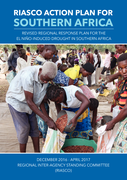
El Niño conditions persisting during the 2015/16 planting season have caused the worst drought in 35 years in Southern Africa, resulting in a second consecutive failed harvest. This has created severe food shortages and compounded existing vulnerabilities. Since July 2016, Namibia and Botswana have
...
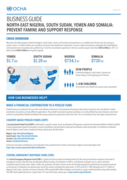
More than 20 million people in North-East Nigeria, South Sudan, Yemen and Somalia are facing famine or a credible risk of famine over the coming six
months. Some 1.4 million children are currently at imminent risk of death from malnutrition. To avert a major
...

The primary focus of the plan continues to be prevention, preparedness and treatment of the the Novel Coronavirus (COVID-19) outbreak. Central to the plan are the following overall objectives:
To prevent further transmission of COVID-19 in the oPt;
To provide adequate care for patients aff
...
This brief considers the rationale for shielding individuals at high risk of severe disease or death from COVID-19 in low- and middleincome countries. It provides an overview of proposed approaches to shielding, discusses the categories of individuals who may be identified for shielding, and outline
...
The Guide has been developed to enhance the knowledge capabilities of NDMAs and their local partners. This is accomplished by exposing them to the existing tools and services developed by the international community to facilitate effective disaster response to any scale of disaster (small, medium an
...
The guide is designed to help disaster managers in national Governments gain basic knowledge of how to use international tools and services. It aims to support the growing disaster response and disaster response preparedness capabilities that exist at national level across Asia and the Pacific.
...
...
Myanmar is prone to various natural hazards that include earthquakes, floods, cyclones, droughts, fires, tsunamis, some of whichhave the potential to impact large numbers of people. In the event that large numbers of people are affected(such as was the case in 2008 following cyclone Nargis), the gov
...
It aims to minimize damage to property, reduce injury and lives lost, and normalize the lives of those affected in a timely manner in the case of a damaging earthquake in the country.
It also seeks to contribute to the achievements of Myanmar Sustainable Development Goals as well as respond to Gl
...