
Filter
719
Text search:
drug
formulations
Featured
Recommendations
91
New Publications
210
Language
Document type
No document type
399
Guidelines
150
Studies & Reports
94
Manuals
37
Training Material
13
Strategic & Response Plan
10
Fact sheets
9
Situation Updates
2
Resource Platforms
2
Brochures
1
App
1
Infographics
1
Countries / Regions
India
51
Kenya
28
Global
23
Ethiopia
15
South Africa
15
Malawi
15
Western and Central Europe
12
Africa
12
Tanzania
11
Uganda
10
Nepal
10
Bangladesh
10
Sierra Leone
9
Nigeria
8
Zimbabwe
8
Zambia
8
Namibia
8
Liberia
7
Ghana
7
Philippines
7
Rwanda
7
Myanmar / Burma
7
South–East Asia Region
6
Latin America and the Carribbean
6
Eastern Europe
6
Cameroon
4
Cambodia
4
Eswatini/ Swaziland
4
Senegal
3
Haiti
3
Syria
3
Benin
3
Botswana
3
Burkina Faso
2
Indonesia
2
East and Southern Africa
2
Middle East and North Africa
2
Russia
2
Congo, Democratic Republic of
1
Mali
1
Côte d’Ivoire / Ivory Coast
1
Niger
1
Pakistan
1
South Sudan
1
Afghanistan
1
Thailand
1
Malaysia
1
Mozambique
1
Argentina
1
Peru
1
Brazil
1
Ukraine
1
Colombia
1
Bolivia
1
Madagascar
1
Lesotho
1
Sri Lanka
1
Chile
1
Yemen
1
Western Pacific Region
1
Eastern Europe and Central Asia
1
Paraguay
1
Bhutan
1
Venezuela
1
Congo-Brazzaville
1
Tajikistan
1
Australia
1
Georgia
1
North America
1
France
1
Authors & Publishers
Publication Years
Category
Countries
258
Clinical Guidelines
129
Women & Child Health
33
Public Health
32
Key Resources
19
Pharmacy & Technologies
15
Capacity Building
9
Toolboxes
HIV
105
TB
92
Pharmacy
63
AMR
40
Mental Health
32
NTDs
32
COVID-19
15
NCDs
15
Malaria
13
Rapid Response
9
Caregiver
9
Ebola & Marburg
8
Refugee
5
Planetary Health
5
Disability
4
Conflict
4
2.0 Rapid Response
4
Cholera
3
Polio
3
Health Financing Toolbox
3
Zika
2
Specific Hazards
2
Global Health Education
2
2nd edition. These guidelines include several notable changes from the first edition. For cutaneous leishmaniasis, ketoconazole has been removed from the list of treatment options; the number of Leishmania species for which there is strong evidence for the efficacy of miltefosine has increased from
...

This field study to measure access to and use of medicines was undertaken in GHANA in May-June 2008. The study assessed information on the socio-economic level of households, and access to and use of medicines for acute and chronic conditions as well as opinions and perceptio
...
The availability of controlled medicines is crucial for patients requiring palliative care, pain relief and symptom management. Many individuals worldwide, especially in low- and middle-income countries, continue to experience limited access to these essential medicines. Enhancing access to controll
...
This is a report from a National, representative household survey carried out in Swaziland in 2009 – 2010. A large amount of effort has been put into this two‐year exercise until finally we can present the results of the combined efforts. First of all, this is a credit to the Federation of Disab
...

Published:February 02, 2021DOI:https://doi.org/10.1016/S0140-6736(21)00234-8
The strategic framework gives guidance to public and private health facilities and health workers on compliance with standards relating to IPC practices. To further assist health facilities to implement the IPC strategic framework, this practical implementation manual has been developed in parallel
...
Asthma prevalence is increasing worldwide and surveys indicate that the majority of patients in developed and developing countries do not receive optimal care and are therefore not well controlled. The aim of these guidelines is to promote a better standard of treatment based on advances in the unde
...

Diabetes is a significant public health issue that affects approximately one in 10 adults globally, with type 2 diabetes accounting for 90–95% of cases. This chronic condition causes considerable morbidity and mortality and is growing in impact, with cases projected to rise from 537 million in 202
...
These guidelines have been developed specifically to address ethical issues of conducting research in children.
The guidance document provides a set of indicators for assessing the status of development, implementation and monitoring of key policy interventions for prevention and control of NCDs and injuries. It promotes city-level evidence based decision-making processes to identify gaps and take appropriate
...
The steps are presented in a user-friendly guidebook, designed to be a working resource for implementers and leads in infection control, safety, and quality.
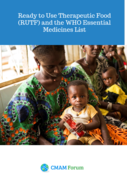
Severe Acute Malnutrition (SAM) is one of the greatest child survival challenges in the world today and
reportedly affects more than 16.2 million children each year1. High impact, proven treatment interventions exist
yet sadly approximately only 3.2 million children with SAM have access to treatme
...
