
Filter
678
Text search:
United
Nations
Secretary-General
Featured
Recommendations
51
New Publications
181
Language
Document type
No document type
393
Studies & Reports
145
Guidelines
42
Manuals
39
Strategic & Response Plan
35
Fact sheets
9
Training Material
7
Situation Updates
5
Resource Platforms
2
Infographics
1
Countries / Regions
Global
53
Syria
22
Myanmar / Burma
19
Sierra Leone
16
Liberia
15
South Sudan
14
Yemen
14
Kenya
13
Indonesia
12
Bangladesh
12
Congo, Democratic Republic of
11
Nigeria
10
Africa
10
Guinea
9
Ukraine
9
Western and Central Europe
9
Uganda
7
India
7
Nepal
7
Mozambique
7
Asia
7
Zambia
6
South Africa
6
South–East Asia Region
6
Venezuela
6
Ethiopia
5
Ghana
5
Philippines
5
Tanzania
5
Thailand
5
Central African Republic
5
East and Southern Africa
5
Middle East and North Africa
5
Mali
4
Cambodia
4
Rwanda
4
Malawi
4
Colombia
4
Latin America and the Carribbean
4
Cameroon
3
Zimbabwe
3
Haiti
3
Jordan
3
Afghanistan
3
Namibia
3
Brazil
3
Madagascar
3
Mexico
3
West and Central Africa
3
Eastern Europe
3
Laos
3
Burkina Faso
2
Senegal
2
Côte d’Ivoire / Ivory Coast
2
Somalia
2
Pakistan
2
Lebanon
2
Sudan
2
Benin
2
Peru
2
Botswana
2
Libya
2
Angola
2
Lesotho
2
Palestine
2
Russia
2
Estonia
2
Guinea-Bissau
1
Morocco
1
USA
1
Saudi Arabia
1
Togo
1
Iraq
1
Egypt
1
China
1
Malaysia
1
Mauritania
1
Argentina
1
Eswatini/ Swaziland
1
North Macedonia
1
Hungary
1
El Salvador
1
Greece
1
Western Pacific Region
1
Eastern Europe and Central Asia
1
Paraguay
1
Albania
1
Armenia
1
Southern Africa
1
Timor Leste/ East Timor
1
Moldova
1
Iran
1
Kyrgyzstan
1
Georgia
1
Vietnam
1
Jamaica
1
Norway
1
Portugal
1
Authors & Publishers
Publication Years
Category
Countries
162
Key Resources
78
Women & Child Health
42
Public Health
39
Clinical Guidelines
10
Capacity Building
6
Pharmacy & Technologies
1
Toolboxes
COVID-19
67
HIV
64
Mental Health
61
Conflict
60
Disability
52
Refugee
34
Global Health Education
32
Ebola & Marburg
29
Planetary Health
29
AMR
22
NCDs
15
TB
13
Natural Hazards
11
Rapid Response
11
Health Financing Toolbox
11
Specific Hazards
9
2.0 Rapid Response
8
Caregiver
7
Typhoon
3
Zika
3
Pharmacy
2
Cholera
1
Polio
1
NTDs
1
Malaria
1
A global hunger crisis -- fuelled by conflict, economic turbulence and climate-related shocks -- has been exacerbated by the COVID-19 pandemic. The number of people experiencing food insecurity and hunger has risen since the onset of the pandemic. The IRC estimates that the economic downturn alone w
...

Unmet mental health needs in the Region of the Americas are a leading source of morbidity and mortality, which result in tremendous health, social, and economic consequences. The COVID-19 pandemic has exacerbated the mental health crisis in the Region, necessitating urgent action at the highest leve
...

An estimated 1.3 billion people globally experience significant disability. This figure has grown over the last decade and will continue to rise due to demographic and epidemiological changes. In 2022, the World Health Organization launched the Global report on health equity for persons with disabil
...
The Atlas of health and climate is a product of this unique collaboration between the meteorological and public health communities. It provides sound scientific information on the connections between weather and climate and major health challenges. These range from diseases of poverty to emergencies
...

In Control. A Practical Handbook for Professionals Working in Health Emergencies Internationally
recommended
In Control imparts knowledge, provokes reflection and triggers curiosity. The first half of the book provides an overview of the organisations, principles, frameworks and themes that every professional deploying to health emergencies should be aware of. The second half of the book provides practical
...
Hundreds of thousands of refugees are at risk of being pushed to return to Syria in 2018, despite ongoing violence, bombing and shelling that are endangering the lives of civilians, leading humanitarian agencies warn in a report released today. The warning comes amid a global anti-refugee backlash,
...
El Niño conditions persisting during the 2015/16 planting season have caused the worst drought in 35 years in Southern Africa, resulting in a second consecutive failed harvest. This has created severe food shortages and compounded existing vulnerabilities. Since July 2016, Namibia and Botswana have
...
Knowledge based upon a descriptive literature review of applied research

Guidelines for WHO Representatives and Country
Offices in the Western Pacific Region
As this report shows,
reports of child abuse and of children
witnessing violence between their
parents and caregivers have increased.
Ending violence against children is
increasingly within our reach. D
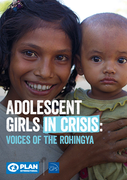
Commissioned by Plan International the report draws on data from research conducted in Bangladesh in April 2018. It explores how adolescent girls within two age brackets (10-14 and 15-19) understand the unique impact the crisis has upon them, and how they have responded to the challenges they face.
...
...
Background paper for the Oslo Summit on Education for Development.
This paper covers the four topics of the Oslo Summit: investment in education, quality of learning, education in emergencies and girls’ education. Disability continues to be one of the primary causes of educational disadvantage a
...
“The children are psychologically crushed and tired.
When we do activities like singing with them, they
don’t respond at all. They don’t laugh like they
would normally. They draw images of children
being butchered in the war, or tanks, or the siege
and the lack of food.”
Teacher in the
...

Women and girls are paying the price of the war in Yemen – Humanitarian actors must increase the priority given to women and girls’ needs, with specific attention to GBV prevention and response, and reproductive health services
Lancet Glob Health 2018 Published Online September 12, 2018 http://dx.doi.org/10.1016/S2214-109X(18)30407-8
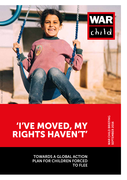
War child: "I´ve moved, my rights haven't" (Towards a global action plan for children forced to flee)
recommended
We live in a world in which 28 million children have been driven from their
homes as a result of conflict, persecution and insecurity¹. If current trends
continue, more than 63 million children could be forced to flee by 2025², of
which over 25 million will cross borders and become refugees. At
...
