
Filter
1275
Text search:
soil
Featured
125
341
Language
Document type
520
315
172
104
59
37
25
13
10
10
6
2
1
1
Countries
78
39
35
34
30
28
26
26
25
24
20
16
16
15
15
14
12
12
10
10
10
9
9
9
9
8
8
7
7
6
6
6
6
6
5
5
5
4
4
4
4
4
4
4
3
3
3
3
3
3
2
2
2
2
2
2
2
2
2
2
2
2
2
2
2
2
1
1
1
1
1
1
1
1
1
1
1
1
1
1
1
1
1
1
1
1
1
1
1
1
1
1
1
1
1
1
1
1
Authors & Publishers
Publication Years
Category
415
185
66
65
39
16
13
Toolboxes
222
139
65
52
48
45
38
34
28
27
24
22
20
17
16
11
11
10
10
7
7
3
3
3
3
1
1

“towards quality health and social welfare services”
Prevention and Control of Cholera Uganda
recommended
Operational Guidelines for the national and district health workers & planners.
These new approaches include use of selective chemotherapy, Rapid Diagnostic Tests (RDTs), Zinc for treatment of cholera in children and complementary use of OCV
Guideline ‒ Alternative mass drug administration regimens to eliminate lymphatic filariasis
recommended
Lymphatic filariasis is a vector-borne neglected tropical disease that causes damage of the lymphatic system and can lead to lymphoedema (elephantiasis) and hydrocele in infected individuals. The global baseline estimate of persons affected by lymphatic filariasis is 25 million men with hydrocele an
...

Act 851 | AN ACT to revise and consolidate the law relating to public health to
prevent disease, promote, safeguard, maintain and protect the health
of humans and animals and to provide for related matters.

PMPB/INS-GUIDE/04
CORE Group has developed a module to improve preparedness for and response of communities in countries at risk of a cholera epidemic. The module consists of four lesson plans with accompanying flipcharts, intended to be delivered through community health workers. The lessons target mothers and careg
...
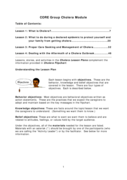
CORE Group has developed a module on cholera to address gaps in preparedness and response in at-risk countries and communities. The guide contains four different lesson plans and is complemented by flipcharts designed for use by community health workers. The lessons are aimed at mothers and carers o
...
Training module
A Step-by-Step Guide.
It is intended for health planners, dengue or vector control programme managers and individuals, nongovernmental organizations (NGOs) and other agencies with interests and/or expertise in developing biological, chemical, environmental and communication interventions to prevent
...

STATUTORY INSTRUMENTS | SUPPLEMENT No. 8 28th March, 2014 | STATUTORY INSTRUMENTS SUPPLEMENT | to The Uganda Gazette No. 18 Volume CVII dated 28th March, 2014 | Printed by UPPC, Entebbe, by Order of the Government. | STATUTORY INSTRUMENTS | 2014 No. 29.

Available in English, French, Spanish, Russian, Chinese, Arabic and Portugues
Policy and Manual
