
Filter
1678
Text search:
response
to
epidemics
Featured
208
428
Language
Document type
768
321
262
121
112
42
26
15
4
3
1
Countries
123
63
59
46
37
35
32
32
31
29
29
28
27
25
20
20
20
19
19
18
16
16
13
11
11
11
11
11
11
11
10
10
10
9
9
9
8
8
8
7
7
6
6
5
5
5
5
5
4
4
4
4
4
3
3
3
3
3
3
3
3
3
3
3
3
2
2
2
2
2
2
2
2
2
2
2
2
2
2
2
2
2
2
1
1
1
1
1
1
1
1
1
1
1
1
1
1
1
1
Authors & Publishers
Publication Years
Category
536
145
145
111
49
24
18
Toolboxes
205
135
100
98
94
74
71
56
53
42
40
37
36
36
29
24
20
19
17
15
14
13
8
7
1
1

These 2025 guidelines respond to the need for better approaches to identify advanced HIV disease, improve the poor outcomes of people living with HIV being discharged from hospital and provide updat
...

The overall objective of the framework is to support WHO and Members States in meaningful engagement of people living with NCDs, and mental health and neurological conditions to co-create and enhanc
...
A guide for developing a hygiene promotion program to increase handwashing with soap
Contact tracing is a key element of WHO’s recommended approach to control the spread of COVID-19 by breaking the chains of human-to-human transmission.
This document provides guidance
...

The review’s objectives are to review progress in TB control with emphasis on DOTS strategy implementation, summarize the experience, lessons learnt and methods of work and to make recommendations
...
The Guidance Notes seek to help operationalize, simplify and standardize the collection and reporting of data through the application of common language and methods. They provide information on the key issues
...
Информационный бюллетень Июнь 2020 г.
Уязвимые группы населения в контексте ответных мер в отношении COVID-19
Vulnerable populations during COVID-19
...
Contact tracing is a key element of WHO’s recommended approach to control the spread of COVID-19 by breaking the chains of human-to-human transmission.
This document provides guidance
...
The purpose of this document is to guide clinicians in the care of patients with or at risk of severe illness from influenza virus infection, including those caused by seasonal influenza viruses, pandemic influenza viruses and zoonotic (novel influe
...

This paper explores access to water, sanitation, and health in pastoral communities in northern Tanzania. It argues that the concept of gender, used on its own, is not enough to understand the compl
...
Health communication has proven to play a crucial role in addressing diseases such as dengue, Zika and chikungunya, for which there are no definitive or easily accessible vaccines. In this context, this discipline becomes a fundamental tool
...

Building on our decades of commitment to human rights in medicine and healthcare, we have published a new report on emerging threats in health-related human rights both globally and in the UK.
'Health and human rights in the new world (dis)order'
...

Africa CDC Non Communicable Diseases, Injuries Prevention and Control and Mental Health Promotion Strategy
recommended
Non-communicable diseases (NCDs) & injuries and mental health conditions constitute a serious impediment to achieving the vision of Agenda 2063 to build an integrated, prosperous, and peaceful Afric
...
The main objective of this document is to inform and inspire community activists in the EECA region to actively engage in domestic budget advocacy, in order
...

People affected by impairments and disabilities associated with TB are even more likely to belong to marginalized segments of society and are more likely
...

The Rwanda Malaria Strategic Plan 2020–2024 outlines Rwanda’s national strategy to reduce malaria morbidity and mortality by at least 50% compared to 2019 levels. The vision is a malaria-free Rw
...
Issued by the Ministers of Health of High Burden High Impact (HBHI) countries in Africa. Yaounde Declaration.
Ministers committed to strengthening their health systems, stepping up domestic resources, enhancing multisectoral action and ensuring a r
...
CIPH Curriculum for Best Practices. Putting Principles to Work
Millennium Development Goal 8E aims for affordable access to essential medicines. Essential medicines, as defined by WHO, are those that “satisfy the health-care needs of the majority of the population” and that should therefore “be available
...
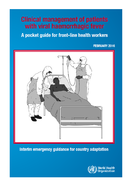
The purpose of this pocketbook is to provide clear guidance on current best management practices for VHF across health-care facilities
