Filter
2153
Text search:
property
rights
Featured
280
492
Language
Document type
756
479
409
248
137
65
38
15
4
1
1
Countries
175
48
41
36
32
31
31
31
28
28
28
24
21
21
19
19
18
18
15
15
14
14
14
14
14
13
12
12
12
12
11
11
10
10
10
10
10
9
7
7
6
6
6
6
6
6
6
6
5
5
5
5
5
5
4
4
4
4
4
4
4
4
3
3
3
3
3
3
3
3
3
2
2
2
2
2
2
2
2
2
2
2
2
2
2
1
1
1
1
1
1
1
1
1
1
1
1
1
1
1
1
1
1
1
1
1
1
1
1
1
1
1
1
1
1
Authors & Publishers
Publication Years
Category
521
215
200
181
145
59
47
Toolboxes
189
162
121
98
96
94
92
88
87
86
62
61
56
51
49
44
42
41
37
32
19
14
8
8
4
3
2
Just about everyone has experienced the joy that a healthy newborn child brings to parents, families and communities. But the arrival of a newborn who is small or sick often results in immediate worry and sadness. When the infant is at high risk of death or disability, these concerns can be a tremen
...

This document was designed to inform educators, amongst others, about enhancing the pre-service curriculum with mental health Gap Action Programme Intervention Guide (mhGAP-IG) materials, which can provide future professionals with the theoretical and clinical knowledge they need to provide mental h
...
Web annex 6: Injectable prostaglandins versus
placebo or no treatment
Evidence to Decision Framework
Web annex 5: Oxytocin and ergometrine versus placebo or no treatment
Evidence to decision framework
The recommendation in this document thus supersedes the previous WHO recommendation for the prevention of PPH as published in the 2012 guideline, WHO recommendations for the prevention and treatment of postpartum haemorrhage.
Web annex 2: Carbetocin versus placebo or no treatment
Evidence to decision framework
Sepsis contributes significantly to preventable mortality and is the final common pathway to death for severe infectious diseases; it can also arise as a complication of injuries and non-communicable diseases.
Birth defects surveillance: quick reference handbook of selected congenital anomalies and infections
This Quick Reference Handbook of Selected Congenital Anomalies and Infections is a companion tool to Birth defects surveillance: a manual for programme managers, and is intended for use by front-line health care professionals who are diagnosing and collecting data on congenital defects and infection
...
Results of rapid assessment
The COVID-19 pandemic has disrupted or halted critical mental health services in 93% of countries worldwide while the demand for mental health is increasing, according to a new WHO survey. The survey of 130 countries provides the first global data showing the devastating
...
In this document, recommendations are provided on designing and implementing
a cross-sectional serosurvey using school-based sampling to estimate age-specific
DENV seroprevalence to inform a country’s national dengue vaccination program.
The document includes recommendations for methods for
...
Whole-genome sequencing (WGS) provides a vast amount of information and the highest possible resolution for pathogen subtyping. The application of WGS for global surveillance can provide information on the early emergence and spread of AMR and further inform timely policy development on AMR control.
...
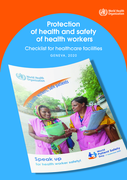
This checklist is the first step in identifying and prioritizing areas of action for improving the protection of health and safety of health workers in line with WHO–ILO Global Framework for National Occupational Health Programmes for Health Workers.
It is designed to be filled out in discussio
...
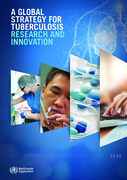
The Global Strategy for Tuberculosis Research and Innovation will support the efforts of governments and other stakeholders to accelerate TB research and innovation, and improve equitable access to the benefits of research.
Availabl in Arabic, Chinese, English, French, Spanish and Russian
his practical Guide serves as a companion to the “WHO guideline: recommendations on digital interventions for health system strengthening” and provides a systematic process for countries to develop a costed implementation plan for digital health within one or more health programme areas, drawing
...
The Guidance Notes seek to help operationalize, simplify and standardize the collection and reporting of data through the application of common language and methods. They provide information on the key issues to take into account in the collection of health data and the types of data that should be
...
The recommendation in this document thus supersedes the previous WHO recommendation for the prevention of PPH as published in the 2012 guideline
The recommendation in this document thus supersedes the previous WHO recommendation for the prevention of PPH as published in the 2012 guideline, WHO recommendations for the prevention and treatment of postpartum haemorrhage.
Driving Impact through Programme Monitoring and Management
These guidelines – an update to the World Health Organization’s 2015 publication Consolidated strategic information guidelines – present a set of essential aggregate indicators and guidance on choosing, collecting and systematically
...