
Filter
1310
Text search:
World
Health
Organization
(Thailand)
Featured
Recommendations
113
New Publications
310
Language
Document type
No document type
733
Studies & Reports
247
Guidelines
174
Manuals
71
Training Material
23
Fact sheets
22
Strategic & Response Plan
19
Situation Updates
9
Infographics
6
Brochures
3
Resource Platforms
3
Countries / Regions
Global
81
Myanmar / Burma
59
South–East Asia Region
44
Asia
38
India
35
Thailand
23
Philippines
21
Bangladesh
21
Nepal
18
Indonesia
17
Cambodia
16
Kenya
15
Ethiopia
14
Syria
12
South Africa
12
Nigeria
10
Africa
10
Latin America and the Carribbean
8
Vietnam
8
Uganda
7
Tanzania
7
Western and Central Europe
7
Russia
7
China
6
Liberia
5
Senegal
5
Congo, Democratic Republic of
5
Ghana
5
Mozambique
5
Afghanistan
4
Rwanda
4
Laos
4
Guinea
3
Burkina Faso
3
Cameroon
3
Haiti
3
Pakistan
3
Brazil
3
Ukraine
3
Colombia
3
Mexico
3
Sri Lanka
3
Yemen
3
East and Southern Africa
3
West and Central Africa
3
Middle East and North Africa
3
Eastern Europe
3
Sierra Leone
2
Zimbabwe
2
South Sudan
2
Lebanon
2
Zambia
2
Papua New Guinea
2
Benin
2
Argentina
2
Namibia
2
North Macedonia
2
Lesotho
2
Western Pacific Region
2
Eastern Europe and Central Asia
2
Bhutan
2
Iran
2
Georgia
2
Mali
1
Côte d’Ivoire / Ivory Coast
1
Morocco
1
USA
1
Niger
1
Somalia
1
Iraq
1
Jordan
1
Germany
1
Malaysia
1
Malawi
1
Sudan
1
Central African Republic
1
Peru
1
Switzerland
1
Hungary
1
Honduras
1
Ecuador
1
Botswana
1
El Salvador
1
Bolivia
1
Greece
1
Guatemala
1
Madagascar
1
Nicaragua
1
Other region
1
Venezuela
1
Palestine
1
North Korea
1
Armenia
1
Mongolia
1
Congo-Brazzaville
1
Timor Leste/ East Timor
1
Estonia
1
Kyrgyzstan
1
North America
1
Uruguay
1
Turkmenistan
1
Jamaica
1
Japan
1
Belgium
1
France
1
Maldives
1
Norway
1
Portugal
1
Spain
1
Belarus
1
Bosnia and Herzegovina
1
Authors & Publishers
Publication Years
Category
Countries
258
Clinical Guidelines
142
Public Health
88
Key Resources
79
Women & Child Health
61
Pharmacy & Technologies
17
Capacity Building
16
Toolboxes
HIV
249
Mental Health
114
TB
94
Disability
66
COVID-19
59
Planetary Health
48
AMR
47
NTDs
42
Global Health Education
40
Caregiver
31
Malaria
30
Pharmacy
28
Rapid Response
23
Natural Hazards
17
Zika
17
NCDs
17
Refugee
16
Health Financing Toolbox
16
Conflict
15
2.0 Rapid Response
14
Specific Hazards
8
Ebola & Marburg
7
Polio
6
Cholera
3
Typhoon
1
This report challenges policy-makers and political leaders to tackle fossil fuel production and consumption as a health control issue, in the same way that smoking has been reduced and regulated. Fossil fuel combustion is a major source of toxic air
...
The report and an accompanying series of studies show the global uptake of the World Health Organization (WHO) Surgical Safety Checklist in its fir
...
The full range and scale of all forms of violence against children are only now becoming visible, as is the evidence of the harm it does. This book documents the outcomes and recommendations of the process of the United Nations Secretary-General’s Study on Violence against Children. ‘The Studyâ€
...
Virtually all (99.9 percent) of Southeast Asia’s 656.1 million people live in areas where particulate pollution exceeds the World Health Organization
...
During the first year of the Covid-19 pandemic, the world’s economy slowed. Yet, the global annual average particulate pollution (PM2.5) was largely unchanged from 2019 levels. At the same time, growing evidence shows air pollution—even when exp
...
English Analysis on World about Agriculture, Climate Change and Environment, Epidemic and more; published on 15 Dec 2021 by FAO and UNICEF

The WHO Mekong Malaria Elimination (MME) programme hosted a 3-day meeting on 15–17 November 2023 in Siem Riep, Cambodia for representatives from national malaria programmes, research institutions, partners, donors, WHO and UN agencies. The meeting provided a forum to discuss surveillance systems,
...
This new publication presents the continuing and emerging challenges to children’s environmental health.
Health in All Policies (HiAP) is not a new concept. While the term “HiAP” has received much attention since the 1990s, the concept
of working across sectors of government for improved population healt
...
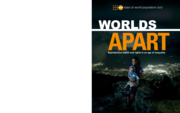
Unchecked inequality and failure to protect the rights of poorest women could undermine peace and world’s development goals, new UNFPA report warns:
- Only about half of the world’s women hold
...
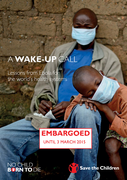
Almost 30 countries vulnerable to a new Ebola-style Epidemic, jeopardising the future of millions of Children. The report ranks the world’s poorest countries on the state of their public health sy
...
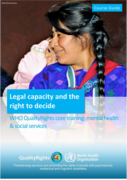
Ensuring mental health and well-being has become a worldwide imperative and an important target
of the Sustainable Development Goals.
But in all countries around the world, our response has been w
...
Hand hygiene is vital for safe health care delivery, yet practices at the point of care remain suboptimal worldwide. A comprehensive research agenda is therefore necessary to improve our understanding of factors influencing hand hygiene behaviour an
...
The present book deals not only with emergency response, but also with measures designed to reduce the impact of disasters on environmental health infrastructure, such as water supply and sanitation facilities. It also aims to strengthen the ability
...

Regional implementation framework for elimination of cervical cancer as a public health problem: 2021–2030
recommended
Cervical cancer continues to be a significant public health problem and a major cause of premature mortality among women, disproportionately affecting the socioeconomically disadvantaged population in low- and middle-income countries (LMICs). In the
...

Access to safe blood and blood products is recognized as one of the key requirements for delivery of modern health care in the journey towards health for all. The foundation of safe and sustainable
...
There is an expanding market of no- and low-alcohol beverages (NoLos). However, their effects on global ethanol consumption and public health are still questioned. Policies and regulations about NoLos’ availability, acceptability and affordability
...
The environment in which young people live, learn and play significantly affects their decisions about whether to consume alcohol. Environmental factors are the main risk factors driving alcohol consumption and related harm among young people. Environments that normalize alcohol consumption – term
...

World malaria report 2024
recommended
New data from the WHO reveal that an estimated 2.2 billion cases of malaria and 12.7 million deaths have been averted since 2000, but the disease remains a serious global health threat, particularly in the WHO African Region. According to WHO’s la
...
