
Filter
678
Text search:
United
Nations
Secretary-General
Featured
Recommendations
51
New Publications
181
Language
Document type
No document type
393
Studies & Reports
145
Guidelines
42
Manuals
39
Strategic & Response Plan
35
Fact sheets
9
Training Material
7
Situation Updates
5
Resource Platforms
2
Infographics
1
Countries / Regions
Global
53
Syria
22
Myanmar / Burma
19
Sierra Leone
16
Liberia
15
South Sudan
14
Yemen
14
Kenya
13
Indonesia
12
Bangladesh
12
Congo, Democratic Republic of
11
Nigeria
10
Africa
10
Guinea
9
Ukraine
9
Western and Central Europe
9
Uganda
7
India
7
Nepal
7
Mozambique
7
Asia
7
Zambia
6
South Africa
6
South–East Asia Region
6
Venezuela
6
Ethiopia
5
Ghana
5
Philippines
5
Tanzania
5
Thailand
5
Central African Republic
5
East and Southern Africa
5
Middle East and North Africa
5
Mali
4
Cambodia
4
Rwanda
4
Malawi
4
Colombia
4
Latin America and the Carribbean
4
Cameroon
3
Zimbabwe
3
Haiti
3
Jordan
3
Afghanistan
3
Namibia
3
Brazil
3
Madagascar
3
Mexico
3
West and Central Africa
3
Eastern Europe
3
Laos
3
Burkina Faso
2
Senegal
2
Côte d’Ivoire / Ivory Coast
2
Somalia
2
Pakistan
2
Lebanon
2
Sudan
2
Benin
2
Peru
2
Botswana
2
Libya
2
Angola
2
Lesotho
2
Palestine
2
Russia
2
Estonia
2
Guinea-Bissau
1
Morocco
1
USA
1
Saudi Arabia
1
Togo
1
Iraq
1
Egypt
1
China
1
Malaysia
1
Mauritania
1
Argentina
1
Eswatini/ Swaziland
1
North Macedonia
1
Hungary
1
El Salvador
1
Greece
1
Western Pacific Region
1
Eastern Europe and Central Asia
1
Paraguay
1
Albania
1
Armenia
1
Southern Africa
1
Timor Leste/ East Timor
1
Moldova
1
Iran
1
Kyrgyzstan
1
Georgia
1
Vietnam
1
Jamaica
1
Norway
1
Portugal
1
Authors & Publishers
Publication Years
Category
Countries
162
Key Resources
78
Women & Child Health
42
Public Health
39
Clinical Guidelines
10
Capacity Building
6
Pharmacy & Technologies
1
Toolboxes
COVID-19
67
HIV
64
Mental Health
61
Conflict
60
Disability
52
Refugee
34
Global Health Education
32
Ebola & Marburg
29
Planetary Health
29
AMR
22
NCDs
15
TB
13
Natural Hazards
11
Rapid Response
11
Health Financing Toolbox
11
Specific Hazards
9
2.0 Rapid Response
8
Caregiver
7
Typhoon
3
Zika
3
Pharmacy
2
Cholera
1
Polio
1
NTDs
1
Malaria
1

The world has been turned on its head by the coronavirus disease 2019 (COVID-19) pandemic. This has provided a stark wakeup call on the severe under-financing of health systems around the world. It has laid bare the inequalities and limitations in the capacities of countries at all levels of develop
...

In fragile, conflict-affected and vulnerable settings, delivery of quality health services faces significant challenges, including disruption of a routine health service organization and delivery systems, increased health needs, complex and unpredictable resourcing issues, and vulnerability to multi
...

In Control: A Practical Handbook for Professionals Working in Health Emergencies Internationally RKI
The greatest risk to persons engaging in international medical emergency response is poor preparation.
The In Control handbook hopes to provide a remedy.
At the time of writing, we are living through the Coronavirus (COVID-19) pandemic, a health emergency that disregards physical borders, brin
...

Poor quality health services are holding back progress on improving health in countries at all income levels.
Today, inaccurate diagnosis, medication errors, inappropriate or unnecessary treatment, inadequate or unsafe clinical facilities or practices, or providers who lack adequate training an ...
Today, inaccurate diagnosis, medication errors, inappropriate or unnecessary treatment, inadequate or unsafe clinical facilities or practices, or providers who lack adequate training an ...
Project Drawdown (2022) provides evidence of how climate solutions can also be win-win opportunities for meeting development and human well-being needs while boosting prosperity for rural communities in sub-Saharan Africa and South Asia. The report summarizes the co-benefits of five groups of a subs
...
Currently there is no publicly available source of consolidated information on attacks on health care in emergencies. This report is a first attempt to consolidate and analyse the data that is available from open sources. While the data are not comprehensive, the findings shed light on the severity
...
Rediscovering Biology
Molecular to Global Perspectives
Accessed: 03.09.2019

2nd edition.
The tool kit provides learning objects and curricular content to support the competencies for those proficiency/trainee levels
Mental health is critically important to everyone, everywhere. All over the world, mental health needs are high but responses are insufficient and inadequate. The World mental health report: transforming mental health for all is designed to inspire and inform better mental health for everyone everyw
...
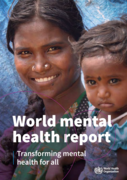
Mental health is critically important to everyone, everywhere. All over the world, mental health needs are high but responses are insufficient and inadequate. The World mental health report: transforming mental health for all is designed to inspire and inform better mental health for everyone everyw
...
Many children will not be ‘safe to learn at home’: As of April 2020, 91 percent of the world’s students have been affected by school closures due to COVID-19. While schools are often places where violence occurs, they also offer a comparatively protective and nurturing space for many children.
...
A practical handbook. This Health Cluster Guide (2nd edition, 2020) provides practical advice on how WHO, Health Cluster Coordinators and partners can work together during a humanitarian crisis to achieve the aims of reducing avoidable mortality, morbidity and disability, and restoring the delivery
...
This report sets out ways to make pre-hospital care and ambulance services operating in areas of armed violence safer. Written by the Norwegian Red Cross with support from the ICRC and the Mexican Red Cross, the report summarizes field experience in over 20 countries.
Nguyen HH et al. Journal of the International AIDS Society 2018, 21:e25151 http://onlinelibrary.wiley.com/doi/10.1002/jia2.25151/full | https://doi.org/10.1002/jia2.25151
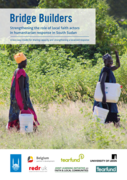
This report outlines and analyses the implementation of the Bridge Builder Model. This is a two-way, capacity-sharing model aimed at bringing together local faith actors (LFAs) and international humanitarian actors to increase understanding, trust, coordination and collaboration.
