Filter
261
Text search:
waters
supply
Featured
Recommendations
24
New Publications
67
Language
Document type
No document type
115
Studies & Reports
75
Guidelines
31
Manuals
15
Strategic & Response Plan
10
Training Material
7
Fact sheets
6
Situation Updates
1
Resource Platforms
1
Countries / Regions
Global
18
Myanmar / Burma
8
India
7
Mozambique
7
Philippines
4
Kenya
4
Bangladesh
4
Namibia
4
USA
3
Ethiopia
3
Zambia
3
Syria
3
Indonesia
3
Nigeria
2
Congo, Democratic Republic of
2
Uganda
2
Rwanda
2
Ukraine
2
Western and Central Europe
2
Asia
2
Guinea
1
Sierra Leone
1
Liberia
1
Zimbabwe
1
Haiti
1
Somalia
1
Nepal
1
Pakistan
1
South Sudan
1
Cambodia
1
Singapore
1
Malawi
1
Argentina
1
Peru
1
Brazil
1
North Macedonia
1
Botswana
1
Lesotho
1
Chile
1
Yemen
1
South–East Asia Region
1
Paraguay
1
Venezuela
1
Authors & Publishers
Publication Years
Category
Countries
71
Key Resources
47
Public Health
13
Clinical Guidelines
10
Capacity Building
7
Women & Child Health
6
Toolboxes
Planetary Health
58
Natural Hazards
25
Global Health Education
15
Conflict
13
AMR
12
Cholera
9
HIV
7
COVID-19
7
NTDs
7
Specific Hazards
6
Caregiver
6
Rapid Response
5
Mental Health
5
2.0 Rapid Response
5
Pharmacy
4
Disability
3
Ebola & Marburg
2
Refugee
2
TB
2
Health Financing Toolbox
2
South Sudan
1
Typhoon
1
Social Ethics
1
Malaria
1
This document is produced by the Humanitarian Country Team and the United Nations Resident
Coordinator’s Office in Mozambique, with the support of the United Nations Office for the Coordination of
Humanitarian Affairs (OCHA). The projects reflected here support the national government. It covers
...
Prepared for the Stunting Prevention and Reduction Project - The project Medical Waste Management Plan’s (MWMP) overall objective is to prevent and/or mitigate the negative effects of increased generation of medical waste on human health and the environment. The plan proposes measures to prevent t
...
A “catastrophic” combination of drought and communities’ declining resilience has left an estimated 2.3 million people facing severe acute food insecurity – up from an estimate of 1.7 million people a month ago.
Communities across southern Africa have been affected by drought since late 2
...
Medicinal plants occupied an important position in the socio-cultural, spiritual and medicinal arena of rural people of India. T
The present report is based on contribution made by members of the task force and many other experts on medicinal plants. We hope the report on implementation will promot
...
Nature Sustainability | VOL 2 | APRIL 2019 | 267–273 | www.nature.com/natsustain
This guide is intended to support national governments developing their national deployment and vaccination plans (NDVPs) for COVID-19 vaccines by outlining the roles, needs and opportunities for community health workers (CHWs) to contribute. This note builds on and is structured to align with the G
...
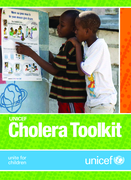
UNICEF Cholera Toolkit
recommended
Large size: Download directly from the website: https://www.washcluster.net/sites/gwc.com/files/2022-01/Unicef_Cholera%20Toolkit_2013.pdf
WHO Model Formulary for Children
recommended
WHO Model Formulary for children based on the Second Model List of Essential Medicines for Children 2009.
In 2007, the World Health Assembly passed a Resolution titled ‘Better Medicines for Children’. This resolution recognized the need for research and development into medicines for children,
...
Religion and Development 01/2019. Discussion Paper Series of the Research Programme on Religious Communities and Sustainable Development
This report shows that frontier agriculture is a viable complement to conventional agriculture, particularly in Africa and countries affected by fragility, conflict, and violence (FCV).
The Kenya Climate Smart Agriculture Implementation Framework 2018-2027 (KCSAIF) has been developed to provide a guide to various innovative and transformative initiatives and best practices that will strive to address challenges brought about by climate change. It is envisioned to ensure increased a
...
The workshop is structured around 13 learning modules. The first module (Introduction) gives an overview of WSPs. The last module (Module 12) introduces participants to the quality assurance tool for WSPs (WHO & IWA, 2012). Modules 1–11 relate explicitly to the WSP manual produced by IWA and WHO (
...
The training is targeted at all professionals involved in the management of drinking-water safety. The handbook is divided into three parts:
• Part 1 – Overview of the training approach, training structure and mode of training assessment
• Part 2 – Module learning material, which i ...
• Part 1 – Overview of the training approach, training structure and mode of training assessment
• Part 2 – Module learning material, which i ...
This paper presents lessons learned from previous flood responses in developing countries, based on a structured review of the literature. It is intended for people working in relief and recovery operations who have to decide if, when and how to intervene after a flood.
This companion document to Ending the neglect to attain the Sustainable Development Goals: a road map for neglected tropical diseases 2021-2030 ("the road map") aims to support a range of stakeholders - including countries in which neglected tropical diseases (NTDs) are endemic, international organi
...
European Journal of Biomedical and Pharmaceutical Sciences, vol.3 (2016) 1, 192-206
This review shows that if all sub areas of pharmaceutical waste management can efficiently work back to back environmental pollution and dangers to human health can reduce significantly.
Healthcare-associated infections (HAI) are a significant burden globally, with millions of patients affected each year. These infections affect both high- and limited-resource healthcare settings, but in limited-resource settings, rates are approximately twice as high as high-resource settings (15 o
...