
Filter
176
Text search:
provincial
profiles
Featured
11
60
Language
Document type
101
26
23
12
9
3
2
Countries
19
12
8
7
7
6
6
5
5
5
4
3
3
3
2
2
2
2
2
2
2
2
2
1
1
1
1
1
1
1
1
1
1
1
1
1
1
1
1
1
1
1
1
1
1
1
1
1
1
1
1
1
1
1
Authors & Publishers
Publication Years
Category
76
19
12
12
10
2
1
Toolboxes
13
10
9
8
7
6
5
5
5
4
4
3
3
3
3
3
2
2
1
1
Recently, a renewed interest in large-scale community health worker (CHW) programs has been seen globally. This renewal provides an opportune moment to take stock of issues and challenges such programs face and what can be done to make them as effective as possible. With this in mind, this manual is
...
Early damage assessments indicate that at least 800,000 people could be directly exposed to minor to severe damages, including communication, access, security, loss of livelihoods, infrastructure, and health services could be impacted.
Guidelines for the Prevention and Contaiment of of Antimicrobial Resistance in South African Hospitals
recommended
These guidelines form part of efforts to institutionalize the prevention and containment of antimicrobial resistance (AMR) in healthcare facilities in South Africa, as outlined in the Antimicrobial Resistance Strategic Framework and Implementation Plan. The focus of these guidelines is on two interr
...

Int. J. Environ. Res. Public Health 2018, 15(12), 2626; https://doi.org/10.3390/ijerph15122626
Climate change is increasing risks to human health and to the health systems that seek to protect the safety and well-being of populations. Health authorities require information about current associatio
...
Promoting health and well-being throughout Europe

This guideline provides evidence-based recommendations on parenting interventions for parents and caregivers of children aged 0–17 years that are designed to reduce child maltreatment and harsh parenting, enhance the parent–child relationship, and prevent poor mental health among parents and emo
...
Hypertension is referred to as a “silent killer”. Most people with hypertension are unaware of their condition as in most cases, they experience no warning signs or symptoms hence they are not identified or treated. Hypertention is associated with a number of conditions, disability, and causes o
...

he National Department of Health (NDOH) presents this Malaria Elimination Strategic
Plan 2019-2023 for the Republic of South Africa. The strategy comes at an important time
as the Southern African Development Community (SADC) heads of state have recently
renewed the commitment to eliminate malari
...
The Toolkit is a resource that may be used by businesses of all sizes in the different sectors. The guidelines provided in the Toolkit are intentionally general so they can easily be adapted by employers to their specific business culture, working environment and human resource procedures.
The Tool
...
The UNFPA Zambia 2017 Annual Report highlights key milestones and achievements recorded with UNFPA support towards improving the health and well-being of women and young people in Zambia.
It is our hope and prayer that the guidance and multiple tools provided herein to manage
the entire lifecycle of a food security program are useful to our food security staff, our
local partners, and our fellow international Cooperating Sponsors throughout the world.

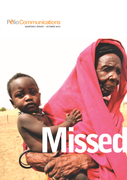
With a focus on Pakistan and Nigeria’s most vulnerable communities, this report provides insight about the role that community push-back is playing in the transmission of the polio virus and how the Global Polio Eradication Initiative (GPEI) can mitigate these social risks to reach every missed ch
...
Outbreak surveillance in humanitarian emergencies involves rapid detection, data collection, and analysis to identify disease threats, while response focuses on implementing timely control measures to prevent further spread.
this toolkit presents a structured, rating-based methodology designed to provide a rapid, comprehensive assessment of the capacity of the human resource support system for a country’s supply chain. Data are gathered from a document review, focus group discussions, and in-country stakeholder interv
...
The Regional strategy for measles control recommends that a second opportunity for measles immunization be provided to all children irrespective of their vaccination status or history of clinical measles. The preferred method of provision of a second opportunity is through Supplemental Immunization
...
