
Filter
317
Text search:
eau
potable
Featured
24
92
Language
Document type
152
51
43
32
14
9
8
3
2
1
1
Countries
42
26
24
21
19
15
9
8
7
7
6
5
5
5
5
3
3
2
2
2
2
2
1
1
1
1
1
1
1
1
1
1
1
1
1
1
1
1
Authors & Publishers
Publication Years
Category
164
56
15
13
9
7
Toolboxes
32
23
17
15
10
9
8
7
7
4
3
3
3
3
3
2
1
1
1
1

This manual is part of a series of guides devised by the Oxfam Public Health Engineering Team to help provide a reliable water supply for populations affected by conflict or natural disaster. Storage tanks are required for collection of water from springs or water produced from continuous flow water
...

This manual is part of a series of guides devised by the Oxfam Public Health Engineering Team to help provide a reliable water supply for populations affected by conflict or natural disaster. The equipment is designed to be used with any or all of the following Oxfam water equipment: Water Pumping e
...
Guidelines for drinking-water quality: Fourth edition incorporating the first and second addenda
recommended
Guidance has been updated on a number of chemicals: asbestos, bentazone, chromium, iodine, manganese, microcystins, nickel, silver, tetrachloroethene and trichloroethene. Guidance has also been added for chemicals not previously assessed in the Guidelines: anatoxin-a and analogues, cylindrospermopsi
...
Survival, Health and Dignity for Refugees
Accessed March 13, 2019

This report summarizes the World Health Organization’s (WHO) global work on water, sanitation and hygiene (WASH) during 2022. It describes how the Organization continued to deliver its essential WASH programming as elaborated in its 2018–2025 strategy.
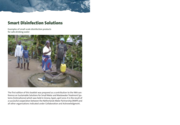
Examples of small-scale disinfection products for safe drinking water
Oxfam Water Supply Scheme for Emergencies. This manual is part of a series of guides devised by the Oxfam Public Health Engineering Team to help provide a reliable water supply for populations affected by conflict or natural disaster. Wherever possible, water supplies in emergency conditions should
...
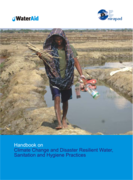
WaterAid is an international NGO that provides assistance for safe water supply,
sanitation and hygiene practice in the poor communities in the world.
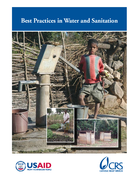
In this review, the editors will investigate the impact of eight WASH interventions in preventing (reducing the risk of) and controlling outbreaks in LMIC, with particular focus on three diseases of current concern to the response community – cholera, Ebola, and Hepatitis E. Additionally, we will
...
Disinfection of drinking-water supplies has been one of the most significant public health advancements of the last century with respect to reducing waterborne disease.
Although chlorine has been used as the disinfectant of choice for public drinking-water supplies for the past century, a numbe ...
Although chlorine has been used as the disinfectant of choice for public drinking-water supplies for the past century, a numbe ...
In order to maintain daily operations and patient care services, health care facilities need to develop an Emergency Water Supply Plan (EWSP) to prepare for, respond to, and recover from a total or partial interruption of the facilities’ normal water supply. Water supply interruption can be caused
...
A review of proactive risk assessment and risk management practices to ensure the safety of drinking-water
Based on information gathered from 118 countries representing every region of the globe, this report provides a picture of WSP uptake worldwide. It presents information on WSP implementati ...
Based on information gathered from 118 countries representing every region of the globe, this report provides a picture of WSP uptake worldwide. It presents information on WSP implementati ...
The WHO/UNICEF JMP report, WASH in Health Care Facilities, is the first comprehensive global assessment of water, sanitation and hygiene (WASH) in health care facilities. It also finds that 1 in 5 health care facilities has no sanitation service*, impacting 1.5 billion people. The report further rev
...
During fresh fruit and vegetables (FFV) production, water is used for a variety of purposes. Even the water was conventionally treated and disinfected, it may still potentially contain human pathogens, albeit at low concentrations. A risk assessment, appropriate to the national or local production c
...
