
Filter
260
Text search:
Regional
Network
for
Equity
in
Health
in
East
and
Southern
Africa
(EQUINET)
Featured
Recommendations
27
New Publications
88
Language
Document type
No document type
147
Studies & Reports
62
Guidelines
19
Strategic & Response Plan
17
Manuals
8
Situation Updates
3
Fact sheets
3
Training Material
1
Countries / Regions
Global
16
Ethiopia
11
Africa
11
India
10
Zambia
9
Kenya
9
Uganda
8
Myanmar / Burma
8
Tanzania
7
East and Southern Africa
7
South Africa
6
Ghana
5
Sierra Leone
4
Nepal
4
Rwanda
4
Bangladesh
4
Nigeria
3
Senegal
3
Somalia
3
Syria
3
Indonesia
3
Namibia
3
West and Central Africa
3
Western and Central Europe
3
Laos
3
Zimbabwe
2
Haiti
2
Cambodia
2
Mozambique
2
Eswatini/ Swaziland
2
Botswana
2
Latin America and the Carribbean
2
Eastern Europe and Central Asia
2
Asia
2
Southern Africa
2
Liberia
1
Congo, Democratic Republic of
1
Cameroon
1
Philippines
1
Jordan
1
Lebanon
1
Egypt
1
Chad
1
Thailand
1
Malawi
1
Madagascar
1
Lesotho
1
Chile
1
Middle East and North Africa
1
South–East Asia Region
1
Tajikistan
1
Vietnam
1
Authors & Publishers
Publication Years
Category
Countries
110
Clinical Guidelines
20
Public Health
19
Women & Child Health
16
Key Resources
13
Capacity Building
2
Toolboxes
HIV
44
Planetary Health
14
Global Health Education
12
TB
11
COVID-19
11
Mental Health
8
Disability
7
NTDs
7
Health Financing Toolbox
7
Caregiver
5
Refugee
4
Malaria
4
Conflict
2
Natural Hazards
2
Rapid Response
2
NCDs
2
2.0 Rapid Response
2
Ebola & Marburg
1
Cholera
1
Polio
1
AMR
1
Social Ethics
1
Health is routinely considered in strategic environmental assessment (SEA) and environmental impact assessment (EIA), following require
...

Every year, an estimated 15 million babies are born preterm – before 37 weeks of pregnancy. That is more than 1 in 10 live births. Approximately 1 million children die each year worldwide due to complications from their early birth. Those that sur
...

This publication provides a problem analysis of the U.S. cuts in global health and derives concrete recommendations
...

While there has been real progress in addressing the burden of disease in the WHO African region, the COVID-19 pandemic has highlighted the link between h
...
The Global Antibiotic Resistance Partnership (GARP)-Mozambique team, in partnership with the Center for Disease Dynamics, Economics & Policy (CDDEP), has produced this report as part of a solid com-
...

The purpose of the situation assessment was to execute a situation analysis for Autism and Neurodevelopment Disorder (NDD) in Bangladesh. The situa
...

The State of the world’s nursing 2020 report provides the latest, most up-to-date evidence on and policy options for the global nursing workforce.

This guideline provides global, evidence-informed recommendations on daily iron supplementation in infants and children, as a public-health interve
...
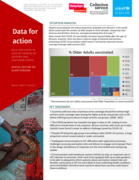
Data for Action March 2022, Issue 5
Despite high regional demand for vaccines valued at over US$ 1 billion annually, Africa’s vaccine industry provides only 0.1% of global supply. Vaccine inequity
...
Rehabilitation in health systems provides recommendations for Member States and other relevant s
...

WHO Ghana 2022 annual report
recommended
“2022 was an eventful year for the WHO Country Office in Ghana,” says Dr Francis Kasolo, WHO Representative to Ghana.
In 2022, WHO Ghana col
...

Inequality of access to palliative care and symptom relief is one of the greatest disparities in global health care (1). Currently, there is avoida
...
Health in All Policies (HiAP) is not a new concept. While the term “HiAP” has received much attention since the 1990s, the concept
of working across sectors of government
...
This tool is a living document that provides guidance on good partnership practices that promote strong relationships between civil society organizations and government representatives on engaging men a
...
I examine the effectiveness of donors in targeting the highest burden of malaria in the Democratic Republic of Congo when health information struct
...

WHO’s Country Cooperation Strategy (CCS) defines the Organization’s medium-term vision for working in and with a particular country. The CCS, d
...

Adolescents and young adults aged 10-24 remain underserved in the global response against HIV. Combination prevention, treatment and care programme
...
