
Filter
82
Text search:
Oxfam
International,
et
al.
Featured
Recommendations
10
New Publications
23
Language
Document type
No document type
51
Studies & Reports
18
Manuals
7
Guidelines
4
Training Material
1
Strategic & Response Plan
1
Countries / Regions
Liberia
6
Global
6
Nepal
5
Sierra Leone
4
Syria
3
Guinea
2
Somalia
2
Kenya
2
Senegal
1
Congo, Democratic Republic of
1
Ethiopia
1
Niger
1
Zimbabwe
1
Haiti
1
Philippines
1
India
1
Pakistan
1
South Sudan
1
Afghanistan
1
Cambodia
1
Rwanda
1
Indonesia
1
Malawi
1
Yemen
1
Latin America and the Carribbean
1
Asia
1
Eastern Europe
1
Laos
1
Authors & Publishers
Publication Years
Category
Key Resources
24
Countries
17
Women & Child Health
4
Public Health
2
Capacity Building
1
Toolboxes
Ebola & Marburg
8
HIV
6
COVID-19
6
Planetary Health
5
Conflict
4
Natural Hazards
4
Mental Health
4
Global Health Education
4
Health Financing Toolbox
4
Disability
2
TB
2
AMR
2
Caregiver
2
Rapid Response
1
Refugee
1
Specific Hazards
1
Pharmacy
1
NCDs
1
The 2022 Financing for Sustainable Development Report identifies a “great finance divide” as a main driver of the divergent recovery. Developed countries were able to borrow record sums at ultra-low interest rates to support their people and economies, but the pandemic response and investment in
...
This paper provides information to assist World Bank and GFDRR staff in affecting disability-inclusive DRM. It is based upon desk reviews of existing practice, as well as consultations with experts in the field of disability-inclusive DRM. The paper:
- Illustrates promising practices related to ...
- Illustrates promising practices related to ...
An attempt has been made to map the incidence of uni-dimensional and multi-dimensional poverty simultaneously arguably for the first time in Pakistan. While multi-dimensional poverty map is calculated using PSLM 2010-11; small area estimation technique is utilized to map uni-dimensional poverty usin
...
It is widely understood that the food insecurity crisis in the Sahel and the Horn of Africa is one of the world’s fastest growing and most neglected crises. It lacks sufficient global focus, resources and urgency. As in so many crises, women and girls are disproportionately affected and shoulder t
...
Gender and security is a complex issue, and this research found that there are different levels of comprehension of what it means in humanitarian and development assistance practice. The aims of the paper are twofold: to raise general awareness about gender and how it relates to security risk manage
...
Insecurity Insight Report 13-1.
The coronavirus disease 2019 (COVID-19) pandemic has created a global and gendered crisis that is compounding existing inequalities and disproportionately affecting girls and women. Emerging evidence from the COVID-19 crisis in 2020 shows school closures, disruptions in essential services and rising
...
Afghanistan has one of the largest populations per capita of persons with disabilities in the world. At least one in five Afghan households includes an adult or child with a serious physical, sensory, intellectual, or psychosocial disability. More than 40 years of war have left more than one million
...

The transformation of the humanitarian landscape has already made a significant impact on the operational security of INGOs and other humanitarian actors. This report serves to inform strategic policy priorities and approaches to security planning and coordination, and addresses three main questions
...
LLEVADA A CABO POR LOS AGENTES HUMANITARIOS Y LOS DEFENSORES DE LOS DERECHOS HUMANOS EN LOS CONFLICTOS ARMADOS Y OTRAS SITUACIONES DE VIOLENCIA
Good Practice Review
The availability, prices and affordability of essential medicines in Malawi: A cross-sectional study
The Malawian government recently introduced cost-covering consultation fees for self-referral patients in tertiary public hospitals. Previously, patients received medicines free of charge in government-owned health facilities, but must pay elsewhere. Before the government implements a payment policy
...
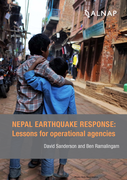
In the aftermath of the April 2015 earthquake in Nepal, this paper looks at lessons drawn from previous comparable disasters and seeks to provide invaluable information and assistance to the operational agencies responding to the crisis.
This paper has been commissioned by RedR to identify gaps in skills, technology, and knowledge in urban humanitarian response in order to inform RedR’s project Ready to Respond which is looking to address these gaps in two specific areas:
Water supply, sanitation, and hygiene; Shelter res
...
Policy Brief
Accessed: 20.11.2019
