
Filter
121
Text search:
Institute
of
Health
Metrics
and
Evaluations
Featured
Recommendations
8
New Publications
27
Language
Document type
No document type
48
Studies & Reports
34
Guidelines
16
Manuals
12
Strategic & Response Plan
6
Resource Platforms
2
Training Material
1
Situation Updates
1
Fact sheets
1
Countries / Regions
Global
15
Myanmar / Burma
3
Sierra Leone
2
Ethiopia
2
Uganda
2
Zimbabwe
2
Rwanda
2
Malawi
2
Latin America and the Carribbean
2
Guinea
1
Nigeria
1
Senegal
1
Congo, Democratic Republic of
1
Mali
1
Ghana
1
Haiti
1
India
1
Nepal
1
Zambia
1
Kenya
1
Tanzania
1
Bangladesh
1
Mozambique
1
Sudan
1
Central African Republic
1
Brazil
1
East and Southern Africa
1
West and Central Africa
1
Middle East and North Africa
1
Western Pacific Region
1
Western and Central Europe
1
Africa
1
Armenia
1
Authors & Publishers
Publication Years
Category
Countries
24
Public Health
18
Key Resources
12
Clinical Guidelines
8
Capacity Building
2
Women & Child Health
2
Pharmacy & Technologies
2
Toolboxes
Planetary Health
15
Mental Health
12
Health Financing Toolbox
11
COVID-19
7
Caregiver
7
HIV
6
Global Health Education
6
AMR
5
Pharmacy
4
NTDs
4
Malaria
4
Disability
3
Rapid Response
3
Conflict
2
TB
2
Ebola & Marburg
1
Zika
1
2.0 Rapid Response
1
Although Shiga toxin-producing Escherichia coli (STEC) have been isolated from a variety of food production animals, they are most commonly associated with ruminants from which we derive meat and mi
...
Haiti, one of the poorest countries in the world, was devastated by an earthquake in 2010. The disaster uncovered the realities of a non-existent mental h
...
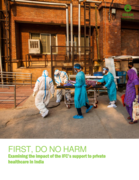
This report examines the support to private healthcare provision in India by the World Bank’s private sector arm, the International Finance Corporation (IFC). Despite supporting private healthcare in the country since 1997, no healthcare results for lending
...

Poor quality health services are holding back progress on improving health in countries at all income levels.
Today, inaccurate diagnosis, medication errors, inappropriate or unnecessary treatm ...
Today, inaccurate diagnosis, medication errors, inappropriate or unnecessary treatm ...

nt. J. Environ. Res. Public Health 2014, 11(12), 13097-13116; https://doi.org/10.3390/ijerph111213097
Climate change will increase the frequency and magnitude
...
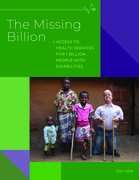
One billion people around the world live with disabilities. This report makes the case that they are being “left behind” in the global community’s work on health. This lack of access not only
...
Development assistance for health (DAH) has grown substantially, totaling more than $31.3 billion in 2013. However, the degree that countries with high concentrations of armed conflict, ethnic viole
...
This paper presents a bibliometric analysis of the literature on private health aid and official health
...

Strategic communication is at the heart of public health and more important than ever in the digital age. Using communication strategically require
...
The purpose of this manual is to provide a resource for training to increase understanding of Health in All Policies (HiAP) by
...

Benchmarking is a strategic process often used by businesses and institutes to standardize performance in relation to the best practices of their sector. The World
...

Rwanda’s national health sector is focused on the equitable delivery of high-quality health services. The Government
...
2nd edition. The purpose of the WHO human health risk assessment toolkit: chemical hazards is to provide its users with guidance to identify, acquire and
...
This guidance document is designed to ensure that the process of iteratively managing the health risks of climate change is integrated into the ove
...
These guidelines – an update to the World Health Organization’s 2015 publication Consolidated strategic information guidelines – present a set of essential aggregate indicators
...

Antibiotics and other antimicrobial agents are invaluable life savers, particularly in resource-limited countries where infectious diseases are abundant. Both uncomplicated and severe in
...

In 2019, the Task Force on Fiscal Policy for Health concluded that taxes on tobacco, alcohol, and sugar-sweetened beverages were a highly effective but greatly underused policy tool to reduce consum
...

National-scale databases and reliability issue
Background report

The five hepatitis viruses have different epidemiological profiles, and their impact, duration, and transmission route also vary. The most common transmission routes contributing to the spread
...

Strengthening global health security to protect the world against future epidemics and pandemics requires well-tested and decentralized capacities
...
