
Filter
106
Filtered Results: 106
Text search:
IFRC
Myanmar
Red
Cross
Featured
Recommendations
15
New Publications
55
Language
Document type
No document type
63
Studies & Reports
13
Guidelines
9
Manuals
7
Strategic & Response Plan
4
Training Material
3
Situation Updates
3
Brochures
1
Infographics
1
Online Courses
1
Fact sheets
1
Countries / Regions
Myanmar / Burma
42
Bangladesh
9
Global
4
South–East Asia Region
4
Indonesia
4
Asia
3
Vietnam
3
Nepal
2
Syria
2
Laos
2
Malaysia
2
Philippines
2
India
2
Colombia
1
Thailand
1
China
1
Cameroon
1
Mozambique
1
Haiti
1
Cambodia
1
Latin America and the Carribbean
1
Middle East and North Africa
1
South Korea
1
Brazil
1
Sri Lanka
1
Sudan
1
Yemen
1
Angola
1
Liberia
1
Pakistan
1
Authors & Publishers
Publication Years
Category
Countries
45
Key Resources
23
Women & Child Health
4
Capacity Building
3
Public Health
1
Clinical Guidelines
1
Toolboxes
Natural Hazards
15
COVID-19
13
Rapid Response
6
Conflict
6
Mental Health
5
Planetary Health
5
2.0 Rapid Response
5
Refugee
3
TB
3
Disability
2
Global Health Education
2
HIV
1
Ebola & Marburg
1
Malaria
1
Typhoon
1
Over the past 50 years, dengue has spread from nine to over a hundred countries, making it the most rapidly spreading vector-borne disease. Yet, dengue continues to have a low profile among policy-makers and donors and does not receive the media attention it deserves. While there is no vaccine or cu...
Psychosocial Interventions. A handbook
recommended
In the following you can find 51 Planning tools for Mental Health and Psychosocial support in disasters, that have been derived from an anylsis of 282 Psychosocial Mental Health guidelines and 678 Tools. The single planning tools are structured according to the most relevant topics and can be used i...
This document, produced by IFRC, UNICEF and WHO, suggests key actions on how people and communities can stay safe and slow down the spread of COVID-19, particularly for contexts where you might have been asked by your local authorities to maintain physical distance or stay home.
Available in: Arabi...
Cambodia drafted and adopted the National Action Plan for Disaster Risk Reduction 2014-2018 in 2014. This plan finalized the required policies and legal processes to strengthen DRM in Cambodia. It also focused on capacity building at national and sub-national levels and provided dedicated resources ...
The Humanitarian News Digest is a monthly compilation of links to reports, web stories, press releases, and other
public products published online by organizations with humanitarian operations in Myanmar.
The ERP approach seeks to improve effectiveness by reducing both time and effort, enhancing predictability through establishing predefined roles, responsibilities and coordination mechanisms. The Emergency Response Preparedness Plan (ERPP) has four main components: i) Risk Assessment, ii) Minimum Pr...
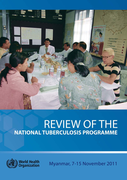
Myanmar is one of the world’s 22 high tuberculosis (TB) burden countries, and supporting TB control in Myanmar is a global priority. This report reflects the findings, discussions, conclusions and recommendations of the fourth international review mission of the Myanmar National TB Programme (NTP)...

The Myanmar National Framework seeks to achieve people-centered, inclusive, and sustainable socioeconomic development in the face of disasters triggered by natural hazards and climate change. The framework articulates a common understanding, proposes a coherent approach, and identifies potential opp...
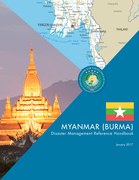
Myanmar has made significant progress in its disaster management policies, plans, and procedures since 2008, when Cyclone Nargis impacted the country leaving devastation in its aftermath. The Government of Myanmar (GoM) has modified the government structure and created new authorities and plans to i...
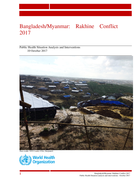
Public Health Situation Analysis and Interventions 10 October 2017
National Tuberculosis Programme
The National Strategic Plan (NSP) for Tuberculosis (TB) 2016-2020 builds on the past experiences for the National Tuberculosis Programme and its partners. This NSP provides a roadmap for delivering quality TB prevention and care service to the entire population, ...
The National Strategic Plan (NSP) for Tuberculosis (TB) 2016-2020 builds on the past experiences for the National Tuberculosis Programme and its partners. This NSP provides a roadmap for delivering quality TB prevention and care service to the entire population, ...
December 2020 — May 2021

EVALUATION REPORT | This evaluation is the first comprehensive global exercise to examine UNICEF’s programme response in protecting children in emergencies. Its purpose is to strengthen child protection programming by assessing performance in recent years and to draw lessons and recommendations th...

In Control: A Practical Handbook for Professionals Working in Health Emergencies Internationally RKI
The greatest risk to persons engaging in international medical emergency response is poor preparation.
The In Control handbook hopes to provide a remedy.
At the time of writing, we are living through the Coronavirus (COVID-19) pandemic, a health emergency that disregards physical borders, brin...
No publication year indicated.
The Feedback Starter-Kit responds to key questions ( ) and provides the most important tips ( ) for setting up and running a simple feedback mechanism. At the end of this document there is an overview of the templates needed to plan the mechanism and collect, answer, analyse and share community feed...
A brief guide for those using social media in humanitarian organizations
