
Filter
671
Text search:
santé
maternelle
Featured
43
175
Language
Document type
341
106
96
37
24
20
14
10
8
5
4
3
3
Countries
68
64
44
37
29
20
17
14
12
11
9
9
8
7
7
6
6
5
5
3
3
3
2
2
2
2
2
2
2
2
2
2
1
1
1
1
1
1
1
1
1
1
Authors & Publishers
Publication Years
Category
317
242
70
57
25
13
2
Toolboxes
69
22
17
16
11
9
8
7
7
6
5
5
3
3
3
3
2
2
1
1
This film explains the importance of antenatal care and in particular, the principles of ‘focused antenatal care’ (FANC). It describes what is involved in the four visits that make up FANC, including taking a patient’s history, examinations, checks and giving information.
This film is for u
...
This film explains what antenatal care is and why it is important for the mother and baby. It explains the importance of attending 4 antenatal sessions before the baby is born and what should happen at each session.
This film is for use in community health education.
very woman has the right to the highest attainable standard of health, which includes the right to dignified, respectful health care.
Many women experience disrespectful and abusive treatment during childbirth in facilities worldwide. Such treatment not only violates the rights of women to respectf
...

The guide for integration of perinatal mental health in maternal and child health services outlines an evidence-informed approach describing how program managers, health service administrators and policy-makers responsible of planning and managing maternal and child health services can develop and s
...
Download (856.2 kB)
Overview
A programme review for maternal, newborn, child and adolescent health (MNCAH) is a process for assessing mid- or end-term country progress in improving the health of women, newborns, children and adolescents. A programme review is conducted at the national or subnation
...
An advanced-midwife's guide to labour and delivery. An online learning course
To provide a foundation for the strategic policy and programme development needed to ensure the sustainable implementation of effective interventions for reducing the global burden of PPH
The Practical Approach to Emergencies in the Pregnant Mother, Newborn infant and Child. Provder Manual
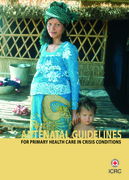
These guidelines are designed for ICRC and other health professionals – nurses, midwifes, doctors – who either lack experience in antenatal care or are not used to working in countries where medical infrastructure is underdeveloped or non-existent
An Illustrated Guide for Service Providers
The Priority medicines for mothers and children 2011 list was updated following the 18th Expert Committee Meeting
on Selection and Use of Medicines, the release of new treatment guidelines and feedback from partners following
the 2011 version. In alignment with the UN Global strategy f
...
This film shows how to prevent and manage excessive bleeding after the delivery of a baby, otherwise known as primary postpartum haemorrhage (PPH).
This film is for use in health worker training

An essential resource that helps a community understand, treat, and prevent many health problems that affect women. Topics include reproductive health, violence, mental health, HIV, and more.
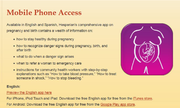
Available in English and Spanish, Hesperian’s comprehensive app on pregnancy and birth contains a wealth of information on:
how to stay healthy during pregnancy
how to recognize danger signs during pregnancy, birth, and
after birth
what to do when a danger sign arises
whe
...
The primary audience for this guideline includes health-care professionals who are responsible for developing national and local health-care protocols and policies, as well as managers of maternal and child health programmes and policy-makers in all settings. The guideline will also be useful to tho
...
The standards of care cover the routine care and management of complications occurring for women and their babies during labour, childbirth and the early postnatal period, including those of small babies during the first week of life. They define priorities for improving the quality of maternal and
...
